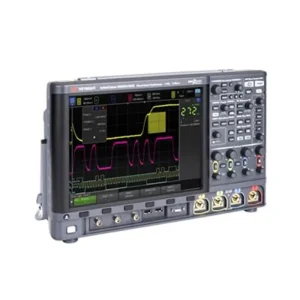
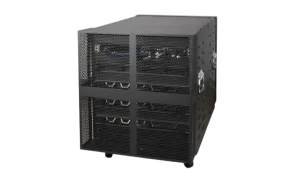
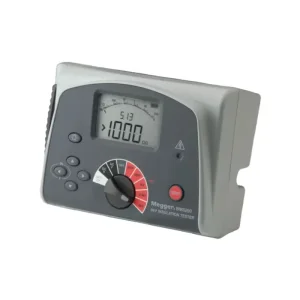
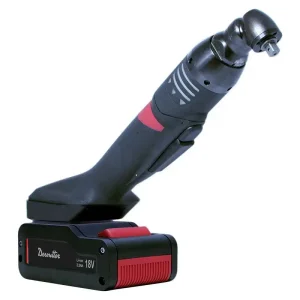
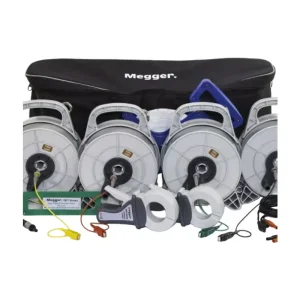
Explore our elite sourcing list for industry-leading brand analyzers, oscilloscopes, and custom automation interfaces.
A comprehensive analysis of programmable power architecture, validation procedures, and strategic industrial execution.
In modern B2B test and measurement, choosing a programmable power supply (PPS) demands a deep understanding of circuit design topologies. High-performance labs require a tailored mix of speed, noise suppression, and efficiency.
Linear Power Supplies: Engineered for critical low-noise environments. Using linear regulation circuits, they provide extremely clean output with minimal ripple (often < 0.5 mVrms) and ultra-fast transient recovery times (< 50 microseconds). These are best suited for high-precision analog testing, semiconductor characterization, and medical sensor validation.
Switching (SMPS) Power Supplies: Utilizing pulse-width modulation (PWM) and resonant topologies (such as LLC or phase-shifted full-bridge), these units prioritize power density and efficiency (exceeding 90%). Ideal for heavy industrial systems, rack-integrated burn-in testing, and EV battery simulations.
Today's custom programmable DC power supplies feature integrated DSPs (Digital Signal Processors). These allow users to program specific output profiles, manage ramp rates, and simulate real-world power events—like car battery cranking profiles or solar panel array output fluctuations.
| Feature Parameter | Linear Topology | Switching Topology |
|---|---|---|
| Efficiency Range | 30% - 50% | 85% - 95% |
| Ripple & Noise | Ultra-low (< 1mV) | Moderate (10mV - 100mV) |
| Transient Recovery | < 50 μs (Fast) | 1 ms to 5 ms (Average) |
| Power Density | Low (Heavy) | Very High (Compact) |
Sourcing programmable power supplies from China provides global buyers with several unique structural benefits. In cities like Shenzhen, Suzhou, and Hangzhou, complete electronics supply chains allow for rapid development and testing cycles.
Clustered Component Supply Chains: By having semiconductor fabricators, magnetic component suppliers, and precision tooling facilities near assembly plants, we keep prototype turnaround times under two weeks.
Cost Efficiency and Advanced R&D: While raw production costs remain highly competitive, Chinese manufacturers are continually investing in research and development. We design custom firmware APIs, implement high-accuracy digital control loops, and build reliable multi-channel modular systems.
Strict Quality Standards: Leading Chinese factories use advanced automated optical inspection (AOI), high-temperature aging chambers, and automated calibration benches. This ensures every custom power supply meets strict international standards, including CE, UL, FCC, and RoHS.
How customized programmable power architectures drive productivity across complex high-tech verticals.
To evaluate complex automotive electronics, test benches must simulate challenging battery dropouts and voltage fluctuations. Custom programmable power supplies recreate ISO 16750-2 test profiles, which are crucial for testing electric vehicle (EV) battery packs, drivetrains, and on-board chargers.
Automated Test Equipment (ATE) for semiconductor wafer sorting and packaging requires multiple independent power channels, fast response speeds, and precise voltage and current monitoring. Custom rack-mount multi-channel power systems easily integrate into high-volume manufacturing environments.
Testing avionics systems requires highly reliable 400Hz AC power sources and ultra-stable, multi-channel DC rails. Systems designed for these sectors feature robust galvanic isolation, transient-suppression networks, and redundant cooling architectures to maintain performance in challenging conditions.
Your premier global supply chain partner specializing in industrial-grade instrument distribution, system integration, and customized sourcing.
Machine-Win Technology Co., Ltd. is a professional and reliable international supply chain company, specialized in providing a wide range of products for various industries. With extensive experience and a global network of suppliers, we excel in delivering high-quality products and satisfactory services. Our commitment to excellence, reliability, and customer satisfaction sets us apart as a preferred partner in the field of international trade.
We are a one-stop partner for instrument sales, repair, and calibration, as well as network testing solutions. We offer top-tier brands like KEYSIGHT, R&S, TEKTRONIX, KEITHLEY, RIGOL, NI, MEGGER, DRUCK, YOKOGAWA, ITECH, etc., covering a wide range from cable testers, fiber optic testers, and network analyzers to power quality meters, infrared thermometers, thermal imagers, multimeters, clamp meters, process calibrators, resistance testers, environmental detectors, laser rangefinders, vibration meters, and oscilloscopes.
Additionally, Machine-Win is your strategic ally for brand-new, original industrial brands on electronics, electricals, machinery spare parts, hardware and tools, and raw materials, featuring trusted brands including MITSUBISHI, SIEMENS, SCHNEIDER, PANASONIC, OMRON, DELTA, WEINTEK, EMERSON, EATON, PHOENIX CONTACT, and more, delivering comprehensive solutions for your industrial needs.
We deliver tailored OEM/ODM solutions for many areas, like IT & Computing accessories including products of Battery, Adapter, Charger, Keyboard, Mouse, Speaker, Headphone, Earphone, and also POF shrink film packaging materials, workshop production assembly line and parts, etc. Our strategic sourcing is all backed by unwavering integrity, reliable execution, and a commitment to turning your needs into seamless success.
Connect with our technical sales engineers to optimize your laboratory testing or production line setups.
Contact Us TodayBringing equipment, machines, and spare parts together into one seamless service—your shortcut to business success.
We provide a wide range of top-tier brand instruments, including KEYSIGHT, R&S, and ITECH. We handle the process from procurement and validation to delivery, simplifying your procurement workflow.
We offer professional network testing solutions to help customers test and analyze network performance, diagnose complex issues, and ensure stable, efficient operations.
We supply brand-new, original industrial products across electronics, electrical components, machinery spare parts, hardware tools, and raw materials.
From IT accessories and specialized battery chargers to custom automated test enclosures, we turn client drawings and functional requirements into ready-to-run products.
We leverage our established logistics networks to optimize supply chains, reduce international freight costs, and ensure customs compliance and timely delivery.
Our experienced application engineers are available 24/7 to resolve technical questions, assist with instrument calibration, and provide after-sales support.
When purchasing custom programmable power supplies or multi-unit test systems, engineering and procurement teams should evaluate the following key parameters:
1. Programming Resolution and Readback Accuracy: The system's ability to precisely output and measure fine steps in voltage and current is critical. For high-precision applications, seek resolutions of 1 mV or 0.1 mA, along with readback capabilities that minimize the need for external digital multimeters.
2. Load and Line Regulation: These parameters define how well the output remains stable despite fluctuations in input line voltage or load changes. High-quality systems limit variation to less than 0.01% + 2mV.
3. Communications Interface Options: Integration with modern automated test racks requires flexible connectivity options, such as LXI, LAN, GPIB, USB, or RS-232/485 interfaces. Support for SCPI commands makes it easy to integrate units with LabVIEW, Python, or MATLAB test scripts.
To safeguard expensive units under test (UUT), programmable power supplies should feature hardware-level protection networks:
Answers to common engineering and sourcing questions about programmable DC and AC power systems.
Linear programmable power supplies offer very low ripple and noise, along with fast transient recovery times. However, they are heavier and run less efficiently. Switching programmable power supplies provide higher efficiency and greater power density in a smaller footprint, but they generate more high-frequency electrical noise.
In high-current testing, lead wires experience a small voltage drop. Remote sensing uses two high-impedance sense lines connected directly to the load. The power supply monitors the voltage at the load and automatically adjusts its output to compensate for the drop in the primary power lines.
Yes. Connecting units in series increases the total output voltage, while connecting them in parallel increases the total current. When configuring these setups, ensure the models support master-slave control to maintain balanced load sharing and protect the internal circuits.
For most test and measurement systems, we recommend an annual (12-month) calibration interval. In aerospace, automotive safety, and medical device testing, quality standards may require a shorter 6-month calibration schedule.
Transient response time is the time a power supply takes to return to its set voltage level after a sudden change in load current. A fast response time is essential for testing mobile processors or RF amplifiers that switch between low-power standby and high-power transmit modes.
Yes. Advanced programmable supplies feature arbitrary waveform generation (AWG). This allows engineers to import voltage profile tables, simulating battery discharge curves, fuel cell behavior, or solar panel output variations.
Discover our range of digital low-resistance ohmmeters, insulation testers, dimming actuators, and specialized sensors.
 Machine-Win