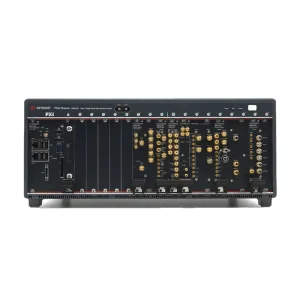
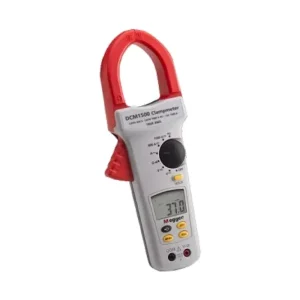
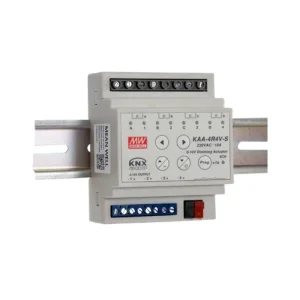
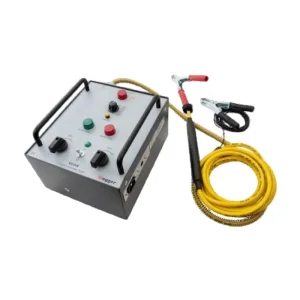
Discover premium equipment, calibration tools, and power system devices sourced globally to support your customized testing operations.
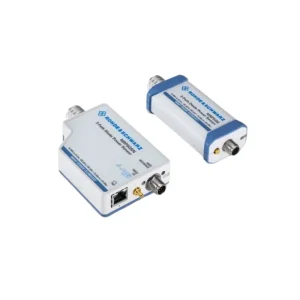
In today's highly dynamic industrial framework, a variable power supply (whether direct current - DC, or alternating current - AC) forms the bedrock of engineering innovation. Unlike traditional fixed-output power modules, variable power supplies provide engineers, systems developers, and testing laboratories with the ability to dynamically adjust voltage, current, and frequency. This adaptability is crucial for testing the operational envelopes of sensitive electronics, simulating fluctuating input lines, and conducting rigorous quality assurance protocols.
As global supply chains pivot towards electric mobility, renewable energy microgrids, high-performance computing (HPC), and advanced semiconductor fabrication, the requirement for bespoke, high-performance, and custom-engineered variable power supply systems has surged. Companies now seek custom designs optimized for high-power densities, minimal electromagnetic interference (EMI), ultra-fast dynamic load responsiveness, and high levels of programmable precision.
Selecting a custom variable power supply demands a granular understanding of different electronic topologies:
Machine-Win Technology Co., Ltd. is a professional and reliable international supply chain company, specialized in providing a wide range of premium instruments, controllers, and industrial hardware for various sectors. With extensive experience and a global network of partners, we excel in delivering high-quality products and satisfactory integration services.
Whether your operations call for custom programmable variable power solutions, precision test and measurement gear, or replacement electrical components for manufacturing systems, we coordinate with leading global manufacturers to ensure compliance, high performance, and rapid supply fulfillment.
Get Expert Consultation
We bridge the gap between high-precision instruments and complex global industrial supply chains.
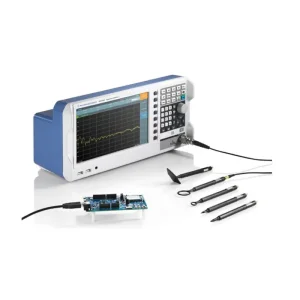
Comprehensive sales, system configuration, dynamic calibration, and post-sale technical support. We host top-tier test brands like KEYSIGHT, R&S, TEKTRONIX, and KEITHLEY to keep your systems running at design parameters.
Analyze latency, throughput, and physical layer signal integrity across modern industrial Ethernet networks. We integrate analyzers and line testers to maintain optimal communication topology.
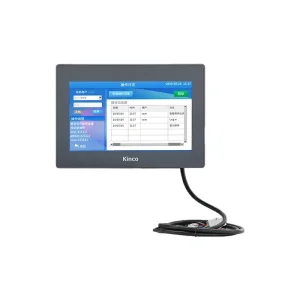
Leveraging direct supplier channels for electronics, industrial controllers (PLC, HMI), and specialized components from MITSUBISHI, SIEMENS, SCHNEIDER, DELTA, and OMRON to design tailored cabinets and systems.
As industrial architectures become increasingly complex, variable power supplies must transition from passive power delivery blocks to intelligent, connected, and highly responsive components. Future architectures rely on dynamic interfaces and software frameworks.
Transitioning from manual panel configurations to advanced API architectures (LabVIEW, MATLAB, Python-driven automation libraries) to enable remote hardware-in-the-loop (HIL) automation.
Adopting new semiconductor alloys to minimize switching energy losses, decrease footprint sizing by up to 50%, and expand standard operating temperatures beyond classical thermal limits.
Integrating localized MCU/DSP cores to analyze voltage ripple variance, trace thermal signatures, and forecast capacitor/inductor breakdown before a plant shut-down occurs.
Depending on geographical targets, variable power solutions face distinct regulatory and technical challenges. In Europe, focus points center heavily on electromagnetic compliance (EMC, CE) and low harmonic distortion levels. In the North American market, robust safety standards like UL/CSA certification are critical, coupled with Ethernet-based SCADA integration. The Asia-Pacific (APAC) region, acting as the epicenter of consumer electronics and EV battery cell manufacturing, generates intense demand for automated multi-channel DC test setups optimized for throughput.
How different sectors utilize custom variable power options to secure reliability and throughput.
| Industrial Vertical | Primary Power Requirements | Key Challenges Solved | Recommended Hardware Class |
|---|---|---|---|
| Automotive & EV Testing | High voltage (800V+), bidirectional capabilities, regenerative grid loops | Simulating battery charge/discharge cycles; recovering excess kinetic energy back to mains | High-Power Regenerative Bidirectional DC Systems |
| Aerospace & Defense | Ultra-low ripple, multi-phase AC output, 400Hz frequency simulation | Validating avionics under varying engine turbine load outputs and dynamic noise margins | Precision Linear AC/DC Custom Power Supplies |
| Semiconductor R&D | Sub-millivolt accuracy, high transient speed, automated remote APIs | Assessing wafer-level performance and microchip logic gates under peak power spikes | Programmable SMPS with LXI/GPIB Interfaces |
We source and integrate precision components and systems from the industry's absolute leaders.
Keysight, Rohde & Schwarz, Tektronix, Keithley, Rigol
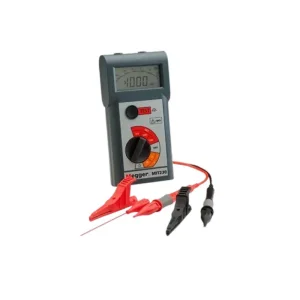
Megger, Druck, Yokogawa, Itech Calibrators
Mitsubishi, Siemens, Schneider, Panasonic, Omron
Delta, Weintek, Emerson, Eaton, Phoenix Contact
Expert engineering perspectives regarding custom variable power architectures and integration.
Linear variable power supplies function by dropping excess voltage across a transistor acting as a linear resistor, resulting in ultra-low ripple voltage (clean output) but relatively low electrical efficiency (often 30-50%). They are ideal for high-precision laboratory testing. Switched-mode power supplies (SMPS) use high-frequency pulse-width modulation (PWM) to convert voltages, boosting efficiency above 90% and reducing physical weight, though they generate more high-frequency switching noise.
Dynamic transient response measures how fast a variable power supply corrects its output voltage when the load current changes rapidly. For instance, in microprocessor or telecommunication tests, dynamic current spikes can cause voltage sags or spikes. A fast transient response (typically below 50 microseconds) prevents under-voltage or over-voltage damage to the unit under test (UUT).
In high-current scenarios, significant voltage drops occur across the copper leads connecting the supply to the load. Remote sensing uses two high-impedance sense lines connected directly to the load terminals. These lines feedback the actual terminal voltage to the supply's regulation loop, allowing the unit to automatically boost its output to compensate for cable losses.
For benchtop lab automation, standard interfaces like USB and LAN (compliant with LXI) are highly popular due to plug-and-play operation. For long-distance industrial deployments or high-speed automated test equipment (ATE) racks, Ethernet or fiber optic interfaces are preferred to eliminate ground loop noises, while legacy systems still leverage GPIB (IEEE-488) interfaces.
Yes. As a global supply chain integrator, Machine-Win Technology Co., Ltd. coordinates original components from industrial leaders like Siemens, Schneider, and Eaton, combining them with high-precision test instrumentation from Keysight and Tektronix. This ensures that customized power configurations meet rigid electrical and safety specs.
Additional industrial measurement instruments, safety devices, and calibration packages available via our global supply networks.
 Machine-Win