Essential automation elements and smart monitoring interfaces optimized for modern battery manufacturing plants, storage integration, and industrial test labs across India.
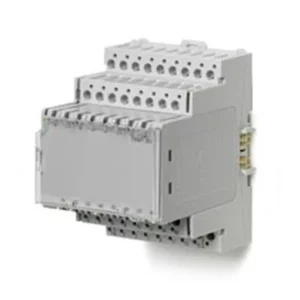
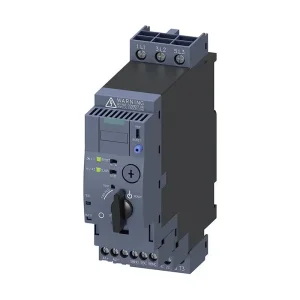
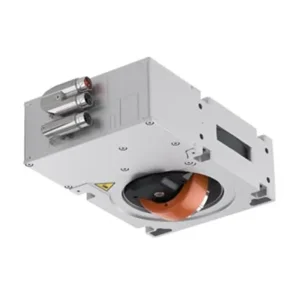
The industrial landscape in India is undergoing a profound paradigm shift driven by the National Mission on Transformative Mobility and Battery Storage. With India targeting 30% EV penetration by 2030 and rapidly expanding its renewable energy storage grid, battery technology is at the center of this transformation. Consequently, the demand for precision battery analyzers, battery management system (BMS) testing tools, and diagnostic hardware has surged exponentially.
B2B procurement teams, research labs, and gigafactories in major industrial hubs—such as Pune, Chennai, Gurgaon, and Bengaluru—are prioritizing reliable hardware that can accurately model aging dynamics, state of charge (SoC), state of health (SoH), and internal resistance of Li-ion, LFP, NMC, and next-generation solid-state cells.
As India implements stringent regulations on battery safety, sourcing original, high-performance electronics and test systems becomes non-negotiable for manufacturers aiming for local compliance and global exports.
While the Indian government encourages domestic manufacturing via Phased Manufacturing Programmes (PMP), local supply chains still face bottlenecks in high-frequency test instrumentation, advanced semiconductor components, and multi-channel calibration analyzers. Partnering with a professional, global supply chain facilitator like Machine-Win Technology Co., Ltd. bridges this crucial gap.
Our strategically managed supply network ensures direct access to leading Global Test & Measurement brands alongside robust OEM/ODM customized battery pack testing modules. We handle international logistics, complex customs clearance frameworks in major Indian ports, and provide comprehensive technical verification before delivery.
Testing battery chemistries requires high-fidelity equipment. Even a minor 5mV discrepancy in battery voltage measurements can lead to incorrect state-of-health predictions or miss critical thermal runaway triggers.
For Indian labs seeking NABL (National Accreditation Board for Testing and Calibration Laboratories) recognition, instrument trace-ability is mandatory. We provide genuine instruments (Keysight, Tektronix, R&S) with traceable documentation. Our calibration support ensures that your battery research data stands up to international regulatory audits.
| Parameters Tested | Recommended Analyzer/Instrument | Accuracy Requirements |
|---|---|---|
| Cell Internal Resistance | High-Speed LCR Meter / Keysight HD3 Series | < 0.1 mΩ Resolution |
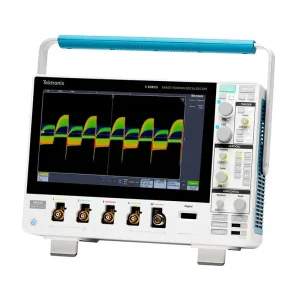
| BMS Voltage Ripple | Tektronix MSO Series Oscilloscopes | Up to 12-bit Vertical Resolution |
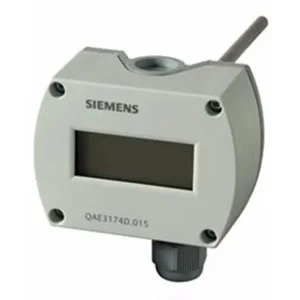
| Thermal Cycling / Temp | Siemens QAE3174D.015 Temp Sensors | ±0.1°C Drift Tolerance |
| High-Current Discharging | Custom Programmable DC Loads | Active Power Factor Correction |
The Battery Management System (BMS) controls balancing algorithms, protects cells from overvoltage/undervoltage conditions, and communicates with the vehicle control unit (VCU) via CAN bus. Debugging these high-speed serial networks requires superior mixed-signal tools.
By leveraging high-definition oscilloscopes (e.g., Tektronix MSO22/24 and Keysight DSOS804A), development teams in Pune and Bengaluru can capture fast transient signals, spikes, and electromagnetic interference (EMI) generated by the electric motor inverter. This is essential for ensuring that communication signals between the BMS and powertrain components remain error-free under real-world driving conditions.
Providing seamless, high-integrity industrial and measurement supply solutions globally, specifically optimized for Indian industrial manufacturing and energy sectors.
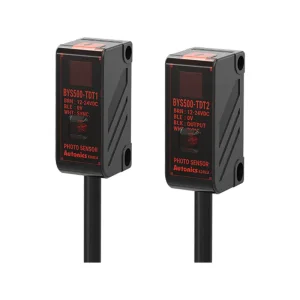
Explore our selection of oscilloscopes, digitizers, safety relays, and sensing systems critical for battery compliance, transient profiling, and automated test equipment (ATE) setups.
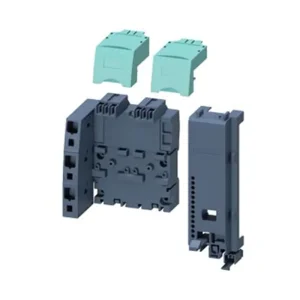
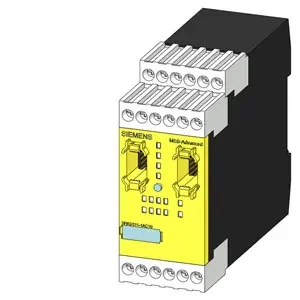
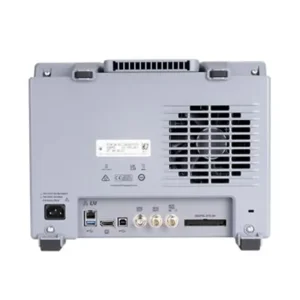
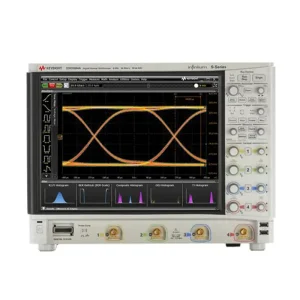
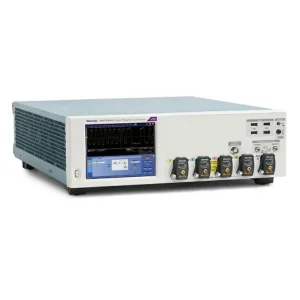
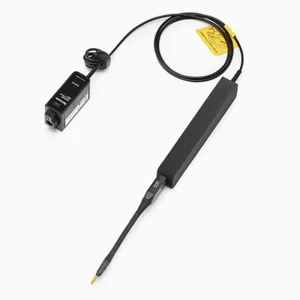
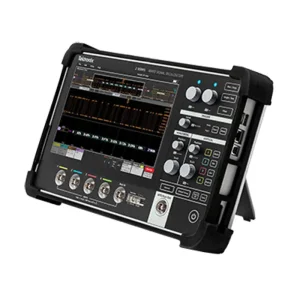
Understanding how specific test instrumentation drives efficiency in India's leading engineering contexts.
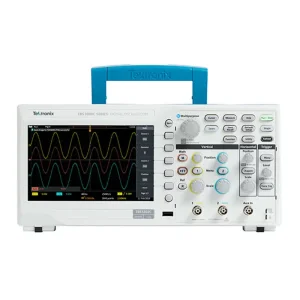
Automotive engineers use multi-channel oscilloscopes coupled with high-sensitivity current probes to measure synchronous load fluctuations during real-world simulation tests. These setups ensure compliance with Indian road profiles and extreme ambient temperatures.
Large-scale solar parks in Rajasthan and Gujarat utilize utility-scale battery energy storage systems (BESS). Maintaining these plants requires high-capacity battery analyzers to locate degraded cells within massive series-parallel arrays before they cause system-wide balance issues.
With hundreds of thousands of telecom towers nationwide, maintenance providers depend on handheld and automated battery testers to run routine state-of-health checks, avoiding sudden network blackouts due to degraded backup power modules.
Addressing the critical regulatory, logistic, and technical questions asked by Indian engineering procurement executives.
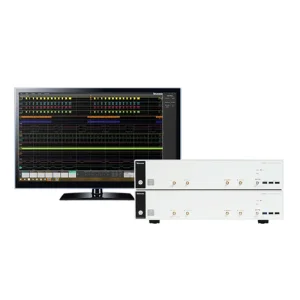
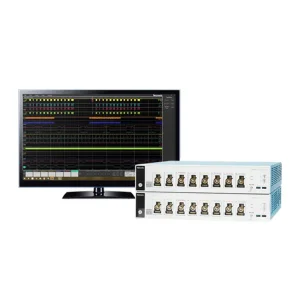
AIS 156 Amendment 2 mandates rigorous thermal, overcharge, and vibration profiling. High-precision battery analyzers and data loggers record cell-level voltages and surface temperatures during stress testing. Advanced digitizers, like the Tektronix LPD64, allow continuous tracking of dynamic cell behavior to ensure that safety thresholds are not violated, mitigating thermal runaway risks.
Yes, we deliver end-to-end custom sourcing, mechanical assemblies, and control rack designs. We integrate leading-brand test instruments (e.g. Keysight, Siemens PLC logic, and customized thermal sensors) into single-cabinet test configurations to match the specific footprints and throughput requirements of Indian factories.
All instruments supplied are brand-new, original units complete with manufacturer trace-ability certificates. We work alongside accredited laboratories globally to provide trace-ability reports. This ensures that when your facilities undergo NABL audits, all equipment and calibration references are fully compliant with ISO/IEC 17025 guidelines.
By leveraging our strategic supply networks in China and overseas, we optimize shipping routes, export documentation, and customs verification. Typical logistics cycles to major Indian hubs average between 2 to 4 weeks depending on the level of customization required, compared to typical direct agent pipelines that can exceed 12 weeks.
EV battery packs operate at voltages of 400V to 800V. Standard probes struggle with common-mode noise generated by switching power semiconductors. Isolated probes utilize fiber-optic isolation, which eliminates high-frequency ground loops. This allows Indian R&D engineers to capture clean gate drive signals and dynamic voltage ripples safely.
We handle import/export procedures regularly. We assist in classification under appropriate HS codes, ensuring correct custom duties and GST computations are applied, avoiding unexpected clearance holds at Indian air ports or seaports.
 Machine-Win