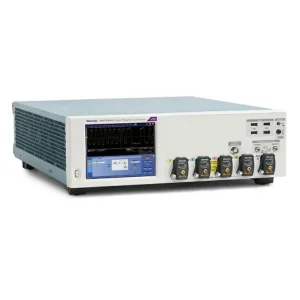
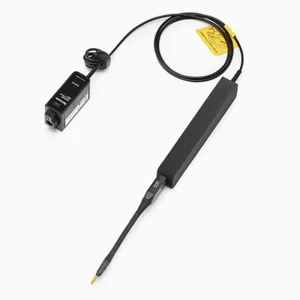
 Machine-Win
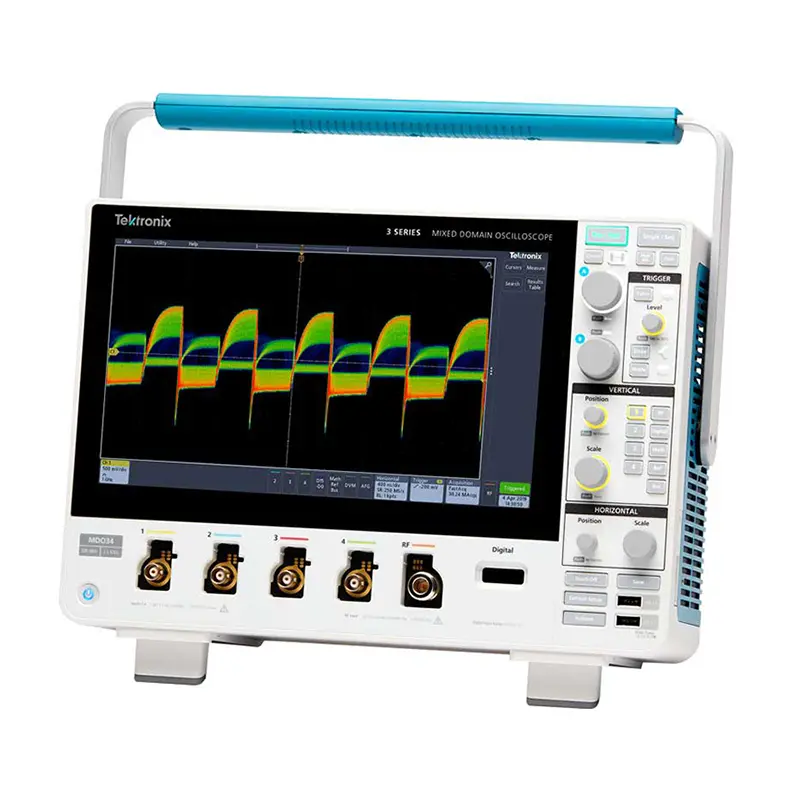
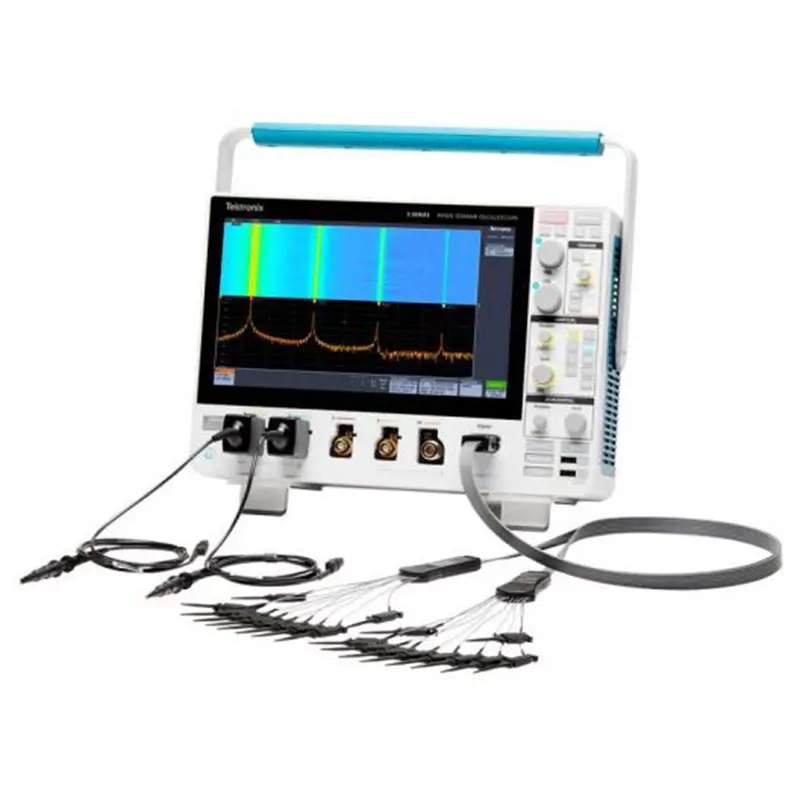
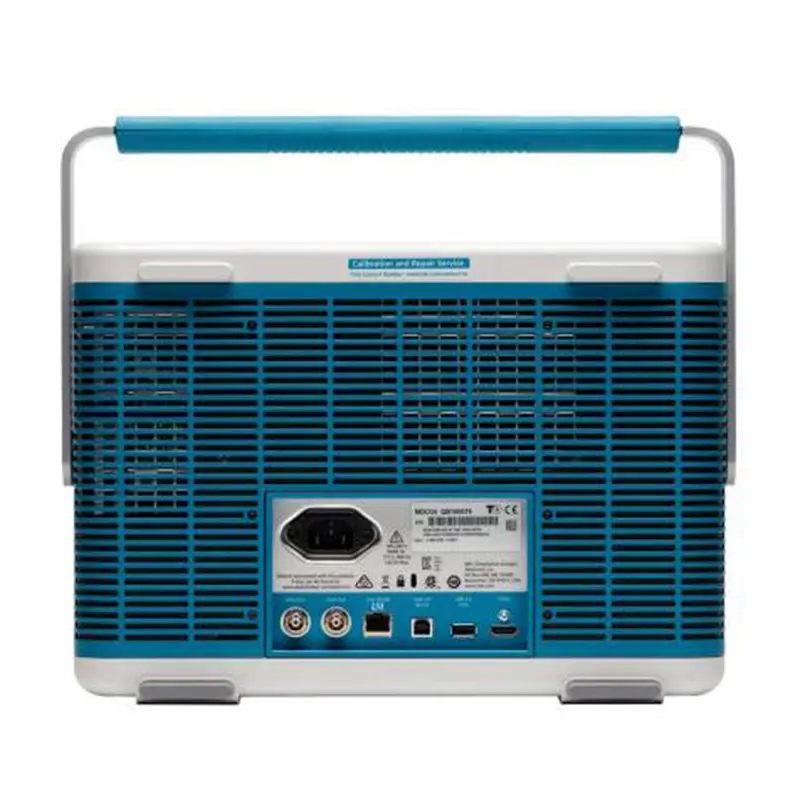
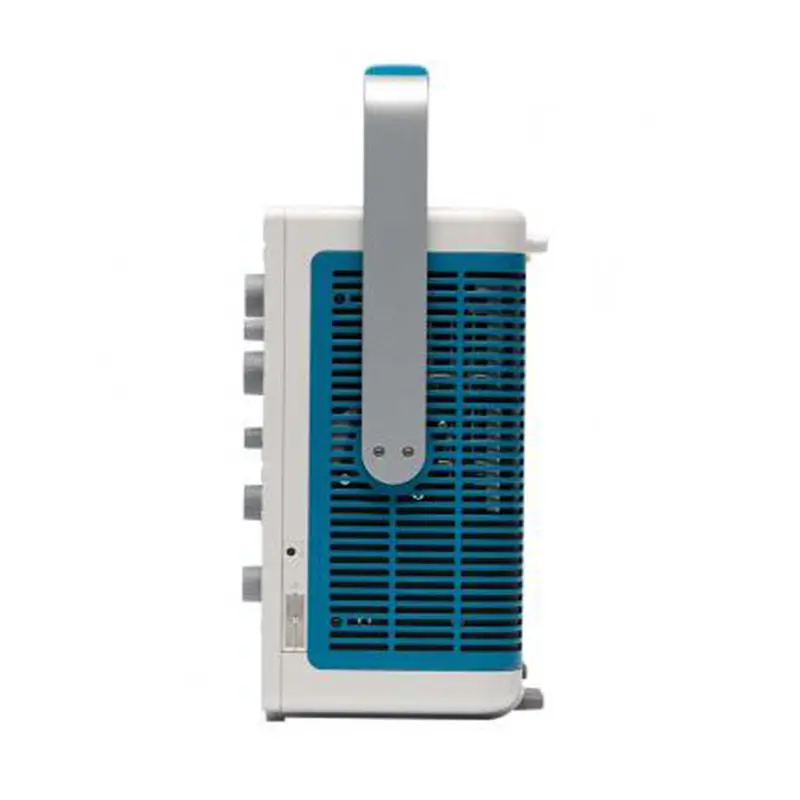
1 / 4
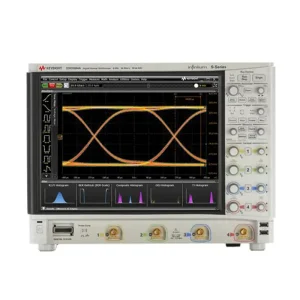
Strong Waveform Analysis and Capture The world-class oscilloscope at the heart of the 3 Series MDO provides extensive features that expedite every step of debugging, from swiftly identifying and recording abnormalities to searching your waveform record for events of interest and examining their properties as well as the behavior of your device.
You have to be aware of a design issue before you can debug it. Without the proper debug tools, finding issues in a design takes a lot of effort and is irritating for every design engineer. Digital phosphor technology gives you quick insight into how your device actually works. Its speedy waveform capture rate (more than 280,000 wfms/s with FastAcq) increases the likelihood that you will detect infrequent flaws with digital systems, such as timing difficulties, glitches, and runt pulses. Intensity grading, which shows the frequency of uncommon transients in relation to typical signal properties, is used to further improve the visibility of infrequent occurrences. In the FastAcq acquisition mode, four waveform palettes are accessible.
Finding a device flaw is just the beginning. In order to determine the root cause, you must then record the occurrence of interest. This is made possible by the 3 Series MDO's more than 125 trigger combinations, which offer a full range of triggers to help you find your event of interest quickly. These trigger combinations include runt, logic, pulse width/glitch, setup and hold violation, serial packet, and parallel data. Additionally, you can record a large number of events of interest—up to 10,000 serial packets—in a single acquisition for additional analysis while keeping excellent resolution to focus on minute signal characteristics thanks to a record duration of up to 10 M.
It takes rigorous analysis to confirm that your prototype's performance matches models and satisfies the project's design objectives. This analysis can range from basic checks of pulse widths and rise times to complex power loss analysis, system clock characterization, and noise source identification. A wide range of standard analysis tools are available with the 3 Series MDO, including:
Key performance specifications:
Spectrum Analyzer:
Arbitrary Function Generator (optional):
Digital Channels (optional):
Serial Bus Decode, Triggering and Search (optional):
Digital Voltmeter / Frequency Counter (Free with product registration):
| MDO32 and MDO34 Comparison | ||||
|---|---|---|---|---|
| Analog channel bandwidth | 100 MHz | 100 MHz | 200 MHz | 200 MHz |
| Analog channels | 2 | 4 | 2 | 4 |
| Rise time (typical, calculated) (10 mV/div setting with 50 Ω input termination) |
3.5 ns | 3.5 ns | 2 ns | 2 ns |
| Sample rate (1 ch) | 2.5 GS/s | 2.5 GS/s | 2.5 GS/s | 2.5 GS/s |
| Sample rate (2 ch) | 2.5 GS/s | 2.5 GS/s | 2.5 GS/s | 2.5 GS/s |
| Sample rate (4 ch) | - | 2.5 GS/s | - | 2.5 GS/s |
| Specification | Value |
|---|---|
| Height | 252 mm (9.93 in.) |
| Width | 370 mm (14.57 in.) |
| Depth | 148.6 mm (5.85 in.) |
| Net Weight |
MDO34 1GHz: 11.7 lbs (5.31 kg) MDO32 1GHz: 11.6 lbs (5.26 kg) |
| Shipping Weight | 17.4 lbs (7.89 kg) |
Tektronix MDO Mixed Domain Oscilloscope, 3 Series Documentation