Explore our high-performance diagnostic, control, and electrical products sourced from leading global manufacturers.
In the contemporary industrial landscape, electrical power distribution, high-speed telecommunications, automated manufacturing grids, and hazardous-area processing plants demand a highly sophisticated grounding topology. An "Earth Ground" is not merely a path to mitigate electric shock hazards; it is the fundamental baseline referencing plane that ensures system stability, transient overvoltage containment, lightning dissipation, and electromagnetic compatibility (EMC). Without a low-impedance ground path, advanced electronic instruments—such as programmable logic controllers (PLCs), fanless industrial PCs, and high-frequency analytical equipment—are vulnerable to destructive voltage spikes, noise corruption, and systemic failures.
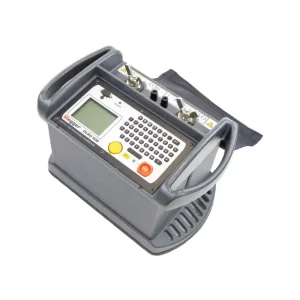
As a global supply partner, Machine-Win Technology Co., Ltd. recognizes that sourcing qualified earth ground materials, structural bonding systems, and accurate testing hardware (e.g., Megger DLRO micro-ohmmeters) represents a strategic operational requirement. The integrity of an electrical installation rests squarely on the quality of its ground connection. This white paper analyzes the global macroeconomic currents, localized engineering challenges, technical design considerations, and future pathways for industrial earth grounding and precision testing networks.
The market for industrial earth grounding systems is experiencing unprecedented expansion, driven by three major secular trends: the global energy transition, the rise of hyperscale data centers, and the automation of heavy manufacturing.
In the renewable energy sector, utility-scale solar photovoltaic (PV) plants and wind farms occupy vast geographical footprints. Each inverter station, turbine mast, and substation requires an interconnected, highly reliable earth grid designed to withstand fault currents up to 50kA or higher. Similarly, the rapid buildout of AI-focused hyperscale data centers demands robust, low-impedance, and high-integrity ground loops. In these facilities, sub-ohm ground paths are vital to prevent transient surges from destroying costly microprocessing clusters and storage media.
From a material supply chain perspective, the industry is witnessing a structural shift toward copper-bonded steel rods and advanced exothermic welding accessories. Pure copper has traditionally been the benchmark for high conductivity, but its susceptibility to theft and high cost has driven manufacturers to engineer composite materials. Copper-clad steel (CCS) rods offer the mechanical strength of high-tensile steel cores combined with the corrosion resistance and conductivity of an outer molecularly bonded copper sheath. This composite approach ensures a service life exceeding 30 to 40 years in corrosive soils, making it the preferred wholesale component for global engineering procurement.
Designing a highly effective grounding grid requires an understanding of soil physics and geology. The earth itself acts as the conductor completing the circuit during a ground fault. The resistance of a grounding system ($R$) is fundamentally dictated by soil resistivity ($\rho$), the geometry of the grounding electrodes, and the depth of the installation.
Soil resistivity varies wildly based on moisture content, mineral structure, temperature, and compaction. For instance, wet organic soil might exhibit a resistivity of $10 \, \Omega\cdot\text{m}$, while dry rock or sandy gravel can exceed $10,000 \, \Omega\cdot\text{m}$. Engineers utilize the Wenner Four-Pin Method to determine the soil resistivity profile at various depths. This data is then modeled in electromagnetic software to size the grounding mesh.
To lower the resistance of an earthing array in high-resistivity zones, engineers employ several technical tactics:
An earthing system is only as good as its weakest connection. Over time, thermal cycling, soil chemistry, and fault events cause corrosion and mechanical loosening at connection points. Even a minor resistance increase of a few milliohms at a critical junction can lead to catastrophic touch-potential elevations during a fault event.
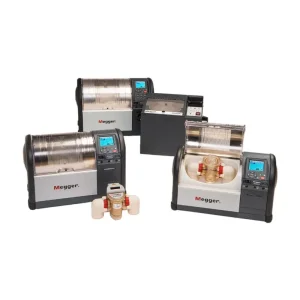
This is where ultra-precise instrumentation, such as the Megger DLRO600 Micro-Ohmmeter, becomes indispensable. Capable of outputting test currents from 10 A to 600 A, these devices measure contact resistance down to $0.1 \, \mu\Omega$. During commissioning and maintenance phases:
Empirical data defining modern high-integrity earthing designs and diagnostic protocols.
How technical specifications translate into distinct geographical and system environments.
Utilizes dense Signal Reference Grids (SRGs) under raised floors. These grids are bonded to the structural building steel at multiple points to minimize electromagnetic interference (EMI) and support high-speed signal integrity for optical network switches.
Focuses on eliminating step and touch potential risks for field personnel during phase-to-ground faults. Incorporates highly calculated buried conductor meshes combined with surface crushed rock layers to limit current flow through the human body.
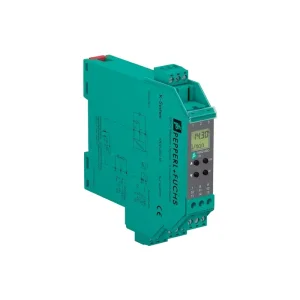
Requires strict static dissipation grounding to prevent explosive spark discharge. Grounding systems are integrated with isolated barriers and intrinsic safety systems, utilizing specialized signal converters to prevent loop current interaction.
Modern industrial operations cannot treat grounding as an isolated civil-works discipline. Grounding is directly coupled with automation and control loop performance. A common failure point in modern manufacturing occurs when high-frequency noise from variable frequency drives (VFDs) leaks into the signal ground of PLCs, causing telemetry corruption or safety shutdowns.
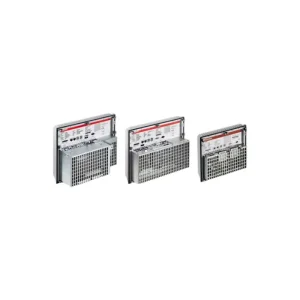
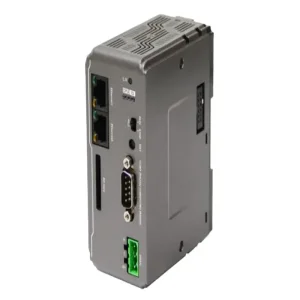
An integrated macro solution combines physical ground path optimization with smart diagnostic modules. Utilizing fanless industrial PCs, such as the Beckhoff C6515, along with advanced field controllers like the Weintek cMT-CTRL01, engineers can deploy continuous ground loop current monitors. These monitors read data from active current sensors clamped to ground lines. If leakage currents exceed pre-programmed levels, the system alerts maintenance crews to inspect the corresponding VFD isolation transformers or filter elements before a system fault occurs.
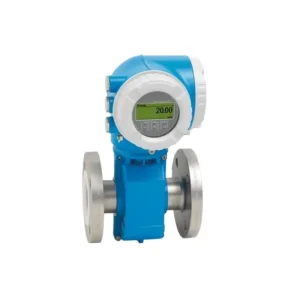
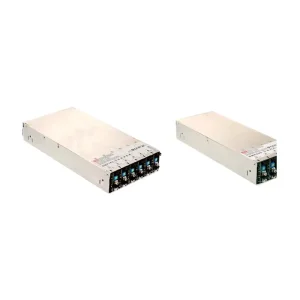
Furthermore, ensuring robust power supplies is vital. Highly customizable power solutions, like the Meanwell NMP Series configurable power supply, feature high dielectric isolation between input, output, and ground circuits. This isolation minimizes the transfer of switching noise onto the earth plane, protecting sensitive sensors (e.g., Datalogic distance sensors or Endress+Hauser flowmeters) from ground loops.
Your premier global supply chain partner specializing in industrial components, high-precision instrumentation, and OEM/ODM engineering solutions.
Machine-Win Technology Co., Ltd. is a professional and reliable international supply chain company specialized in providing a wide range of products for various industries. With extensive experience and a global network of suppliers, we excel in delivering high-quality products and satisfactory services. Our commitment to excellence, reliability, and customer satisfaction sets us apart as a preferred partner in the field of international trade.
We provide comprehensive sales, repair, and calibration services for top-tier global brands, including KEYSIGHT, R&S, TEKTRONIX, KEITHLEY, RIGOL, NI, MEGGER, DRUCK, YOKOGAWA, and ITECH. From cable testers to multimeters and process calibrators, we have you covered.
We supply brand-new, original electrical, electronic, and machinery spare parts from trusted manufacturers including MITSUBISHI, SIEMENS, SCHNEIDER, PANASONIC, OMRON, DELTA, WEINTEK, EMERSON, EATON, PHOENIX CONTACT, and more, streamlining your procurement loop.
We deliver specialized OEM/ODM services covering computing and IT accessories (Batteries, Adapters, Keyboards) and industrial packaging materials (POF shrink film). Our strategic sourcing reduces overheads while ensuring technical compliance.
Leveraging deep industrial relationships and supply chain optimizations to drive customer success.
Providing end-to-end support from sourcing to logistics. We distribute leading instrumentation portfolios including KEYSIGHT and R&S, ensuring full verification of your electrical installations.
We provide advanced test kits, analyzing network speeds, noise levels, and ground-loop integrity to guarantee your plant's communication backbone remains stable.
Our engineering division possesses decades of experience in sourcing, validation, calibration, and commissioning support for international projects.
Access genuine, brand-new mechanical and electrical parts. Avoid counterfeit risks through our direct OEM channels and certified export process.
Minimize procurement friction. Our global network allows us to negotiate bulk prices on raw materials, components, and heavy-duty machinery parts.
Operating across multiple time zones, our team is equipped to handle emergency spare parts requests and quick lead-time delivery demands.
As systems move toward the Industrial Internet of Things (IIoT) and industry 4.0 paradigms, grounding design is shifting from a passive installation to an active, monitored asset. Future-proofing your electrical infrastructure involves moving beyond manual earth resistance testing to real-time telemetry.
The next generation of grounding systems features embedded ground-impedance sensors that utilize the high-frequency clamp method to measure earth loop resistance without disconnecting the grounding electrode. These sensors communicate over industrial wireless protocols (e.g., WirelessHART, LoRaWAN) or wired Modbus links, feeding data directly to cloud-based predictive maintenance systems.
By correlating real-time soil moisture and temperature metrics with ground loop values, AI-driven diagnostics can forecast when a grounding rod array is approaching critical failure thresholds. For example, in dry seasons, an automated irrigation valve can be triggered to wet the soil backfill around the main grounding grid, keeping soil resistivity within safe design limits.
Expert answers to the most common questions regarding industrial earth grounding and precision diagnostics.
Select specialized equipment, tools, and sensors to implement and verify robust grounding grids.
 Machine-Win