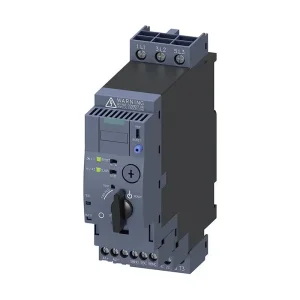
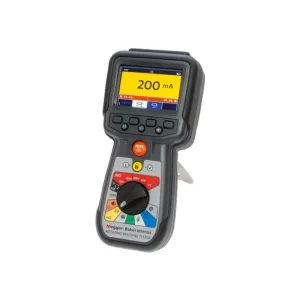
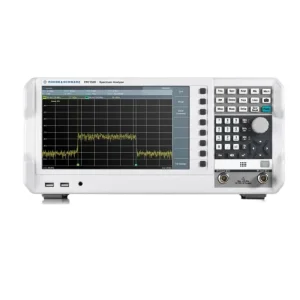
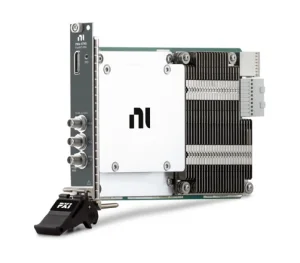
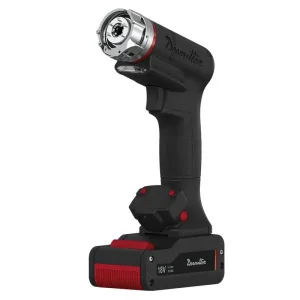
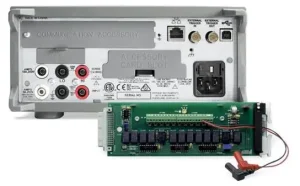
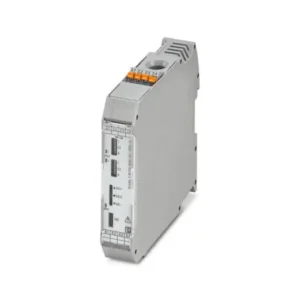
Explore our curated selection of original equipment starters, testers, switches, and analyzers sourced from market-leading industrial manufacturers.
Machine-Win Technology Co., Ltd. is a professional and highly reliable international supply chain enterprise specialized in providing a comprehensive range of high-precision testing, control, and measurement products for a vast array of industries. Driven by decades of specialized domain expertise and sustained by a robust, multi-tier global network of suppliers, we excel at delivering elite instrumentation products matched with uncompromising post-sales support.
Our strategic commitment to technical excellence, strict compliance verification, and transparent project coordination cements our standing as a preferred global ally in international trade, specialized equipment sourcing, and precision engineering deployment.

The contemporary electronics and electrical testing sectors demand unprecedented levels of accuracy, stability, and fast dynamic response from power instrumentation. A Precision DC Power Supply has transitioned from a fundamental lab instrument into a highly sophisticated, software-defined source-measure unit (SMU) and emulator. As industries move toward micro-power optimizations in IoT, high-voltage vehicle architectures, and sub-nanometer semiconductor processing nodes, the margins for noise, ripple, and voltage drift have shrunk to near-zero tolerances.
Globally, the market is categorized by two primary topologies: linear power supplies, known for their near-zero electromagnetic interference (EMI) and extreme noise purity, and switching-mode power supplies (SMPS), which offer high efficiency, density, and wide dynamic range. Modern industrial automation setups, chip characterization labs, and automated test equipment (ATE) setups rely on custom precision DC power supplies to emulate realistic and worst-case electrical environments, validating that modern designs can withstand fluctuation, transient overshoots, and micro-second dropouts.
Advanced testing procedures no longer decouple power sourcing from measurement. By incorporating internal high-resolution digitizers and digital-to-analog converters (DACs), customized precision supplies enable precise voltage sourcing alongside pico-ampere resolution current readback. This integration minimizes external wiring parasitic inductances, optimizes response feedback loops, and allows for clean sweep tests, I-V profiling, and transient analysis of delicate microelectronics, active sensors, and aerospace grade semiconductor arrays.
As technology marches forward, several primary drivers are shaping the engineering roadmap of custom precision DC power systems:
The adoption of Gallium Nitride (GaN) and Silicon Carbide (SiC) within switching networks allows power supplies to operate at higher frequencies. This minimizes physical component footprints, boosts efficiency above 95%, and yields ultra-fast transient responses, all while maintaining low ripple output.
Modern testing environments utilize virtual instruments. Through standard programming APIs (SCPI) over LXI, USB, and GPIB interfaces, test engineers script elaborate power profiles, simulate battery charge/discharge cycles, and execute rapid standard testing sequences dynamically.
Four-quadrant precision supplies (bipolar sources) operate both as power sources and active electronic loads. This bidirectionality is vital for testing energy-regenerative systems, motor drives, battery management systems (BMS), and highly inductive loads.
Across the globe, precision DC power supplies find unique applications tailored to local industrial strongholds, engineering requirements, and laboratory standards:
| Industry Sector | Core Requirement | Primary Tech Parameter | Application Focus |
|---|---|---|---|
| Semiconductor Fabrication & Test | Low-noise wafer analysis, low leakage current detection. | Sub-picoamp resolution (fA-level) | Wafer probing, silicon characterization, transistor switching evaluation. |
| Aerospace Avionics & Radars | Ultra-low ripple, high transient recovery, wide-temp survival. | <10 µs transient recovery, military standard compliance. | Flight control computers, satellite payload power simulation. |
| Automotive EV & BMS | High-voltage high-power emulation, regenerative sinking. | Up to 1500V, multi-rack master/slave operation. | Battery pack lifecycle degradation, motor inverter simulation. |
| Consumer Smart Devices | Continuous sleep-to-transmit dynamic power range tracking. | Fast seamless auto-ranging current measurement. | Wearable IoT diagnostics, RF transceiver module testing. |
Integrating hardware sourcing, calibration services, and custom design systems into a unified workflow designed to accelerate your operational velocity.
Providing sales, system repair, and certified calibration. We support and integrate premium platforms including KEYSIGHT, ROHDE & SCHWARZ, TEKTRONIX, KEITHLEY, RIGOL, NI, MEGGER, DRUCK, YOKOGAWA, and ITECH.
We configure custom industrial environments including network performance analysis and plant floor safety. Leveraging components like Panasonic tactile switches, Schmersal safety interlocks, and Siemens compact starters to guarantee robust operation.
Optimizing supply chain systems, mitigating component shortages, and reducing acquisition costs. From raw structural materials to specialized machinery spares like NACHI solenoid valves, we cover all integration aspects.
The roadmap for precision DC power supply design is closely aligned with the modernization of global electronics architectures. Over the next five years, development is expected to focus heavily on the following advancements:
Traditional precision power loops rely on analog error amplifiers to adjust and maintain voltage levels. The future lies in high-speed, DSP-driven digital feedback control loops. This permits firmware-based adjustments to compensation parameters on-the-fly, allowing a single power unit to shift its characteristics from powering a highly capacitive lithium battery pack to a fast-switching inductive solenoid without risk of oscillation.
As common-mode current leakage and noise interference pose challenges to sub-1V microprocessor rails, power supplies must deliver extreme isolation levels. Next-generation designs aim to push common-mode current down to single-digit nano-amps, eliminating spurious grounding paths and shielding sensitive units under test from external power-grid fluctuations.
Industrial testing facilities require systems that reduce operational costs and limit carbon footprints. Future bi-directional DC sources will utilize sophisticated grid-tied regenerative technologies, recovering up to 95% of absorbed load power during high-current discharges and returning it back to the facility grid, keeping ambient temperatures cool and minimizing utility bills.
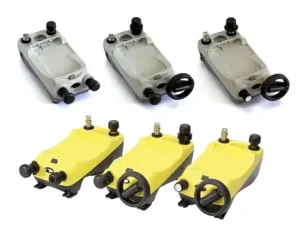
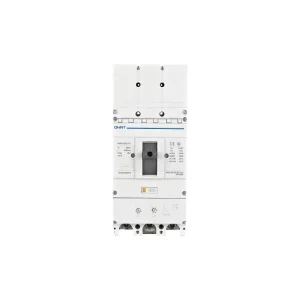
Examine our comprehensive collection of pressure calibration systems, circuit breakers, and auxiliary industrial modules.
 Machine-Win