Premium original electronics, measuring systems, and sensor technologies curated for global high-reliability supply chains.
Within high-performance industrial testing, product R&D laboratories, and manufacturing environments, Variable DC Power Supplies serve as the foundation of empirical validation. From testing sub-assembly microcircuits to verifying electric vehicle (EV) drivetrains, the capacity to supply clean, adjustable, and precisely regulated direct current is vital for ensuring operational stability.
For engineering leads and global procurement directors, navigating the landscape of Chinese manufacturers requires understanding the underlying hardware topologies, electrical parameters, and compliance standards. This comprehensive document analyzes technical trends, selection criteria, global trade dynamics, and specific hardware solutions deployed across advanced automation ecosystems.

Analyzing key shifts in hardware engineering, regulation efficiency, and software-defined integration.
Standard linear power architectures are being replaced by high-frequency, Switch-Mode Power Supply (SMPS) topologies utilizing Wide Bandgap (WBG) semiconductors like Gallium Nitride (GaN) and Silicon Carbide (SiC) to reduce thermal footprints.
Modern testing environments require LXI (LAN eXtensions for Instrumentation), GPIB, and USB connectivity. Advanced systems leverage SCPI command architectures to support automated test sequences (ATE) and digital twin virtualization.
For battery pack simulation and EV testing, variable power sources must function as both a programmable power supply (source) and an electronic load (sink), recycling energy back to the grid to optimize efficiency.
When selecting a variable DC power supply, key parameters must be analyzed to ensure the equipment meets laboratory or automated testing requirements. Standard specifications to consider include:
A high-quality variable supply operates seamlessly across both CV and CC modes. The crossover behavior must be clean, without voltage overshoot or current spikes that could damage sensitive Device Under Test (DUT) components. This is critical during high-speed transient load changes.
Periodic and Random Deviation (PARD) defines the quality of the DC output. Precision applications, such as semiconductor evaluation or wireless communications testing, require low ripple (typically < 1mV RMS or < 10mV peak-to-peak). Excessive noise can interfere with sensitive measurement circuitry.
Load regulation measures the supply's ability to maintain output voltage despite variations in load impedance. Line regulation measures stability relative to changes in the AC input voltage. Leading suppliers target line and load regulation specifications below 0.01% + 2mV.
This metric specifies the speed at which the output voltage recovers to its set value after a sudden step change in load current. For automotive and dynamic electronic systems, recovery times must remain under 50 microseconds to prevent reset loops or logic errors in the test setup.
Machine-Win Technology Co., Ltd. — Your integrated supply chain partner for test instruments, automation components, and engineering services.
Machine-Win Technology Co., Ltd. is a professional and reliable international supply chain company, specialized in providing a wide range of products for various industries. With extensive experience and a global network of suppliers, we excel in delivering high-quality products and satisfactory services. Our commitment to excellence, reliability, and customer satisfaction sets us apart as a preferred partner in the field of international trade. We integrate equipment, machines, and spare parts into one seamless service—your shortcut to business success.
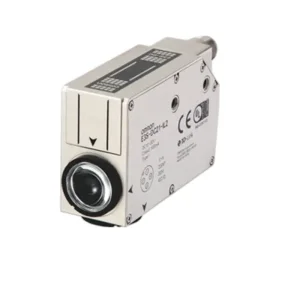
We are a strategic partner for original industrial electronics brands, delivering new, authentic equipment from Siemens, Mitsubishi, Schneider, OMRON, Keysight, and Rohde & Schwarz.
Our solutions span the full lifecycle, including verification, calibration traceable to international standards, and components restoration to maximize instrumentation longevity.
We supply custom adapters, power components, packaging materials, and custom-engineered mechanical components matching your specific industrial parameters.
Combining instrumentation hardware sales with systems integration and lifecycle support.
We provide a wide variety of top-tier brand instruments, including KEYSIGHT, R&S, TEKTRONIX, KEITHLEY, RIGOL, NI, MEGGER, DRUCK, YOKOGAWA, and ITECH, covering a range from oscilloscopes to high-precision power supplies.
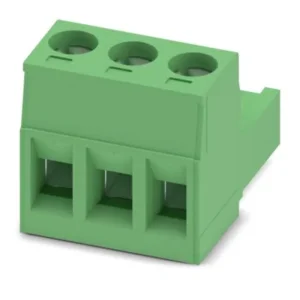
We source original industrial products covering electronics, electricals, machinery spare parts, hardware, tools, and raw materials. Key brands include Siemens, OMRON, Mitsubishi, Schneider, Delta, and Phoenix Contact.
We provide network testing solutions to help customers monitor performance, diagnose network bottlenecks, and keep communication channels stable across industrial infrastructures.
Our experienced engineering and customer-service teams assist with application-specific requests, system integration, configuration setup, and equipment commissioning.
We leverage our supply network to help customers locate high-quality, cost-effective industrial components, helping to optimize supply chains and reduce procurement cycles.
We support customer operations with continuous support, fast logistics processing, and rapid turnaround for urgent equipment needs.
How programmable and variable DC power solutions integrate into modern high-reliability applications.
Testing EV motors and battery management systems (BMS) requires high-voltage, high-power variable DC power supplies. Modern setups simulate battery discharge profiles, outputting voltages up to 1500V. Fast transient recovery and regenerative functionality are critical to absorb kinetic energy during motor braking phase testing.
Military and aerospace electronics rely on stable power inputs. Variable power supplies used in these areas must mimic standard aircraft power grids (e.g., 28V DC systems) and undergo testing for susceptibility to voltage sags, surges, and spikes. Systems must comply with aerospace quality testing directives like MIL-STD-704 and RTCA/DO-160.
In semiconductor fabrication, wafer-level burn-in and wafer-sorting require low-noise, multi-channel variable DC power outputs. Dynamic voltage scaling tests the operating limits of integrated circuits (ICs). Systems require millivolt-level control resolution and high-speed current monitoring to protect chips from latch-up events.
The development of power instrumentation toward digital control, efficiency, and automated system integration.
GaN and SiC materials are enabling higher switching frequencies in power supply stages. This reduces the footprint of inductors and capacitors, leading to more compact benchtop units and denser rackmount configurations.
Future test instrumentation will increasingly feature integrated IoT telemetry. Real-time logging of power profiles, temperature, and wear-and-tear parameters will assist laboratory managers in predictive maintenance planning.
On-board microprocessors running adaptive control algorithms will anticipate dynamic load changes. By dynamically adjusting feedback loops, power supplies will achieve very fast response times and clean output regulation under changing load conditions.
Technical guidance and solutions for common queries related to variable DC power supply selection, operation, and integration.
Extending across process instrumentation, electromechanical contactors, high-speed amplifiers, and diagnostic tools.
 Machine-Win