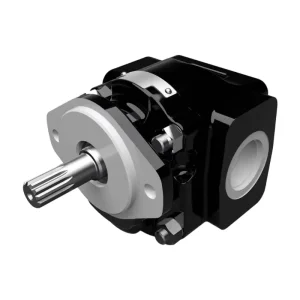
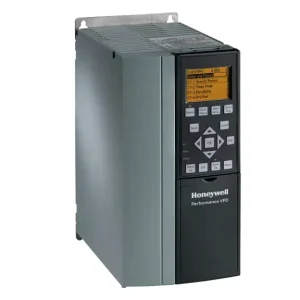
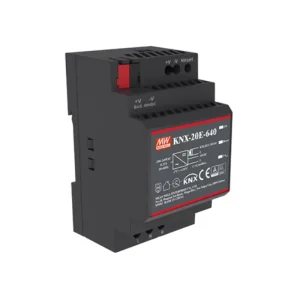
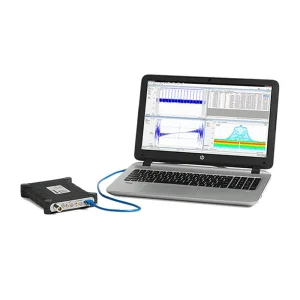
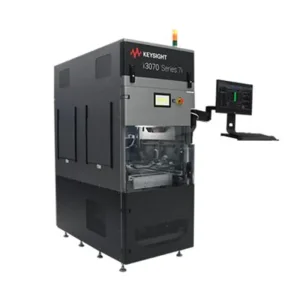
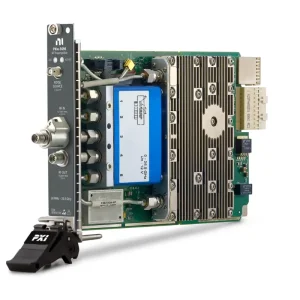
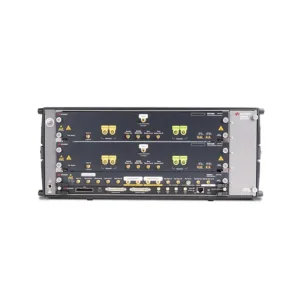
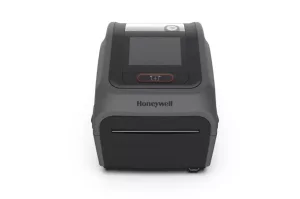
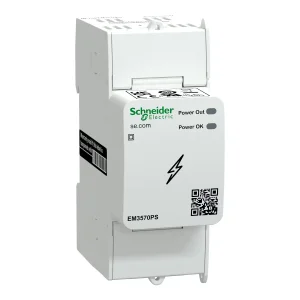
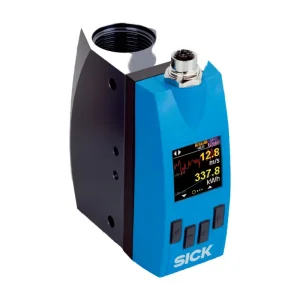
Explore our selected high-precision sourcing lineup featuring components, diagnostic devices, and measurement blocks.
An in-depth white paper on critical evaluation, sourcing strategies, and technical integration guidelines.
In the rapidly advancing landscape of high-frequency electronics, semiconductor manufacturing, and electric mobility, the demand for ultra-precise passive component evaluation is more critical than ever. The modern Digital LCR (Inductance, Capacitance, and Resistance) Meter is no longer just a benchtop tool; it is the cornerstone of Quality Assurance (QA), Research and Development (R&D), and high-throughput automated production lines. Choosing the right Digital LCR Meter manufacturer and supplier requires a deep understanding of measurement physics, operating frequencies, test signal levels, and system integration capabilities.
As components shrink and operating frequencies rise to the gigahertz range, parasitic parameters that were once negligible now dominate circuit behaviors. Digital LCR meters must perform swept-frequency impedance analysis to construct equivalent circuit models, enabling engineers to isolate ESR (Equivalent Series Resistance), ESL (Equivalent Series Inductance), and D (Dissipation Factor). This white paper provides industrial buyers, metrologists, and QA managers with a comprehensive blueprint for selecting high-accuracy instrumentation, optimizing procurement channels, and understanding emerging metrology technologies.
Technological forces driving the next generation of high-precision component testing instruments.
Modern MLCCs (Multi-layer Ceramic Capacitors) and power inductors operate in megahertz to gigahertz environments. Sourcing suppliers who provide analyzers with wide sweep capabilities (up to 120 MHz or higher) is critical for matching real-world operational frequencies.
Factory Automation (Industry 4.0) requires test instruments to seamlessly stream measurement data via SCPI commands over LAN, USB, or GPIB interfaces. Predictive failure detection models utilize LCR telemetry to identify drift in component assembly lines.
With power delivery networks (PDN) operating at low voltages and high currents, power supply decoupling capacitors require ESR values in the micro-ohm range. LCR meters must use phase-sensitive detection to isolate real resistance from massive capacitive reactance.
Critical factors procurement teams must evaluate before entering a Master Service Agreement (MSA) with a supplier.
Ensure your LCR meter supplier delivers units certified with ISO/IEC 17025 accredited calibration reports. Traceability to national standards (NIST or equivalent) is vital for defense, medical, and aerospace contract compliance.
MLCCs exhibit significant capacitance changes under different DC voltages. Sourcing LCR meters with internal or external DC bias sources (up to 40V or more) and choosing the correct four-terminal Kelvin test fixtures avoids measurement errors caused by lead inductance.
For high-volume manufacturing, the LCR meter must feature a Handler Interface (Handler port) to link directly with pick-and-place sorting machines. Look for trigger latency below 2ms to prevent manufacturing line bottlenecks.
Industrial sorting requires built-in binning software. High-quality LCR meters allow programmers to configure multi-bin sorting (e.g., Bin 1 to Bin 9, plus Out of Limit) based on nominal percentage tolerances.
A trusted global supply chain leader integrating test instruments, automation parts, and raw materials.
Machine-Win Technology Co., Ltd. is a professional and highly reliable international supply chain enterprise specialized in providing a comprehensive matrix of products across multiple industries. With decades of combined trade experience, technical engineering depth, and a robust global network of suppliers, we excel in delivering top-tier instruments, machinery components, and customized OEM/ODM industrial solutions. Our commitment to operational excellence, engineering support, and transparent logistics makes us the strategic partner of choice for industrial enterprises worldwide.
As your one-stop partner for electronic test equipment, Machine-Win provides sales, repair, calibration, and configuration services. We bridge the gap between premium global brands and your manufacturing floor, supplying brand-new, original systems from industry leaders including KEYSIGHT, ROHDE & SCHWARZ (R&S), TEKTRONIX, KEITHLEY, RIGOL, NATIONAL INSTRUMENTS (NI), MEGGER, DRUCK, YOKOGAWA, and ITECH. Our extensive portfolio covers everything from fiber optic and network testers to power quality meters, thermal imagers, oscilloscopes, and premium digital LCR meters.
We provide turn-key instrument sales, field calibration support, warranty management, and professional repairs. Additionally, we distribute industrial spare parts and electronics from premium manufacturers such as Siemens, Schneider, Mitsubishi, Delta, Phoenix Contact, and Emerson.
Enjoy end-to-end procurement peace of mind. We offer guaranteed original products, strict custom packaging, complete documentation, fast lead times via global logistics hubs, and robust technical support to resolve complex test challenges.
Through our close partnerships with global calibration labs and brand distributors, we secure high-allocation, hard-to-find test instruments. Our localized compliance assurance simplifies import/export processes across North America, Europe, and Asia-Pacific.
How Machine-Win optimizes your testing and engineering supply chains.
We supply, install, and calibrate top-tier brand instruments like KEYSIGHT and Rohde & Schwarz, ensuring they meet rigorous international laboratory standards upon arrival.
We offer specialized network testing software and systems, helping telecommunication and data center operators diagnose performance bottlenecks and ensure service level agreements (SLAs).
Our application engineers help you select the exact fixtures, cables, and frequency ranges for your digital LCR meters, reducing pre-sales selection risks.
Beyond metrology, we consolidate industrial spares, electrical controllers, PLCs, VFDs, and raw materials, cutting down your multi-vendor overhead.
We analyze your recurring spare parts usage to set up buffer stocks, coordinate consolidated ocean/air shipments, and lower international transport costs.
Our global customer support desks operate around the clock, providing fast quote turnarounds, shipping updates, and technical troubleshooting when your line stops.
Anticipating next-generation testing challenges in semiconductor materials and high-power applications.
The transition from Silicon (Si) to Wide Bandgap Semiconductors, such as Gallium Nitride (GaN) and Silicon Carbide (SiC), has pushed operating frequencies and power densities higher. Test systems must now characterize parasitics under high-voltage and high-current biases. The development roadmap for digital LCR meters focuses on mitigating phase angle errors at extremely high frequencies and high loss factors.
In addition, advanced materials testing requires measuring the dielectric constant and loss tangent of substrates and thin films under temperature-controlled environments. Future-proof LCR systems will integrate with environmental chambers, automating temperature sweeps while performing real-time calibration compensations (Open/Short/Load) at the probe tip to maintain 0.05% basic measurement accuracy.
Detailed technical explanations from our application engineers to help you select, calibrate, and operate impedance analyzers.
Explore our additional original industrial instrumentation and hardware components.
 Machine-Win