Pre-calibrated, high-accuracy instruments configured for Nagoya’s state-of-the-art battery R&D centers and cell-forming assembly lines.
Nagoya, the capital of Japan's Aichi Prefecture, stands as the epicenter of the global automotive manufacturing ecosystem. Home to major industry leaders such as Toyota Motor Corporation, Denso, and their massive supplier networks, the Chubu region has evolved rapidly from combustion engine integration to advanced electrification, solid-state battery development, and high-performance energy storage systems.
Consequently, the demand for high-reliability battery analyzers, chemical cycle test benches, and signal digitizing systems has skyrocketed. R&D centers in Nagoya require precision equipment that can accurately test State of Charge (SoC), State of Health (SoH), internal resistance via Electrochemical Impedance Spectroscopy (EIS), and long-term degradation kinetics under varying thermal conditions. Machine-Win Technology Co., Ltd. fills this vital niche, acting as the premier exporter and supply partner for international testing compliance and global procurement.
As the electric vehicle sector shifts toward solid-state and high-silicon anode chemistries to increase energy density, the diagnostic requirements have changed dramatically. Modern battery analyzers must capture microsecond-level transients, voltage fluctuations during pulsed discharge cycles, and high-frequency noise that indicates mechanical micro-fractures inside the cell. Our Nagoya battery analyzer exports are customized to withstand high current outputs while maintaining ultra-low noise thresholds, enabling advanced developers to isolate cell-level behavior with unmatched accuracy.

Meeting international testing standards (IEC, UL, JIS) requires a harmonious combination of industrial PLCs, high-resolution oscilloscopes, and sensitive ambient control loops.
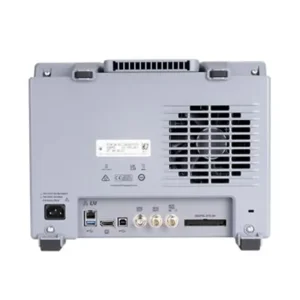
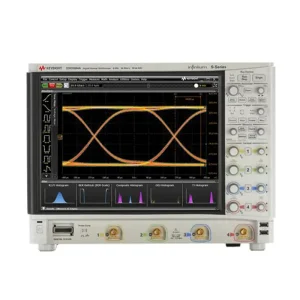
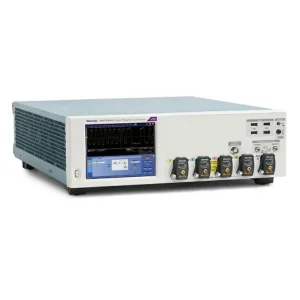
Equipped with sub-nanosecond transient capture, high bandwidth, and multi-channel synchronization (Keysight, Tektronix) to analyze battery management system (BMS) bus communication and fast charging pulses.
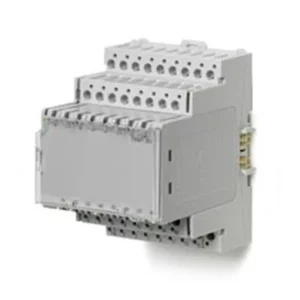
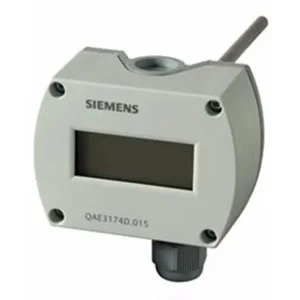
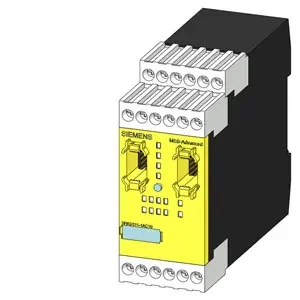
Integrating immersion sensors and safety-rated PLCs (Siemens) to monitor battery module cooling loops. Essential for predicting and preventing thermal runaway conditions in battery chemistry R&D.
Ensuring battery testing frameworks fully adhere to UN 38.3 (transport safety), IEC 62619 (industrial lithium batteries), and JIS C 8715 (Japanese domestic energy storage safety standards).
Machine-Win Technology Co., Ltd. is a highly professional and reliable international supply chain enterprise. We specialize in providing testing solutions and high-demand components for battery pack manufacturers, research institutions, and industrial automation players worldwide.
Acting as a central strategic sourcing partner, we supply brand-new, original measurement equipment, electronic control systems, safety relays, and high-precision sensors from premium brands. We streamline procurement, manage calibration parameters, and coordinate global logistics from Nagoya to gigafactories across North America, Europe, and Asia.
Get Technical ConsultationHelping manufacturers lower integration costs, streamline testing cycles, and assure product conformity.
From initial sourcing to localized calibration and software provisioning, we offer end-to-end integration. Eliminate multi-vendor headaches and align your testing setups under a single compliance strategy.
We only supply 100% brand-new, original industrial products accompanied by trace certification. Guard your battery testing infrastructure against counterfeit parts that compromise test validity.
Leveraging Nagoya’s robust industrial corridors and our global distributor relationships, we secure components at optimal cost-efficiency. Lower lead times even during global component shortages.
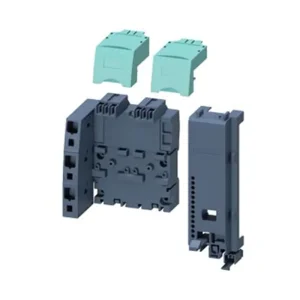
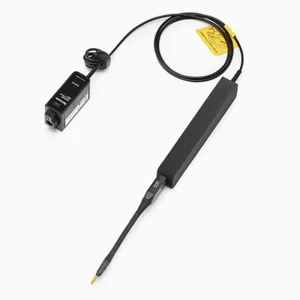
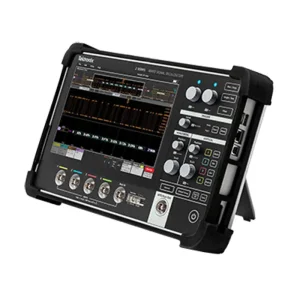
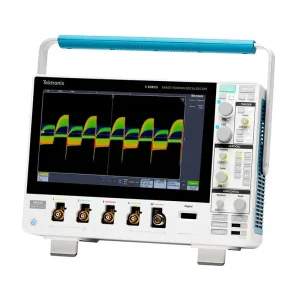
Precision oscilloscopes, safety relays, infeed modules, and current probes designed for battery life cycle analysis.
In-depth technical answers addressing common challenges faced by engineering procurement managers when selecting high-precision battery diagnostic hardware.
Automotive battery packs contain hundreds of cells connected in series and parallel. When diagnosing these packs, micro-volt variations can indicate impedance imbalances, internal short-circuits, or localized thermal degradation. If the test instruments have poor resolution or high electromagnetic interference (EMI), these subtle signals are lost. Devices like the Keysight and Tektronix high-definition oscilloscopes are crucial because they offer high bit-depth and low-noise front-ends, allowing battery researchers to observe micro-level transient anomalies during fast-charging cycles.
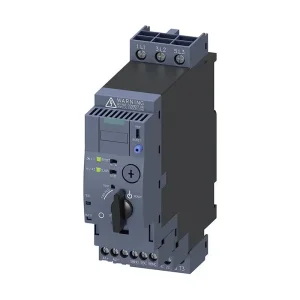
During formation and cycle testing, battery cells can release gas or undergo thermal runaway due to defects. High-reliability safety components, such as the Siemens 3RK3 modular safety relay and SIRIUS 3RA6120 starters, guarantee that if a temperature threshold is exceeded (measured by immersion sensors like the QAE3174D), the power line will shut down in milliseconds. Siemens safety systems integrate seamlessly with main PLC structures, preventing catastrophic battery failures from damaging test benches or factory property.
Japan has strict compliance criteria regarding electrical safety (PSE marking), EMI (VCCI), and general quality assurance. Furthermore, local manufacturing facilities require precise calibration certificates and traceability to national standards. Machine-Win Technology Co., Ltd. resolves these issues by coordinating all required customs filings, ensuring compliance with Japanese domestic voltage and safety regulations, and delivering pre-calibrated machinery ready for immediately validated integration into local R&D workflows.
Yes. Battery cell topologies, module form factors (cylindrical, prismatic, pouch), and BMS connector styles vary widely by automotive manufacturer. We supply not only the primary test hardware (like Keysight and Tektronix scopes) but also tailored cabling harnesses, switching systems, infeed systems (such as the Siemens 3RV2907), and interface adapters to match custom test rig layouts, ensuring minimal impedance and error-free signal transmission.
EIS injects low-amplitude AC currents across a wide spectrum of frequencies to measure a battery's complex impedance. By analyzing the resulting Nyquist plots, researchers can separate the electrical resistance of the electrolyte, anode/cathode charge transfer rates, and lithium-ion diffusion within the electrode structure. Accurate high-frequency signal generators and phase-locked analyzers are essential to isolate these parameters, which serve as early warning indicators of battery aging and potential cycle failure before any physical swelling or thermal changes manifest.
Whether you are designing a high-capacity solid-state production line in Toyota City, establishing a new R&D lab in central Nagoya, or sourcing components for an international testing facility, our technical experts are standing by to assist you.
Send Inquiry Now Machine-Win