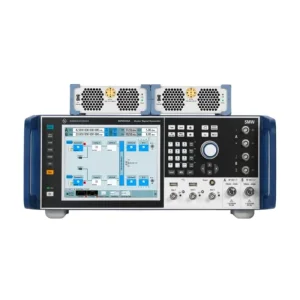
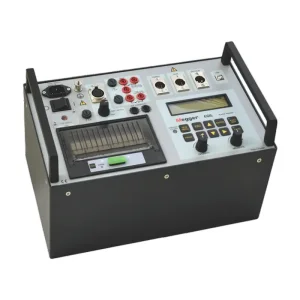
Explore our selected high-precision signal transmitters, measurement instruments, and specialized equipment from global leaders.
Modern electrical engineering requires fast, precise, and highly portable testing equipment. As laboratories move away from bulky benchtop systems, USB-powered instruments have become crucial. A USB Arbitrary Waveform Generator (AWG) acts as a primary signal source, helping engineers recreate complex real-world analog waveforms directly from a PC interface. This bridge between computer software and hardware testing changes how we design and test electronics.
Information Gain Insight: Unlike standard function generators limited to sine, square, and triangle waves, arbitrary waveform generators allow engineers to load custom data points. This helps simulate real-world noise, sensor dropouts, and signal degradation over a compact, USB-powered interface.
The rise of high-speed data transmission, advanced automotive sensors, and modern communications has highlighted the limits of traditional signal sources. Modern testing demands generators that can handle custom modulation, emulate complex physical phenomena, and fit into automated test setups easily. USB AWGs meet these needs by shifting user interface controls and waveform design to PC software, keeping the hardware compact and cost-effective.
By using high-speed digital-to-analog converters (DACs), large memory buffers, and advanced FPGA architectures, these devices deliver high-quality signals directly to your workbench. For manufacturers and industrial users, choosing the right supplier ensures access to equipment that maintains high standards for signal integrity, low phase noise, and reliable performance.
To choose the right USB arbitrary waveform generator supplier, you need to look beyond marketing terms. The true value of a generator lies in its internal design and component selection. Manufacturers focused on high performance balance three main technical parameters:

For procurement officers and R&D managers, evaluating a manufacturer involves checking more than just a datasheet. Reliable vendors must provide comprehensive calibration documents, demonstrate clean manufacturing processes, and offer robust software integration. USB generators should work seamlessly with major programming environments like LabVIEW, MATLAB, C++, and Python. The software suite must allow users to import CSV or binary waveform files easily, convert complex mathematical formulas into physical outputs, and control multiple units synchronously.
How USB Arbitrary Waveform Generators are used across different industries to simplify verification and testing.
Modern vehicles rely on complex electronic control units (ECUs). Engineers use USB AWGs to simulate signals from camshaft sensors, wheel speed sensors, and throttle bodies. This allows lab testing of ECUs under various conditions, including physical faults and sensor failures, without requiring actual vehicles.
By pairing USB AWGs with external IQ modulators, test labs can generate advanced communication standards like QAM, OFDM, and customized 5G protocols. The small form factor of these generators makes it easy to integrate them into distributed RF transceiver test systems.
Universities and research facilities need versatile tools that fit a variety of experimental setups. USB waveform generators turn student workstations into complete electronics labs, saving space and cost while providing advanced capabilities like custom noise injection and pulse generation.
For field testing in aerospace, equipment needs to be rugged and highly portable. USB-powered instruments allow technicians to run diagnostics inside cockpits or at remote radar installations, eliminating the need to haul heavy, rackmount signal generators.
Medical electronics like ECG monitors, pacemakers, and ultrasound equipment require highly precise test inputs. Using arbitrary waveform generators, testing departments can output exact cardiac anomalies or sensor patterns to ensure patient monitoring systems trigger alarms accurately.
For chip testing before mass production, USB generators provide arbitrary signals to sweep input voltage levels, test power margins, and perform margin analysis on high-speed digital buses, ensuring silicon designs work reliably in real-world environments.
Machine-Win Technology Co., Ltd. is a professional, reliable, international supply chain partner specializing in sourcing high-quality products for diverse industrial sectors. With extensive industry experience and a robust global supplier network, we deliver genuine, high-performance equipment, components, and custom OEM/ODM solutions tailored to modern engineering demands.
We operate as a single point of contact for instrument sales, repair, and calibration, alongside industrial networking and automation solutions. We support top brands including KEYSIGHT, ROHDE & SCHWARZ, TEKTRONIX, KEITHLEY, RIGOL, NI, MEGGER, DRUCK, YOKOGAWA, and ITECH. From cable testers and network analyzers to advanced arbitrary signal generation, we connect top industrial manufacturers with global markets.
Connect with Sourcing ExpertsThe USB Arbitrary Waveform Generator market is changing as testing needs become more complex and computer interfaces evolve. Knowing these trends helps procurement teams make future-proof purchasing decisions.
Older USB AWGs relied on USB 2.0 or USB 3.0 Type-B interfaces, which could limit data rates when transmitting large arbitrary tables. The transition to USB Type-C and USB4 allows data speeds up to 40 Gbps. This bandwidth permits real-time streaming of large waveforms without relying heavily on internal memory, bridging the gap between PC software and hardware output.
Modern testing labs are shifting toward software-defined instruments. This architecture uses simple hardware focused on digital-to-analog conversion and signal conditioning, while a connected PC handles configuration and wave generation. Future setups will allow engineers to design waveforms in cloud environments and deploy them to hardware units located globally, simplifying collaborative design and remote testing.
One challenge with USB-powered instruments has been ground loop noise from the host PC. Manufacturers are addressing this by integrating galvanic isolation barriers between the USB controller and the analog generation stages. This keeps high-frequency PC digital noise away from sensitive analog circuits, resulting in a lower noise floor and cleaner test signals.
Get answers to common technical and sourcing questions about arbitrary signal generators.
A Direct Digital Synthesis (DDS) Function Generator creates a preset set of periodic signals (sine, square, triangle, etc.) by reading a fixed-length lookup table. An Arbitrary Waveform Generator (AWG) allows you to define every individual sample point, giving you the flexibility to generate custom, non-periodic waveforms, simulate noise, or reproduce captured real-world waveforms.
A PC's switching power supply can introduce high-frequency noise through the USB ground connection. If the generator lacks built-in galvanic isolation, this ground noise can affect the analog output. For sensitive test setups, it is best to choose a USB AWG that features isolated ground architectures.
Yes. Many professional-grade USB AWGs include reference clock input/output channels (typically 10 MHz) and trigger synchronization connections. This allows you to chain multiple units together and align their phases for multi-channel applications, such as MIMO or 3-phase power simulation.
Most reputable manufacturers supply a dedicated GUI application for basic setup and waveform drawing. For automated testing, they provide DLL/IVI drivers and API support for languages like Python, C#, LabVIEW, and MATLAB, making it straightforward to integrate the instrument into custom test environments.
Explore our additional offerings, ranging from medium voltage drives to software-defined radio hardware, ensuring high supply reliability.
 Machine-Win