Home >
Battery analyzers >
China Tektronix Active Power Rail Probes TPR1000 and TPR4000 Suppliers, Product
1 / 3
China Tektronix Active Power Rail Probes TPR1000 and TPR4000 Suppliers, Product
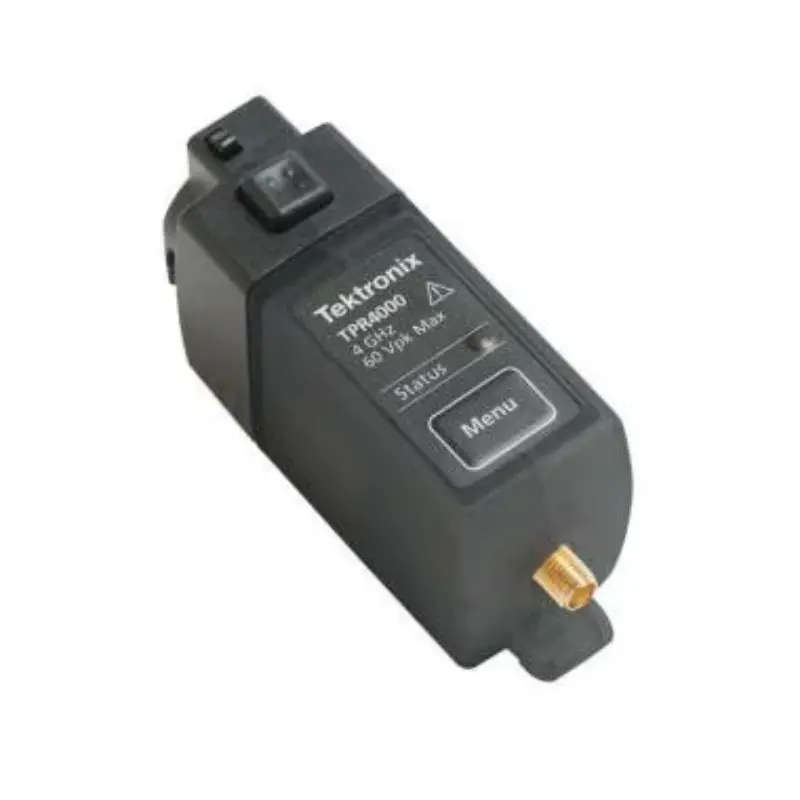
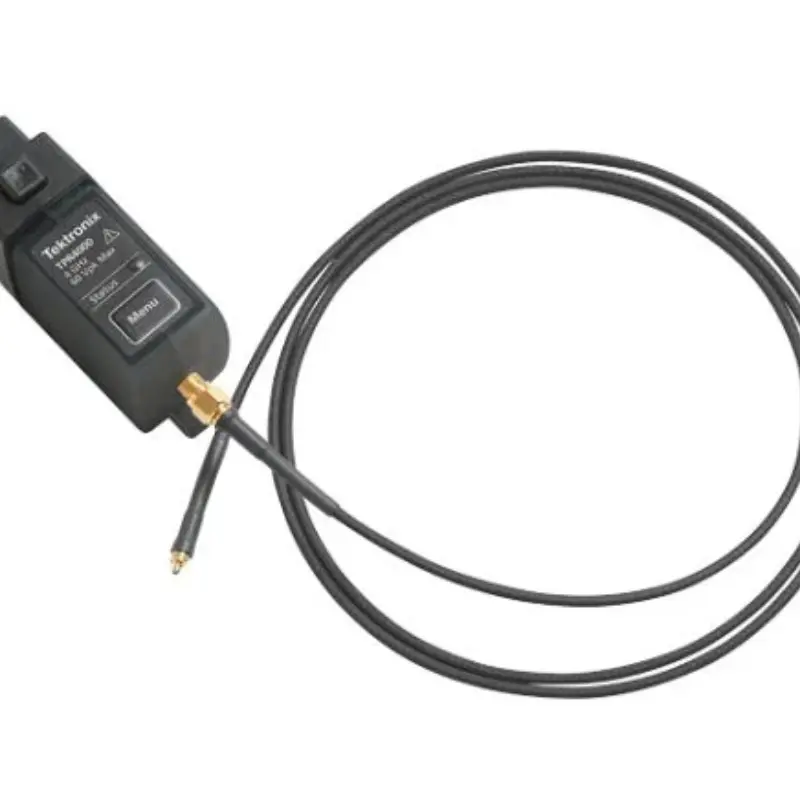
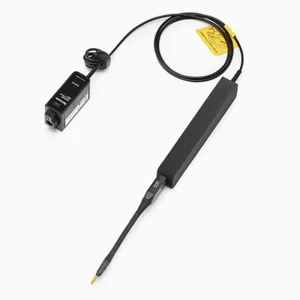
Tektronix TPR1000 and TPR4000 are high-performance active power rail probes designed to solve critical measurement challenges in modern electronic systems—specifically targeting the accurate detection of AC ripple, noise, and voltage fluctuations on DC power rails.
TPR1000 and TPR4000 are high-performance active power rail probes designed to solve critical measurement challenges in modern electronic systems—specifically targeting the accurate detection of AC ripple, noise, and voltage fluctuations on DC power rails. Tailored for power integrity engineers, hardware designers, and test professionals in automotive, industrial, consumer electronics, and high-speed digital industries, these probes address the limitations of traditional oscilloscope probes (e.g., insufficient offset range, high noise, poor bandwidth) when measuring low-voltage, high-frequency power rails.
Core Positioning: Solving Modern Power Rail Measurement Pain Points
As electronic devices become more compact, high-speed, and low-power (e.g., 5G chips, EV controllers, mobile processors), DC power rails operate at lower voltages (often <5V) with tighter tolerances. Traditional probes struggle to:
Isolate small AC ripple (200 μVp-p to 800 mVp-p) from large DC offsets (up to ±60 VDC);
Capture high-frequency noise (up to 4 GHz) without introducing probe-related interference;
Minimize loading effects on sensitive power rails.
The TPR1000/TPR4000 resolve these issues with a low-noise, high-offset, wide-bandwidth design, enabling precise characterization of power rail integrity—critical for preventing system instability, data errors, or component failure.
Compatibility with Oscilloscopes
The TPR1000/TPR4000 integrate seamlessly with a wide range of oscilloscopes to maximize usability:
Compatible models: 6 Series MSO, 5 Series MSO, 4 Series MSO, 3 Series MDO, MDO3000, MDO4000C, MSO/DPO5000B, DPO7000C, DPO70000C/DX/SX;
Special Notes
MDO3000/MDO4000C: Software incompatibilities reduce measurement accuracy at vertical scales <2 mV/division (full accuracy maintained at ≥2 mV/division);
DPO70000 Series: Requires the optional TCA-VPI50 adapter for connection.
Typical Applications
These probes excel in scenarios where power rail integrity directly impacts system performance or safety:
Automotive & EV: Probing power rails for ADAS chips, EV battery management systems (BMS), and infotainment controllers to detect ripple that could disrupt sensor signals or communication.
Industrial Electronics: Testing power supplies for PLCs, motor drives, and industrial sensors—ensuring noise does not affect precision control.
Consumer & Mobile Devices: Characterizing power rails for smartphones, laptops, or IoT devices, where low noise is critical for battery life and signal integrity (e.g., memory, Ethernet connectivity).
High-Speed Digital Systems: Analyzing noise coupling between power rails and high-speed data paths (e.g., PCIe, DDR5) to prevent data corruption.
Parameter
Details
Bandwidth
TPR1000: 1 GHz TPR4000: 4 GHz
Offset voltage range
±60 V
Dynamic range
±1 V
Input resistance
50 kΩ DC 50 Ω AC
Input coupling
DC, LF reject
Accuracy
1 mV
System noise (typical)
<165 μVP-P (with 20 MHz bandwidth limit) <1.3 mVP-P (at full bandwidth of oscilloscope) Using 6 Series MSO oscilloscopes. With grounded input and maximum sensitivity set to 1.3 mV/Div.
Attenuation
1.25x Frequency response optimized for <1 Ω source impedance.
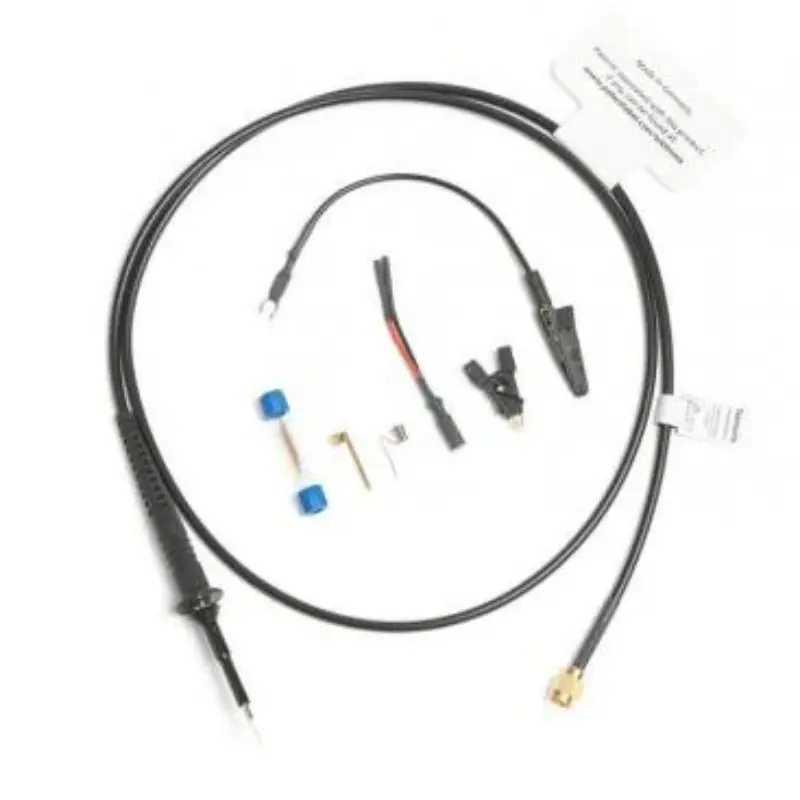
Connectivity and accessories
New browser, solder-in and snap-on
Models: Active Power Rail Probes TPR1000 and TPR4000
Delivery information typically includes delivery times, shipping methods, packaging, etc., which may vary depending on the seller and the location of purchase.
Active Power Rail Probes TPR1000 and TPR4000 Datasheet.pdf
Download
Frequently Asked Questions
Q1: What are the main differences between the TPR1000 and TPR4000 probes?
A1: The primary difference is the bandwidth: the TPR1000 supports up to 1 GHz, while the TPR4000 supports up to 4 GHz. Both offer high offset voltage range and dynamic range capabilities.
Q2: What is the offset voltage and dynamic range capability of these probes?
A2: Both probes support an offset voltage range of ±60 V and a dynamic range of ±1 V. This allows testing of small AC ripples on large DC power rails.
Q3: Are there any specific limitations when using these probes with MDO3000 or MDO4000C oscilloscopes?
A3: Yes, software incompatibilities reduce measurement accuracy at vertical scales below 2 mV/division. Full accuracy is maintained at scales of 2 mV/division or higher.
Q4: What typical applications benefit most from the TPR1000 and TPR4000?
A4: They are ideal for automotive & EV applications (ADAS, BMS), industrial systems (PLCs, motor drives), consumer mobile devices, and high-speed digital systems checking noise coupling on data paths (like PCIe or DDR5).
Q5: What are the input resistance and coupling options of these probes?
A5: The probes feature an input resistance of 50 kΩ DC and 50 Ω AC, with DC and LF reject input coupling options to optimize system measurements.
Q6: What connection options and accessories are provided?
A6: These probes support connectivity via a new browser, solder-in, and snap-on methods to accommodate different testing environments.
 Machine-Win