Reliable precision instrumentation and premium industrial systems sourced globally to ensure faultless signal testing and power management across high-performance vehicle bus nodes.
Machine-Win Technology Co., Ltd. is a professional and reliable international supply chain company, specialized in providing a wide range of products for various industries. With extensive experience and a global network of suppliers, we excel in delivering high-quality products and satisfactory services. Our commitment to excellence, reliability, and customer satisfaction sets us apart as a preferred partner in the field of international trade.
We act as a critical bridge between international engineering departments and high-specification electronic systems, supplying raw components alongside high-end measurement systems essential for testing Vehicle Communication Buses. Our cross-disciplinary platform streamlines testing, validation, and production integration, reducing time-to-market for Tier-1 suppliers and OEMs globally.
A comprehensive overview of modern in-vehicle networks and how Machine-Win Technology supports calibration, testing, and component supply across key automotive protocols.
Modern automobiles are increasingly becoming datacenters on wheels. High-definition ADAS sensors, real-time drive-by-wire mechanics, and high-fidelity infotainment systems demand reliable and robust communication systems. A vehicle communication bus constitutes the physical and logical network architecture designed to manage exchange speeds, reliability parameters, and functional safety profiles among various Electronic Control Units (ECUs).
Historically, the controller area network (CAN) served as the primary nervous system of the vehicle. Today, modern architectures deploy a heterogeneous mix of protocols ranging from Low-Speed LIN networks to High-Speed Automotive Ethernet, necessitating complex gateway integration and testing regimes.
The standard protocol for real-time powertrain control and diagnostics. CAN FD (Flexible Data-rate) ups bandwidth to 5-8 Mbps, demanding precise impedance matching and signal integrity testing.
A cost-effective, single-wire sub-bus protocol operating up to 20 kbps. Ideal for comfort systems, smart mirrors, climate controls, and simple actuator nodes.
Covering IEEE standards like 100BASE-T1 and 1000BASE-T1, supporting multi-gigabit backbones for ADAS cameras, LiDAR arrays, and domain controllers.
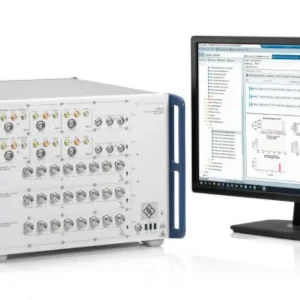
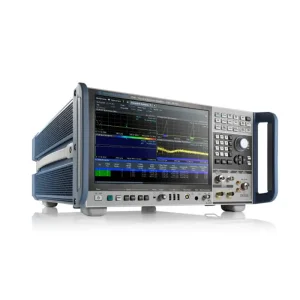
In-vehicle communication networks cannot function in isolation. Developing them requires robust instrumentation for validation. This is where Machine-Win bridges the gap. By acting as a strategic supply partner for instruments from manufacturers like KEYSIGHT, ROHDE & SCHWARZ, TEKTRONIX, and MEGGER, we provide the test hardware needed to measure electromagnetic compatibility (EMC), signal integrity (jitter and noise), and protocol conformance.
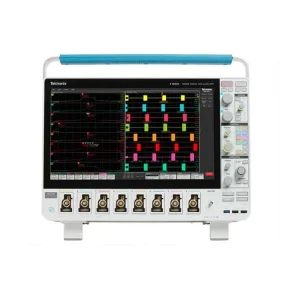
For instance, design engineers utilize high-performance oscilloscopes (such as the Tektronix MSO58B) and high-speed Bit Error Rate Testers (BERT, like Keysight M8050A) to map signal eye diagrams for Automotive Ethernet systems. This prevents packet losses that could lead to sensor data anomalies inside autonomous vehicles.
As automotive designs shift towards central computing systems, sourcing high-spec hardware requires deep engineering domain expertise and verified, original channels. We don't just ship boxes; we coordinate multi-vendor equipment packages that streamline your prototyping, validation, and factory maintenance processes.
In-vehicle network infrastructure must adhere to strict functional safety and reliability standards to prevent mechanical faults. System nodes built for global deployment require validation according to regional standards:
The transition from domain-based ECU structures to centralized Zonal Architectures is reshaping the automotive supply chain. Legacy vehicle bus systems are increasingly being relegated to sub-system control nodes (e.g., doors, seats, tailgates), while primary data backbones migrate to 10G+ Time-Sensitive Networking (TSN) Automotive Ethernet. Machine-Win Technology closely monitors these supply dynamics, stocking the high-speed testing instruments and PCBA assembly capabilities necessary to test the next generation of smart in-vehicle gateways.
Discover how our core divisions work synergistically to cover your industrial supply and instrument validation needs.
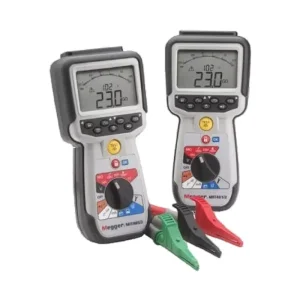
Full-spectrum sales, precision calibration, and diagnostic repair services for industry-standard tools (Keysight, R&S, Tektronix, Megger, Yokogawa, etc.).
Analyzing and optimizing complex Ethernet, optical fiber, and legacy serial bus performance to maintain data integrity across factory floors and vehicles.
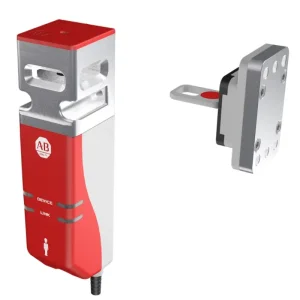
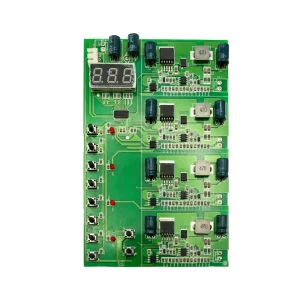
Custom PCB designs, specialized PCBA layout, cabling, components procurement, and mechanical parts execution based on detailed manufacturing criteria.
Insights from our engineering and global supply experts on selection, validation, and support programs.
CAN (and CAN FD) operates as a multi-drop bus system where nodes share a common transmission line, offering speeds up to 5-8 Mbps. It uses priority-based arbitration and is highly robust for core powertrain applications. Automotive Ethernet (such as 100BASE-T1) is a point-to-point switch-based network capable of gigabit-level throughput, utilizing single-pair unshielded twisted pair cabling. Ethernet is chosen for high-bandwidth telemetry, camera arrays, and system-level computing.
All test and measurement equipment supplied by Machine-Win is certified original and sourced directly or through official partner channels. We offer full calibration services traceable to international standards (NIST/ISO/IEC 17025), ensuring that your oscilloscopes, network analyzers, and signal analyzers deliver exact compliance ratings before deployment.
Yes. Through our specialized OEM/ODM PCBA and assembly services, we manufacture custom electronic sub-assemblies, multilayer circuit board designs, and wiring harness interfaces tailored to bridge standard laboratory instrumentation with your specific vehicle bus architectures.
As network speeds exceed 1 Gbps (Automotive Ethernet), electromagnetic interference (EMI) can corrupt high-speed communication packets. A Bit Error Rate Tester (BERT), like the Keysight M8050A, allows design teams to evaluate the receiver sensitivity of automotive transceivers and physical interfaces by running precise pattern tests under realistic noise levels, proving long-term signal robustness.
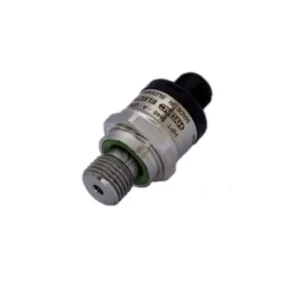
Maximize production line performance and testing efficiency with our comprehensive portfolio of electrical, sensor, and RF measurement equipment.
 Machine-Win