Select premium signal generation systems, multi-channel oscilloscopes, and synchronized hardware components sourced from global tier-1 manufacturers.

Signal generation is the cornerstone of modern electronic validation, serving crucial roles in R&D, product testing, and academic laboratories. The concept of a DIY function generator has undergone a dramatic evolution. Originating from basic analog circuits relying on monolithic ICs such as the classic XR2206 or ICL8038, the DIY paradigm has transitioned into highly advanced digital synthesis architectures. Today's DIY enthusiast, academic researcher, and industrial prototype engineer utilize Direct Digital Synthesis (DDS) chips, high-speed Digital-to-Analog Converters (DACs), and FPGA micro-architectures to construct custom waveform engines capable of competing with entry-level industrial instrumentation.
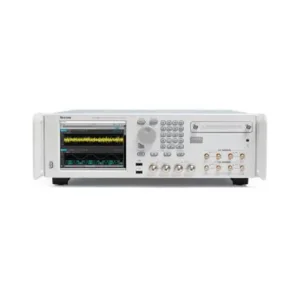
In standard DIY function generators, DDS is the prevailing technology. By employing a phase accumulator, a lookup table containing sine wave values, and a high-resolution DAC, DDS systems synthesize highly accurate, programmable frequencies. This technology allows developers to build low-cost kits that generate sine, square, triangle, and ramp waveforms. However, DIY implementations face critical limitations when subjected to rigorous measurement standards. Jitter, phase noise, harmonic distortion, and reconstructed signal bandwidth limit the effectiveness of custom-built boards. In comparison, ultra-premium commercial systems like the Keysight AWG70000B Arbitrary Waveform Generator operate on high-speed DACs running at tens of Gigasamples per second (GSa/s), resolving complex signal modulations necessary for high-frequency RF and quantum computing verification.
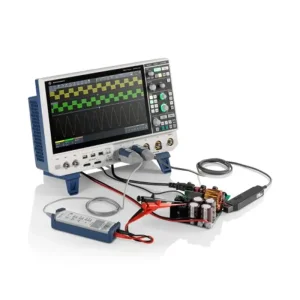
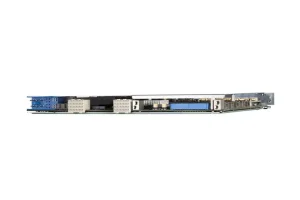
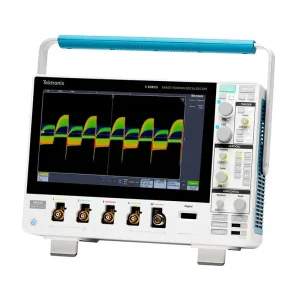
Modern laboratories increasingly rely on a hybrid model that merges DIY, customized micro-controller boards (used to mimic end-use IoT devices) with professional verification systems. Engineers build specialized signal pathways using custom interfaces, then analyze the resulting wave vectors utilizing devices such as the Rohde & Schwarz R&S MXO 4 Oscilloscope. This integration enables real-time physical-layer diagnostic tests that isolate electromagnetic interference (EMI), clock skew, and phase imbalances. The synchronization of such systems requires dedicated modules, such as the Keysight M8192A Module for Multi-Channel Synchronization, ensuring phase-coherent signals across multiple channels, which is highly critical in beamforming, radar testing, and MIMO antenna setups.
Machine-Win Technology Co., Ltd. is a professional and reliable international supply chain company, specialized in providing a wide range of products for various industries. With extensive experience and a global network of suppliers, we excel in delivering high-quality products and satisfactory services. Our commitment to excellence, reliability, and customer satisfaction sets us apart as a preferred partner in the field of international trade.
Machine-Win is your one-stop partner for instrument sales, repair, and calibration, as well as network testing solutions. We offer top-tier brands like KEYSIGHT, R&S, TEKTRONIX, KEITHLEY, RIGOL, NI, MEGGER, DRUCK, YOKOGAWA, ITECH, etc., covering a wide range from cable testers, fiber optic testers, and network analyzers to power quality meters, infrared thermometers, thermal imagers, multimeters, clamp meters, process calibrators, resistance testers, environmental detectors, laser rangefinders, vibration meters, oscilloscopes, etc. We maintain strong partnerships with leading manufacturers and officials.
Connect with Supply Chain Experts
• One-stop instrument solutions: sales, repair, and calibration.
• Professional network testing setups.
• Wide-ranging inventory of original electronics, machinery, and mechanical parts.
• OEM/ODM technical developments and strategic multi-region sourcing.
• Hassle-free end-to-end support from acquisition to calibration.
• Guaranteed genuine components with strict QA procedures.
• Customized configurations to reduce operation costs.
• Secure, on-time delivery across international boundaries.
• Proven industrial trade experience and engineering support.
• Commitment to structural integrity and supply chain transparency.
• Tailored logistics protocols to meet strict regional requirements.
• Decades of professional experience handling high-value precision electronics.
In addition to electrical test instrumentation, Machine-Win acts as a strategic ally for brand-new, original industrial brands covering electronics, electricals, machinery spare parts, hardware tools, and raw materials. We source from trusted manufacturers such as MITSUBISHI, SIEMENS, SCHNEIDER, PANASONIC, OMRON, DELTA, WEINTEK, EMERSON, EATON, PHOENIX CONTACT, and more, delivering robust solutions for your complex industrial ecosystems. Furthermore, we deliver tailored OEM/ODM solutions for many areas, like IT & Computing accessories including battery products, chargers, keyboards, workshop production assembly lines, and high-performance POF shrink film packaging materials.
Enterprise procurement departments face growing challenges when acquiring precision instrumentation. Modern electronics design demands signals that operate in high-frequency spectrums with near-zero noise thresholds. As custom integration increases, organizations require robust signal generators that support both legacy analog systems and complex cloud-enabled validation procedures. The demand for multi-channel synchronization, low phase distortion, and cross-platform compatibility has shifted procurement behavior toward multi-brand consolidators who can guarantee both genuine products and timely calibration services.
Enterprises are consolidating their test and measurement supply chains to mitigate risk. Working with a single, multi-brand partner like Machine-Win ensures compliance, standardized shipping procedures, and consistent technical documentation.
Modern automated test environments (ATE) require instrument integration through systems like PXI, LXI, and USB. High-volume semiconductor fabs require reliable hardware interfaces that communicate seamlessly with custom software-defined testing units.
Capital expenditures (CapEx) for top-tier generators are significant. Procurement plans now demand certified calibration, dynamic repairs, and upgradeable hardware paths to extend the lifecycle of instrumentation networks.
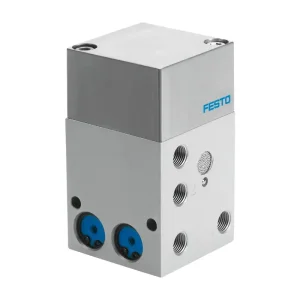
In aerospace, defense, and telecommunications testing, macro solutions involve synthesizing signal environments that replicate crowded wireless frequencies. For example, testing a 5G base station requires the emulation of multiple overlapping signals with distinct phase dynamics. Sourcing standalone DIY kits is insufficient for these applications, yet custom test-bench setups are often constructed using DIY protocols for low-frequency control signals, while relying on instruments like the Keysight M8192A for system-wide RF clock alignment. By employing unified sourcing structures, companies can integrate raw mechanical structures, Festo pneumatic actuators, and Keysight generators into single-framework industrial production lines.
Developing a scalable workflow for electrical measurement and signal routing demands strict attention to device coordination, reliable industrial components, and stable network interfaces. Below is the operational framework managed by Machine-Win to bridge high-end electronics with robust industrial mechanics.
The signal generation industry is moving toward higher integration, software-defined architectures, and cloud-assisted analytics. The convergence of AI-driven signal analysis and high-speed hardware synthesis is creating intelligent test environments. Below are the core technical pathways shaping the future of signal generation:
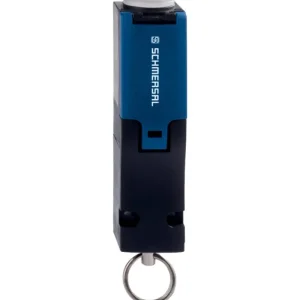
Operating precise measurement devices globally requires absolute compliance with national and international standard bodies. In industrial sectors, safety and performance certifications are mandatory. Every instrument supplied by Machine-Win undergoes strict validation. Testing devices conform to ISO/IEC 17025 standards for calibration laboratories, and industrial machinery components—such as Schmersal switches and Emerson actuators—meet strict CE, UL, and RoHS requirements. This meticulous quality assurance mitigates liability risks for enterprises operating across Europe, North America, and the Asia-Pacific region.
Gain insights from our engineers on the critical aspects of function generator deployment, impedance matching, and system synchronization.
A standard Direct Digital Synthesis (DDS) generator uses a fixed clock and a phase accumulator to step through a lookup table representing standard periodic waves (sine, square, triangle). An Arbitrary Waveform Generator (AWG) allows the user to define the amplitude of every single sample stored in memory, playing back custom waveforms at varying clock rates. AWGs are far more flexible for simulating non-periodic events, noise profiles, and complex digital communications, but require significantly higher processing power and high-speed DAC architectures.
Impedance matching prevents signal reflections. If the output impedance of the function generator does not match the characteristic impedance of the transmission line (coaxial cable) and the load impedance of the device under test (DUT), a portion of the wave is reflected back to the source. This creates standing waves, amplitude errors, phase shifts, and can potentially damage the output driver circuits of the generator at high voltages.
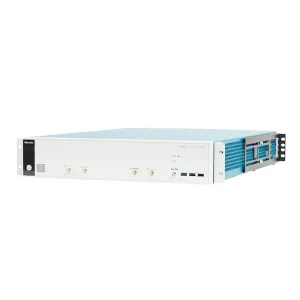
The Keysight M8192A utilizes a master-slave reference clock distribution system. It dynamically measures the phase delay differences between the clock paths of multiple arbitrary waveform generator modules. By applying fine delay adjustments in the picosecond range to the sampling clock of each module, it ensures that all outputs trigger synchronously, keeping phase jitter between channels at near-zero levels.
Prioritize bandwidth, sampling rate, and vertical resolution. The oscilloscope's analog bandwidth must be at least 3 to 5 times the highest frequency component of the signal under test to prevent amplitude attenuation. The sampling rate must satisfy the Nyquist-Shannon theorem, though practically it should be 5 to 10 times the signal frequency. Furthermore, high vertical resolution (such as the 12-bit ADC in the R&S MXO 4) is critical to accurately resolve small signal anomalies, harmonic distortions, and noise floors.
Temperature fluctuations cause thermal drift in internal reference oscillators (such as TCXOs or OCXOs). This drift alters the output frequency and phase stability of the synthesized waves. Furthermore, active analog components in the output amplifier path change their gain characteristics with temperature, introducing amplitude drift. Regular calibration in a temperature-controlled laboratory environment ensures performance traceablity to standards (NIST/PTB).
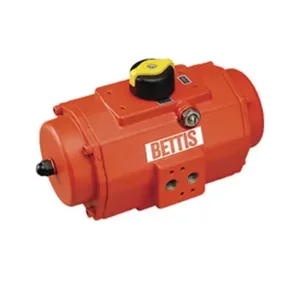
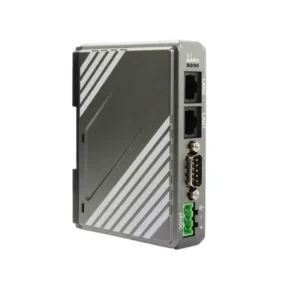
In automated testing systems (ATE), physical components under test (such as switches or valves) must be operated mechanically while being measured electrically. Pneumatic actuators (like the Emerson Bettis RPE-Series) handle mechanical cycling, while an IIoT gateway (like the Weintek CMT-G01) bridges system status telemetry (via OPC UA/MQTT) to a centralized SCADA database, enabling real-time performance tracking and predictive maintenance modeling.
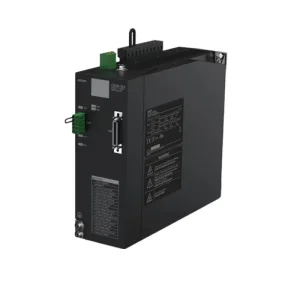
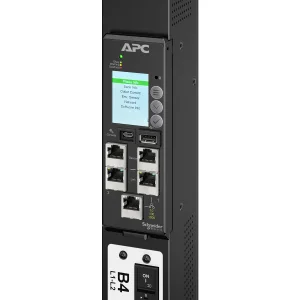
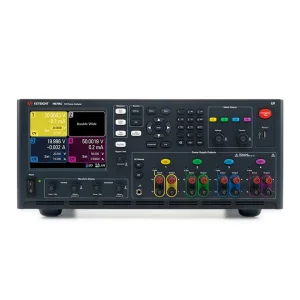
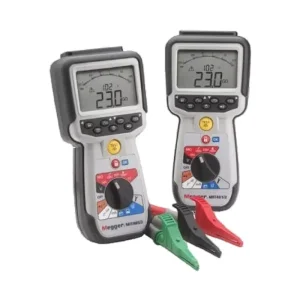
Select premium controllers, oscilloscopes, DC analyzers, and resistance testers to complete your precision instrumentation network.
 Machine-Win