China Rohde & Schwarz R&S FSW series Signal and spectrum analyzer R&S®FSW50 Suppliers, Exporters

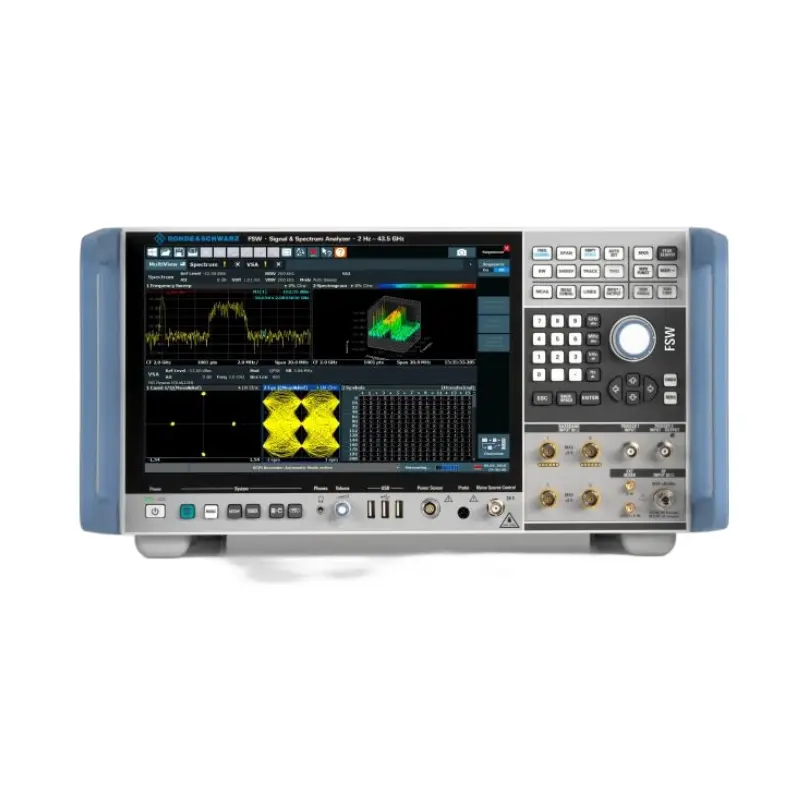
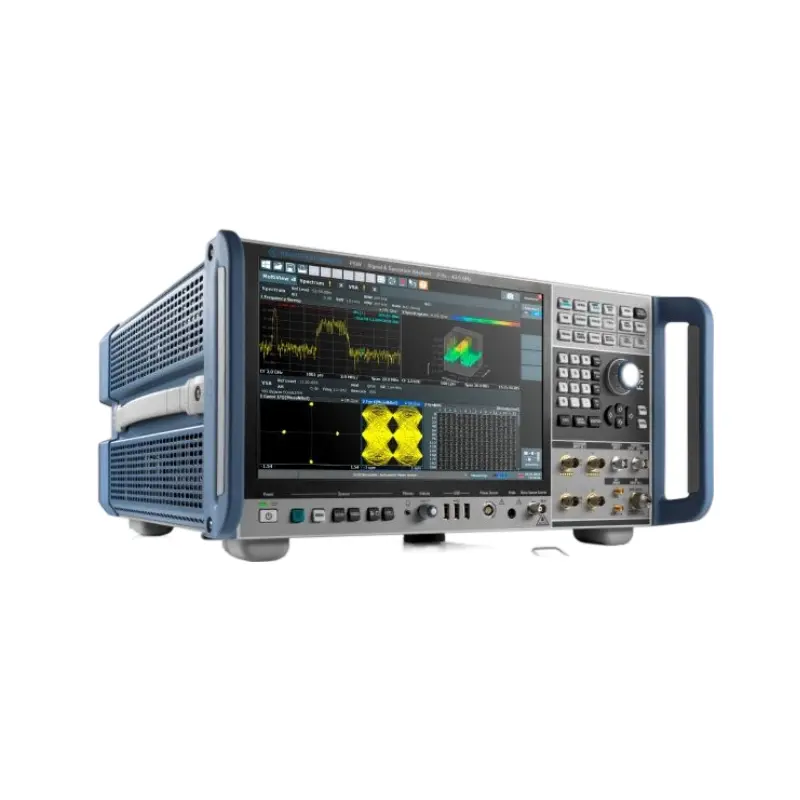
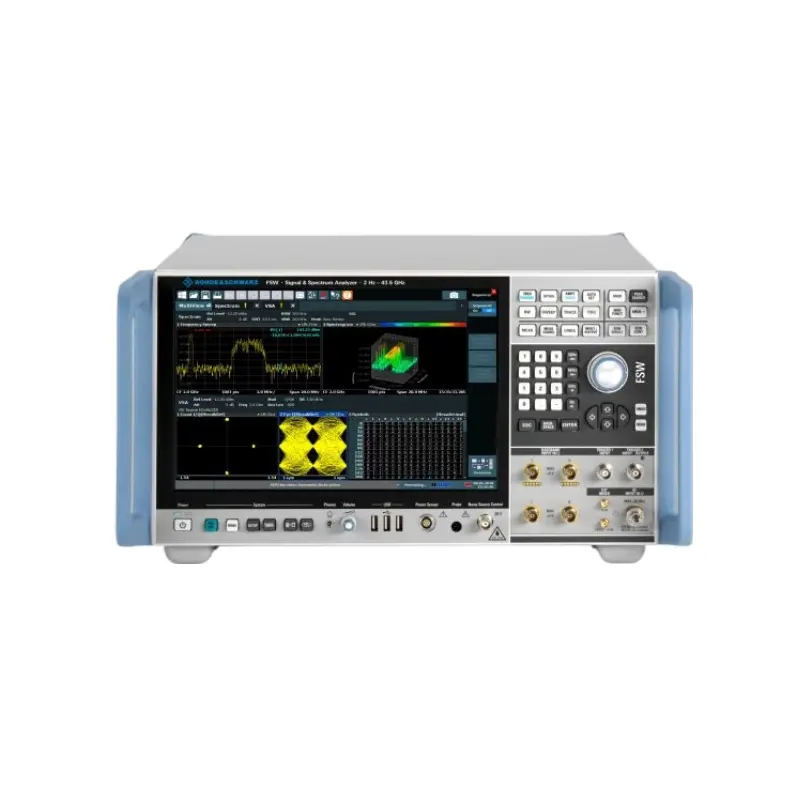
The R&S®FSW50 is a high-performance member of Rohde & Schwarz’s FSW series—designed for precision signal analysis across RF, microwave, and emerging millimeter-wave bands. It excels in demanding scenarios like 5G NR (FR1/FR2), satellite communications, radar testing, and component characterization, balancing wide frequency coverage, ultra-low noise, and advanced analysis capabilities.

Product Description

The R&S®FSW50 is a high-performance member of the FSW series designed for precision signal analysis across RF, microwave, and emerging millimeter-wave bands. It excels in demanding scenarios like 5G NR (FR1/FR2), satellite communications, radar testing, and component characterization, balancing wide frequency coverage, ultra-low noise, and advanced analysis capabilities.

Core Features

1

Wide Frequency Coverage & Bandwidth

Frequency Range Standard coverage from 10 Hz to 50 GHz (no external mixers required), covering key bands like 5G FR1 (sub-6 GHz) and FR2 (mmWave, up to 50 GHz), as well as satellite (Ka/Ku-band) and radar frequencies.
Real-Time Bandwidth (RTBW) Up to 1.5 GHz (with the R&S®FSW-B2015 option), enabling capture and analysis of wideband signals (e.g., 5G NR 100 MHz carriers, Wi-Fi 7 320 MHz channels, or radar chirp signals).
Instantaneous Bandwidth Up to 5 GHz (with external downconverters), supporting ultra-wideband applications like satellite payload testing.
2

Exceptional Signal Purity & Sensitivity

Phase Noise As low as -146 dBc/Hz (at 10 GHz, 1 MHz offset; standard configuration), ensuring accurate analysis of low-phase-noise signals (e.g., oscillator characterization or radar signal demodulation).
DANL (Displayed Average Noise Level) Typical -170 dBm/Hz (at 1 GHz, 10 MHz RBW, preamp on), minimizing noise interference for detecting weak signals (e.g., low-power 5G user equipment [UE] transmissions).
Spurious Rejection >80 dBc (typical), reducing self-generated interference for reliable measurement of small-signal components.
3

Advanced Modulation & Signal Analysis

Modulation Analysis Supports demodulation of all major digital standards, including 5G NR (FR1/FR2), LTE/LTE-A, Wi-Fi 6/6E/7, Bluetooth 5.x, Zigbee, and satellite (DVB-S2X). Key metrics like EVM (Error Vector Magnitude) (down to -50 dB for 5G NR) and spectral flatness are measured with high precision.
Radar Signal Analysis Built-in tools for analyzing pulsed radar signals (pulse width, PRF, duty cycle) and linear frequency-modulated (LFM) chirp signals (bandwidth, chirp rate), critical for radar module testing.
Signal Tracking & Triggering Features frequency mask triggering (FMT) and power trigger to capture transient or intermittent signals (e.g., spurious emissions in power amplifiers or bursty 5G signals).
4

User-Centric Design & Connectivity

Intuitive Interface 10.1-inch touchscreen with a customizable dashboard, context-sensitive help, and “one-touch” presets for standard tests (e.g., 5G NR TS 38.141 conformance).
Automation & Integration Supports SCPI commands, IVI-COM drivers, and R&S®VISA software, enabling integration with test benches or automated test systems (ATS).
Data Export Multiple interfaces (Gigabit Ethernet, USB 3.0, HDMI) for exporting measurements (e.g., CSV, PDF, or screenshots) and remote control via R&S®Remote Control software.

Application Scenarios

5G NR Development & Testing
Verify 5G base stations (gNB) and UE performance, including spectral emissions, EVM, and beamforming (FR2 mmWave).
Satellite Communications
Analyze satellite transponder signals (DVB-S2X, VSAT) and characterize low-noise amplifiers (LNAs) or upconverters.
Radar & Aerospace
Test pulsed radar modules, measure chirp signal linearity, and validate radar receiver sensitivity.
Component Characterization
Evaluate power amplifiers (PAs), filters, mixers, and oscillators for linearity, noise, and spurious emissions.
Calibration Labs
Serve as a reference instrument for calibrating lower-performance spectrum analyzers or signal generators.
Parameter Category Parameter Specification
Frequency Characteristics Frequency Range Standard: 10 Hz – 50 GHz; Extendable to higher bands via external mixers (optional)
Frequency Resolution 1 mHz (minimum)
Frequency Accuracy ±(1 × 10⁻¹¹ × f₀ + 1 Hz) (after 24 h warm-up, reference to internal 10 MHz clock)
Tuning Speed < 1 ms (for frequency hopping between two points)
Signal Purity SSB Phase Noise (at 10 GHz, 1 MHz offset) Typical: -146 dBc/Hz; Optional (low-phase-noise config): -152 dBc/Hz
Displayed Average Noise Level (DANL) Typical: -170 dBm/Hz (1 GHz, 10 MHz RBW, preamplifier on, no attenuation)
Harmonic Distortion (at 1 GHz, +10 dBm input) < -70 dBc
Non-Harmonic Spurious Signals < -85 dBc (carrier offset ≥ 1 MHz, standard configuration)
Bandwidth & Sweep Real-Time Bandwidth (RTBW) Up to 1.5 GHz (with R&S®FSW-B2015 option)
Resolution Bandwidth (RBW) 1 Hz – 100 MHz (analog); 1 Hz – 1.5 GHz (digital, with RTBW option)
Video Bandwidth (VBW) 1 Hz – 100 MHz
Sweep Time 10 μs – 10,000 s (depending on span and RBW; minimum sweep time for 1 Hz RBW: ~1 s)
Input Characteristics Input Impedance 50 Ω (standard); 75 Ω (optional, via impedance matching)
Maximum Input Power (without damage) +30 dBm
Input Attenuation Range 0 dB – 60 dB (step size: 1 dB or 10 dB, selectable)
Modulation Analysis Supported Digital Standards 5G NR (FR1/FR2), LTE/LTE-A, Wi-Fi 6/6E/7, Bluetooth 5.x, DVB-S2X, Zigbee, etc.
Error Vector Magnitude (EVM) Typical < -50 dB (for 5G NR, 100 MHz carrier, QPSK modulation)
Analog Modulation Analysis AM, FM, PM, pulse modulation (duty cycle, pulse width measurement)
Radar-Specific Features Pulsed Signal Analysis Pulse width: 10 ns – 1 s; PRF (Pulse Repetition Frequency): 1 Hz – 1 MHz
LFM Chirp Analysis Chirp bandwidth: Up to 1.5 GHz; Chirp rate: 1 kHz – 100 GHz/s
Physical & Power Dimensions (W × H × D) 434 mm × 177 mm × 615 mm (17.1 in × 6.97 in × 24.2 in) – 3U rack-mount
Weight ~18 kg (39.7 lb)
Power Supply Input Voltage AC 100–240 V, 50/60 Hz
Power Consumption Typical: 300 W (operating); < 10 W (standby mode)
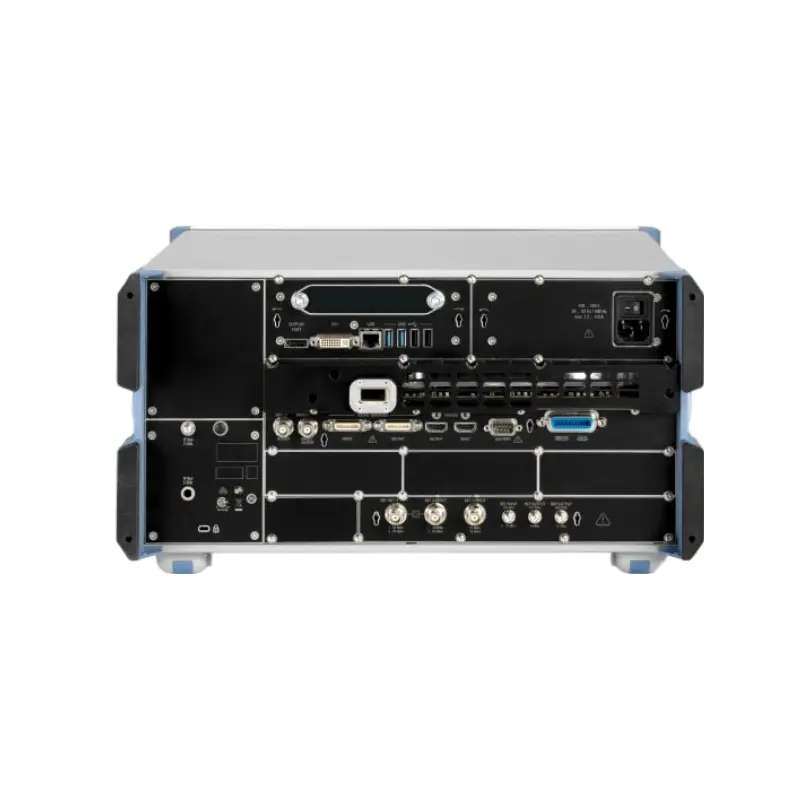
Connectivity Interfaces Gigabit Ethernet (2×), USB 3.0 (2×), HDMI, 10 MHz reference (in/out), Trigger (in/out)

Models

FSW series Signal and spectrum analyzer R&S®FSW50

Key Features

  • Unparalleled low phase noise and best sensitivity on the market
  • 8.3 GHz internal analysis bandwidth
  • 800 MHz real-time analysis bandwidth
  • SCPI recorder simplifies code generation
  • High dynamic range enables outstanding EVM performance
Dimension 434 mm × 177 mm × 615 mm
Weight 18kg
Battery parameters Without battery

Delivery information typically includes delivery times, shipping methods, packaging, etc., which may vary depending on the seller and the location of purchase.

FSW50 datasheet
FSW series Signal and spectrum analyzer R&S®FSW50 datasheet.pdf
Download
FSW50 brochure
FSW series Signal and spectrum analyzer R&S®FSW50 brochures.pdf
Download
Frequently Asked Questions
Q: What is the standard frequency range of the R&S®FSW50 spectrum analyzer?
The standard frequency range is from 10 Hz to 50 GHz. It can also be extended to higher frequency bands via optional external mixers.
Q: What is the maximum real-time analysis bandwidth supported?
The analyzer supports a real-time analysis bandwidth (RTBW) of up to 1.5 GHz when equipped with the R&S®FSW-B2015 option.
Q: Is the R&S®FSW50 suitable for testing 5G NR signals?
Yes. It is designed to demodulate and analyze standard digital signals including 5G NR (FR1 and FR2), LTE/LTE-A, Wi-Fi 6/6E/7, Bluetooth, and satellite standards.
Q: What are the key phase noise characteristics of the device?
At 10 GHz with a 1 MHz offset, the SSB Phase Noise is typically -146 dBc/Hz under standard configurations, and can reach -152 dBc/Hz with the low-phase-noise configuration option.
Q: What are the physical dimensions and weight of this signal analyzer?
The device has a 3U rack-mount form factor, measuring 434 mm × 177 mm × 615 mm (W × H × D), and weighs approximately 18 kg (39.7 lb) without an internal battery.
Q: What automation and data export options are available?
It supports SCPI commands, IVI-COM drivers, and R&S®VISA software for automated testing, and offers Gigabit Ethernet, USB 3.0, and HDMI interfaces for data export.

Related Products