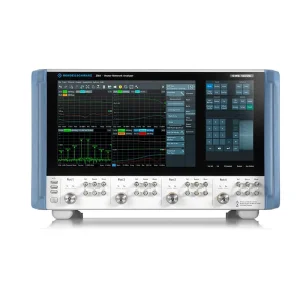
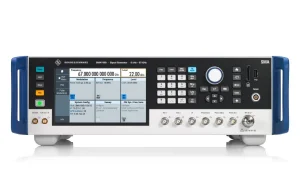
Explore our leading electronic instrumentation, signal generators, network test kits, and process components sourced from elite global manufacturers.
Machine-Win Technology Co., Ltd. is a professional and reliable international supply chain company, specialized in providing a wide range of products for various industries. With extensive experience and a global network of suppliers, we excel in delivering high-quality products and satisfactory services. Our commitment to excellence, reliability, and customer satisfaction sets us apart as a preferred partner in the field of international trade.
Whether you are searching for high-performance arbitrary waveform generators or sourcing custom-engineered industrial spare parts, we serve as your strategic technical bridge. We bring world-class instruments directly from leading manufacturing pipelines to international test beds, ensuring your engineering processes meet strict modern standards.
Get Expert Support
An authoritative analysis of high-frequency synthesis, modulation techniques, and next-generation testing requirements.
The global communications landscape is experiencing an unprecedented shift toward high-frequency spectrums. With the deployment of 5G Advanced (Release 18) and initial research into 6G architectures, test engineers require signal generation capabilities that stretch far beyond traditional microwave limits. Modern digital signal generators must synthesize complex, wideband signals reaching up to 110 GHz and beyond (including the D-band and E-band). As exporters, we witness growing demand for vector signal generators (VSGs) with internal modulation bandwidths exceeding 2 GHz. This enables the verification of multi-carrier structures, phased-array antenna performance, and ultra-high-speed point-to-point links.
Traditional analog signal generation methods involving complex Phase-Locked Loop (PLL) configurations are increasingly augmented or replaced by advanced Direct Digital Synthesis (DDS) and Arbitrary Waveform Generator (AWG) architectures. DDS enables near-instantaneous frequency switching speeds and phase-continuous tuning—critical capabilities for modern electronic warfare simulation, radar prototyping, and quantum computing validation. By executing waveform rendering digitally at multi-gigasample-per-second (GSa/s) rates, export-ready DDS signal generators reduce phase noise to levels below -130 dBc/Hz at 10 GHz with a 10 kHz offset, providing unmatched signal integrity.
Achieving ultra-low Error Vector Magnitude (EVM) in real-world environments demands that signal generators act as more than just clean waveform sources. Today's commercial and industrial enterprises require instrumentation capable of injecting real-time channel impairments, including multipath fading, phase noise simulation, Doppler shifts, and additive white Gaussian noise (AWGN). Exporters specializing in custom signal generators are integrating FPGA-based hardware modules that calculate and apply digital pre-distortion (DPD) on the fly, allowing R&D engineers to compensate for non-linearities in external power amplifiers during the prototype phase.
Understanding the engineering criteria, regulatory compliance, and total cost of ownership (TCO) driving enterprise sourcing decisions.
Enterprise-level procurement of precision testing systems is not merely a transactional purchase; it is a critical investment in a company's product lifecycle quality. When global manufacturers and labs source custom digital signal generators, their evaluation matrix centers on three key performance benchmarks:
Instruments must feature calibration certificates traceable to international standards such as NIST or NPL, satisfying ISO/IEC 17025 compliance frameworks. This ensures test reliability across international borders.
Global procurers look for exporters who provide flexible firmware options, tailored API interfaces (supporting SCPI, LabVIEW, Python, and C++), and chassis form-factors suitable for automated test equipment (ATE) racks.
Due to the long-term nature of defense, aerospace, and semiconductor test programs, procurement managers demand strict parts-availability guarantees, calibration intervals of 24 months or more, and local service support.
How digital manufacturing, vertical component integration, and agile logistics redefine the electronics export landscape.
The Chinese manufacturing sector has underwent a complete transformation from low-cost component assembly to a sophisticated, vertically integrated smart factory ecosystem, commonly referred to as Factory 4.0. For complex test and measurement equipment like digital signal generators, this industrial shift translates directly to substantial competitive advantages for global buyers:
By consolidating localized raw material logistics, rigid-flex PCB fabrication, high-speed FPGA assembly, and precision CNC metal shielding production within unified industrial zones, Chinese exporters provide unprecedented price-to-performance ratios without compromising quality.
Analyzing current market indicators, testing bottlenecks, and application distribution across target sectors.
The global demand for high-performance signal generators is surging, driven by rapid technological advancements in multiple key sectors:
Commercial satellite constellations (LEO) operating in Ka and Ku-bands require signal sources with ultra-low phase jitter for transceiver validation, phase noise analysis, and radar payload simulation.
Automobile safety systems depend on 77 GHz to 81 GHz radar units. Custom RF exporters supply digital signal generators configured to output FMCW (Frequency Modulated Continuous Wave) signals to simulate collision scenarios.
With PCIe Gen 6 and DDR5 pushing transmission boundaries, clean clock generation is paramount. Testing teams use high-speed arbitrary waveform generators to introduce precise clock jitter and measure receiver margins.
From standard laboratory setups to automated test benches—how custom signal generators deliver real-world value.
Engineers utilize multi-channel vector signal generators to simulate complex MIMO environments. By generating precise phase-coherent signals across multiple ports, they validate spatial multiplexing algorithms in next-generation routers and base stations.
In electronics assembly facilities, cycle time is critical. Digital signal generators configured with rapid frequency sweep capabilities and robust USB/LAN programming interfaces allow for fast pass/fail evaluation of RF components.
Before a product launches, it must pass rigorous electromagnetic compatibility testing. Signal sources are used to inject precise levels of radio frequency interference (RFI) into shielding enclosures to evaluate product immunity.
Machine-Win delivers integrated industrial supply options, calibration, and OEM/ODM engineering services.
We manage the complete lifecycle of your high-end testing gear: including sales, repair, and precise metrological calibration services. Our alliances guarantee access to trusted equipment configurations.
Professional network testing systems designed to evaluate throughput, diagnose latency anomalies, optimize channel density, and secure physical-layer stability across enterprise networks.
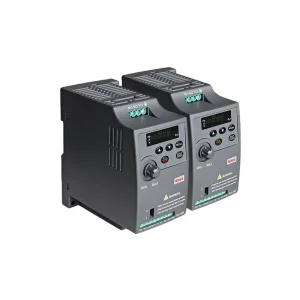
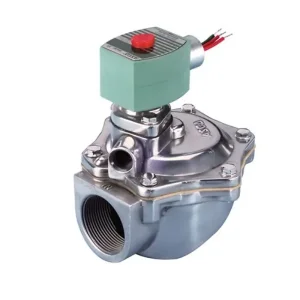
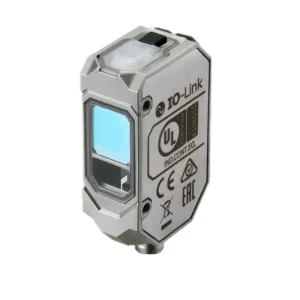
Direct supply lines for certified brand-new industrial equipment and spare parts on electronics, electricals, and mechanical modules from Siemens, Schneider, Mitsubishi, Omron, Phoenix Contact, and more.
Tailored hardware configurations, computing accessories, POF shrink film packaging, and factory floor components. Our expert technical team handles validation, component selection, and logistical consolidation.
Providing key operational advantages to help secure your supply chain and testing pipelines.
Strong relationships with industry-leading brands including KEYSIGHT, R&S, TEKTRONIX, KEITHLEY, RIGOL, NI, MEGGER, DRUCK, YOKOGAWA, ITECH, and more.
We manage the technical sourcing lifecycle from requirement drafting and supplier selection to custom packaging, quality validation, export licensing, and ongoing technical support.
Our export and supply chain teams navigate complicated tariff schedules, trade compliance rules, and delicate calibration standards, transforming supply challenges into reliable operations.
Common technical and logistics questions regarding custom digital signal generators and procurement services.
Complementary products to expand your testing lab, factory automation systems, and machinery pipelines.
 Machine-Win