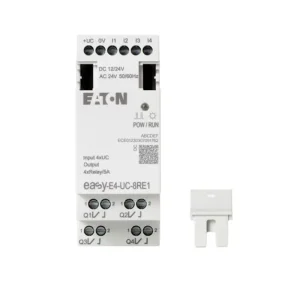
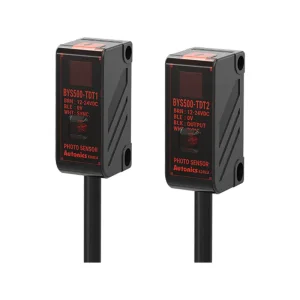
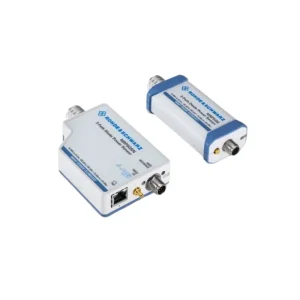
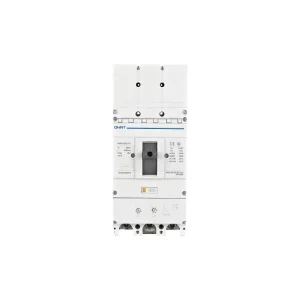
Machine-Win Technology Co., Ltd. is a professional and reliable international supply chain enterprise specialized in providing a wide range of state-of-the-art products for various demanding industries. With extensive experience and a globally integrated network of suppliers, we excel in delivering high-quality products and satisfactory services that keep manufacturing plants, research institutions, and acoustic engineers running efficiently. Our commitment to excellence, reliability, and customer satisfaction sets us apart as a preferred partner in the field of international trade and hardware deployment.
We bridge the gap between high-precision synthesizer technology and industrial-grade electronics supply, ensuring that modern audio hardware creators, synthesizer OEMs, and custom module developers have direct access to the critical test, measurement, and power infrastructure needed for advanced analog synthesis development.
Connect With Our Engineering Team
Analog synthesis has undergone a profound renaissance. No longer restricted to retro enthusiast circles, custom modular synthesizers—predominantly under the Eurorack and 5U formats—have emerged as crucial tools in cinematic orchestration, game audio design, clinical neurological research, and avant-garde sound synthesis. As a result, the commercial and industrial demand for precision-engineered, stable, and highly repeatable Analog Modular Synthesizer modules has escalated.
Designing and manufacturing high-performance custom analog synthesizers is an intricate engineering challenge. Unlike digital systems, analog modules operate on continuous voltage curves where variations in power supply quality, component tolerances, thermal stability, and electromagnetic interference (EMI) directly degrade audio signal path fidelity. Consequently, working with an experienced manufacturer that understands instrument-grade component sourcing, precision PCB routing, noise shielding, and strict calibration protocol is paramount.
At a macro level, the modular synthesizer industry has transitioned from boutique garage workshops to standardized industrial pipelines. Professional studios and broadcast networks demand hardware that can operate reliably under continuous voltage configurations without pitch drift or catastrophic failure. The core modules—Voltage Controlled Oscillators (VCOs), Voltage Controlled Filters (VCFs), and Voltage Controlled Amplifiers (VCAs)—require precision voltage-tracking designs that follow the 1V/Octave (one volt per octave) standard across wide octavial ranges.
For large-scale commercial deployments, educational laboratories, and acoustic research facilities, synthesizer systems must be built upon reliable component foundations. This is where the supply chain becomes critical. Ensuring access to matched transistor pairs, low-temperature coefficient metal film resistors, and ultra-stable operational amplifiers ensures that modular synthesizers maintain their calibration regardless of studio environment changes.
The manufacturing process of analog synthesizer modules involves multiple distinct tiers: prototyping, SMT assembly, manual component matching, mechanical assembly, panel design, and final calibration. Global component shortages and shifting regulations emphasize the need for a resilient and robust partner. Finding a dependable partner who can deliver components from leading names like Keysight, Siemens, Eaton, and Panasonic ensures that the production process never halts.
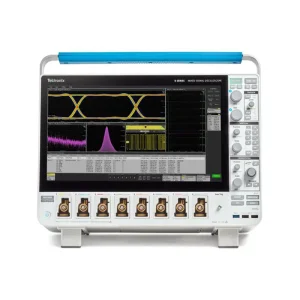
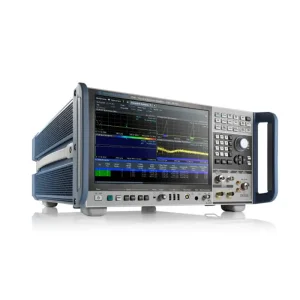
Furthermore, testing and validating analog circuitry requires instrument-grade oscilloscopes and spectrum analyzers. Utilizing premium test gear, such as Tektronix Mixed Signal Oscilloscopes and Rohde & Schwarz Signal Analyzers, enables manufacturers to run fast-Fourier transform (FFT) analysis on audio waveforms, trace distortion pathways, and confirm harmonic levels to guarantee the premium quality of the synthesized sound.
We provide comprehensive sales, repair, and calibration services for test instrumentation from leading brands including KEYSIGHT, ROHDE & SCHWARZ, TEKTRONIX, RIGOL, and NI. This ensures your synthesis diagnostics remain precise.
Custom analog modules must undergo rigorous signal path analysis. Our network testing and signal calibration solutions ensure zero latency, minimal noise floor, and precise tracking across standard volt-per-octave profiles.
We deliver tailored engineering, sourcing, and packaging services. From raw structural sheet metal components to custom PCB fabrications and power delivery harnesses, we turn custom concepts into volume products.
As synthesizer design evolves, the integration of digital microcontrollers alongside analog signal lines (hybrid modules) has become mainstream. To handle this intersection of technologies, manufacturers must adopt structured developmental roadmaps:
For a custom modular synthesizer to be sold globally, compliance with international standards is mandatory. Our supply chain ensures all components and sub-assemblies conform to safety and environmental directives:
From university acoustic laboratories researching sound design to film scoring stages in major metropolitan centers, custom analog hardware finds utilization across specialized domains. By providing robust, highly customizable, and calibrated systems, we enable sound designers to carve out distinct harmonic signatures that are difficult to reproduce on digital emulators alone.
From procuring premium test benches to supplying specialized industrial components, we serve as your one-stop business partner.
We supply analytical equipment to diagnose digital data lines, ensuring hybrid MIDI/CV modules interact seamlessly with computer systems.
Our experienced application engineers and service team provide technical support for high-precision components and instrument diagnostics.
Our expansive trade network allows us to optimize your component pipeline, lower procurement overhead, and guarantee supply line security.
 Machine-Win