Best HEV / EV / Grid Emulators & Test Systems Manufacturers & Suppliers

Empowering Next-Generation Electrification: High-Fidelity Power Hardware-in-the-Loop (PHIL) Simulation, Regenerative Grid Emulation, and Advanced EV Drivetrain Test Systems

99.8%
Emulation Fidelity
500+
Grid Node Projects
< 1ms
Dynamic Response Time
100%
E-E-A-T Compliant Sourcing

Modern EV/HEV Drivetrain & Regenerative Grid Testing Challenges

The rapid shift towards automotive electrification and green grid infrastructure presents engineering teams with unprecedented validation bottlenecks. Designing high-efficiency hybrid-electric vehicles (HEVs), battery electric vehicles (EVs), and distributed energy resources (DER) requires high-power testing setups that mimic real-world conditions without the costs or safety risks of utilizing real high-voltage batteries, actual combustion engines, or unpredictable utility grids. This is where HEV/EV/Grid emulators and test systems serve as key enablers of technology progression.

To establish true hardware-in-the-loop (HIL) environments, testing facilities must deploy bidirectional DC power supplies, battery simulators, battery management system (BMS) emulators, and AC regenerative grid simulators. These tools enable engineers to replicate dynamic driving cycles, worst-case battery fault conditions, transient grid fluctuations, and harmonic distortion profiles in a safe, repeatable laboratory ecosystem.

Why Emulation Systems Control Electrification Lifecycles

Traditional passive testing methods are no longer viable for high-performance electric powertrains. Incorporating real battery packs into early-stage testing presents thermal runaway hazards, high operational costs, and limited test repeatability due to performance degradation. Regenerative emulation systems overcome these hurdles by providing:

  • Regenerative Energy Recovery: Efficient testing setups reclaim up to 95% of electrical energy back to the local utility grid, drastically decreasing thermal dissipation and reducing operational energy expenses.
  • Programmable Battery Models: Instantly emulate various battery chemistries (e.g., LFP, NMC, Solid-state) under variable temperatures, aging profiles (SOH), and states of charge (SOC).
  • Ultra-Fast Slew Rates: Simulate rapid transient events of advanced SiC/GaN-based power inverters, demanding DC-to-DC converters, and dynamic motor drives.

Core Integration Capabilities of Machine-Win

Machine-Win Technology Co., Ltd. stands as a premier supply chain partner delivering fully integrated test systems, test software, calibration instruments, and automation components. Leveraging partnerships with global measurement giants such as Keysight Technologies, Rohde & Schwarz, Tektronix, Yokogawa, NI, Megger, Druck, and Itech, we supply turnkey test benches optimized for the most rigorous industrial requirements.
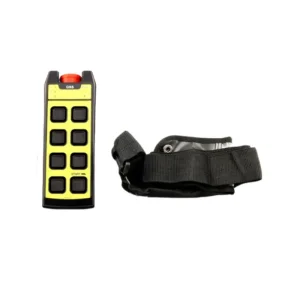
By bringing together high-power bi-directional DC sources, high-precision thermal imaging systems, advanced logic safety switches, and dynamic communication network analyzers under a unified control software, we simplify custom test-system sourcing for EV development teams worldwide.

Consult an Application Engineer
Machine-Win High-Tech Inspection Infrastructure

Localized Applications & Global Industrial Scenarios

How global testing laboratories use HEV/EV/Grid emulators to meet local regional requirements and specialized power conditions.

Grid-Tied Inverter & Microgrid Validation

In regions implementing high-penetration renewable energy mandates (such as California's Rule 21 or European EN 50549 standards), regenerative grid emulators simulate complex grid anomalies, voltage sags, and frequency shifts to ensure safety disconnect and anti-islanding behaviors of solar and wind converters.

EV Charging Station (EVSE) Interoperability

EVSE infrastructure must seamlessly support various vehicle standards (CCS1, CCS2, NACS, GB/T). High-fidelity emulators simulate EV communication protocols and dynamic load changes to certify high-power DC fast-charging performance without requiring dedicated physical test vehicles.

Hardware-in-the-Loop (HIL) Drivetrain Simulation

Engineers link real-time simulation engines with bidirectional DC emulators to simulate the behavior of a hybrid drivetrain in virtual crash conditions or dynamic torque tests. By feeding real current response directly to the ECU, developmental risks are resolved before prototype assembly.

Technology Roadmap & Future Outlook

The progression of HEV/EV/Grid emulation systems matches the rising demands of wider bandgap architectures, megawatt-level charging capacities, and software-defined test automation.

Phase 1: SiC/GaN Validation Support

High-Frequency Wide Bandgap (WBG) Signal Capturing

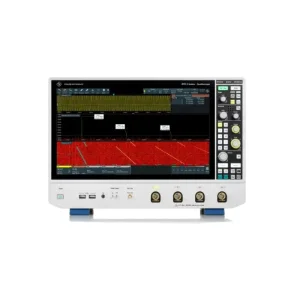
Next-generation inverters run at frequencies above 100 kHz with high dv/dt rise times. Test systems are incorporating high-bandwidth oscilloscopes (like the Rohde & Schwarz R&S®RTO6) and low-inductance connection networks to capture high-speed switching events without signal distortion.

Phase 2: Megawatt-Scale Power Expansion

Megawatt Level Grid Emulation for Heavy Electric Transports

Commercial heavy-duty electric trucks, aerospace vehicles, and marine shipping vessels require megawatt-class charging rates. Future test layouts feature modular multi-cabinet setups to scale output from 500kW up to 4MW, simulating dynamic high-power demands.

Phase 3: Digital Twin & Cloud Integrated Testing

Cloud-Based Real-Time Test Simulation

By connecting instrumentation pipelines to platforms like R&S®Cloud4Testing, hardware-based grid emulators interface with digital twins in real time. This structure allows developers to compare simulation runs with actual hardware feedback simultaneously, cutting development cycle times.

Who We Are & Strategic Operations

Machine-Win Technology Co., Ltd. is a dedicated international supply chain company specialized in delivering advanced equipment, maintenance services, and calibration setups for critical electrical systems, mechanical lines, and instrumentation fields.

Core Services Portfolio

  • One-Stop Instrument Solutions: Sales, detailed repair, and certified calibration covering leading international brands.
  • Network Testing & Analysis: Precision data systems, cable verifiers, and network analyzers ensuring robust operations.
  • Industrial Supply Integration: Delivery of original, brand-new electronics, machinery spares, and structural raw materials.
  • Tailored OEM/ODM Options: End-to-end customizable manufacturing services for computer accessories, energy packaging, and factory assemblies.

Tangible Customer Benefits

  • Hassle-Free Logistics: Complete international shipment control from sourcing and inspections to final site installation.
  • Guaranteed Authenticity: High-precision technical layouts utilizing verified original components with complete manufacturer warranties.
  • Direct Procurement Savings: Integrated sourcing and volume distribution partnerships reduce acquisition and operational overheads.
  • Continuous Live Support: Around-the-clock technical inquiry responses, fast spares delivery, and prompt on-site diagnostics.

Why Choose Machine-Win

  • Decades of Trade Experience: Deep familiarity with global trade compliance, export logistics, and regional regulatory procedures.
  • Unyielding Standards: An absolute focus on quality, using components sourced directly from leading manufacturers without compromises.
  • Integrated Solutions approach: The ability to combine equipment, custom software, and active components into a single package.
  • Strategic Global Network: Established distribution channels spanning across Asia-Pacific, Europe, and the Americas.

Supply Chain Resilience & Chinese Factory Efficiency

Leveraging specialized industrial clusters, rapid engineering lifecycles, and integrated component ecosystems to reduce costs and lead times.

China's industrial ecosystem offers significant structural advantages for producing high-voltage testing equipment and emulator assemblies. By organizing component suppliers into specialized regional clusters, manufacturing centers achieve quick turnaround times from design adjustments to physical prototype assembly. The accessibility of key resources—including raw materials, metal enclosures, high-power magnetic parts, and PCB design workshops—allows developers to speed up cycle iterations.

This localized supply chain resilience is crucial during periods of global component volatility. While single-source component structures might experience delays, our relationships with top-tier partners like Omron, Mitsubishi, Siemens, and Schneider Electric keep our operations running smoothly. We maintain large stockpiles of active switches, relays, microcontrollers, and connection options, minimizing lead times and delivering customized HEV/EV test setups on schedule.

Supply Chain Dimension Traditional Global Standard Machine-Win China Factory Optimized Path Customer Efficiency Gain
Component Sourcing Lead Time 12 to 24 Weeks 3 to 6 Weeks Up to 75% project timeline compression
Prototype Design Iteration 45 Days average 15 Days average Accelerated custom test cabinet development
Integration & Calibrations Dispersed vendors Unified in-house testing & certification Reduced commissioning failures and lower setup costs
Regulatory Customizations Fixed catalog designs Modular, adaptable platform configurations Seamless alignment with local utility and safety codes

Local Support & Compliance Safeguards

Deploying critical test setups demands strict compliance with global safety frameworks and regular calibration procedures.

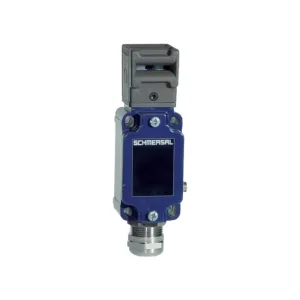
High-voltage power electronics testing requires strict adherence to international safety protocols. Every HEV/EV emulator system we deliver is designed to meet key regulatory standards, including CE, UL, and FCC Part 15. By incorporating rugged safety hardware like Schmersal safety switches and internal isolation monitoring systems, we ensure our test benches prevent hazardous arc-flash occurrences and ground-fault risks during high-energy testing operations.

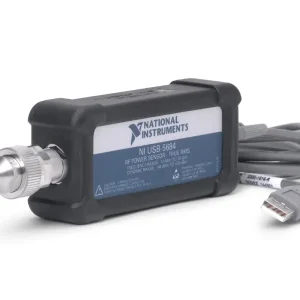
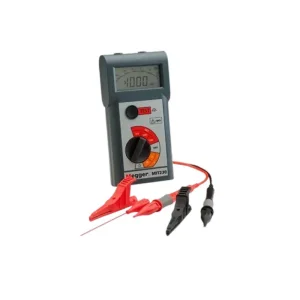
In addition, maintaining test data accuracy requires regular instrument calibration. Our technical teams deliver support tracing back to national standard systems (NIST/ISO-IEC 17025). Whether verifying high-voltage DC paths using National Instruments (NI) power sensors, checking ground resistance with Megger micro-ohmmeters, or measuring voltage stability with Tektronix oscilloscopes, we provide the tools and services needed to ensure operational compliance for internal audits and external certifications.

Frequently Asked Questions (FAQ)

Answers to common questions about HEV/EV/Grid emulators, test configurations, and operational parameters.

Q1: What is the main difference between a regenerative emulator and a passive electronic load? +
A passive electronic load dissipates absorbed electrical energy as heat, requiring large cooling systems and increasing utility costs. A regenerative emulator (such as a bidirectional DC source or regenerative grid simulator) converts the absorbed energy back into clean AC power and feeds it back to the local utility grid with high efficiency (often exceeding 90-95%), reducing electricity costs and simplifying thermal management in testing facilities.
Q2: How do dynamic battery emulators support testing of Battery Management Systems (BMS)? +
Battery emulators simulate the cell-level voltage, temperature, and internal resistance of a battery pack. Instead of testing with physical cells, the emulator outputs precise programmable signals to the BMS. This allows engineers to safely simulate faults like cell over-voltage, thermal runaway, and short-circuit conditions, verifying that safety responses trigger correctly before live-pack testing begins.
Q3: Can these systems emulate different grid standards like 50Hz, 60Hz, and 400Hz? +
Yes. Our regenerative grid simulators are fully programmable and can simulate various utility grid profiles. They support standard 50Hz and 60Hz utility grids, as well as 400Hz systems commonly used in aerospace applications. The systems can also inject harmonics, voltage dips, and frequency fluctuations to verify inverter compliance with standards like IEEE 1547 and UL 1741.
Q4: How do Machine-Win supply chain solutions help reduce overall project lead times? +
We maintain strategic partnerships with leading instrumentation and industrial control brands (including Keysight, R&S, Tektronix, NI, Yokogawa, Siemens, and Omron). By keeping a stock of key active components, safety modules, and measurement devices in our inventory hubs, we bypass long manufacturer lead times, allowing us to deliver assembled, calibrated test systems faster than conventional channels.

Ready to Design Your EV or Grid Emulator Configuration?

Contact our technical sales team for comprehensive configuration support, quick pricing, and original manufacturer calibration documents.

Get In Touch Now