Explore our globally sourced industrial catalog featuring market-leading calibration gear, high-precision multifunction testers, and reliable electrical components.
Understanding the physics of Zs, Ze, and safety compliance under international standards.
Earth fault loop impedance ($Z_s$) determines whether the protective devices (such as MCBs, MCCBs, and fuses) will operate fast enough in the event of an insulation breakdown. The impedance of the loop path must be sufficiently low to allow a high fault current to flow, triggering the protective device within the timeframe mandated by local codes, such as BS 7671 (typically 0.4 seconds for TN systems under 230V, and 0.2 seconds for TT systems).
The mathematical representation is formulated as:
Zs = Ze + (R1 + R2)
Where Ze is the external loop impedance measured at the origin of the installation, R1 is the resistance of the phase conductor, and R2 is the resistance of the protective earth (PE) conductor.
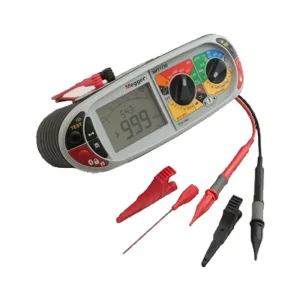
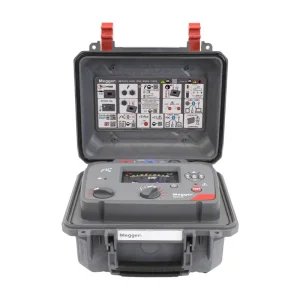
Historically, performing loop impedance tests risked tripping RCDs (Residual Current Devices) due to the high test current (typically ~20A) directed down the protective earth line. Modern instruments, such as the Megger MFT1800 & MFT1700 series, implement advanced testing technologies:
High-voltage infrastructure projects, data centers, and heavy manufacturing facilities demand specialized instrumentation exporters. Ensuring instruments like the Megger MFT1711 are delivered with fully traceble NIST/DKD calibration certificates is a critical requirement for B2B procurement professionals worldwide.
Using a non-certified supply chain partner introduces risks of counterfeit equipment, calibration drift, and safety hazards. Machine-Win Technology guarantees genuine, brand-new components from premier manufacturers, ensuring your site engineers operate in safe conditions with accurate electrical values.
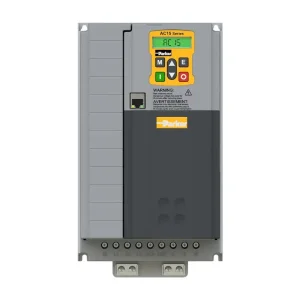
By integrating testing instruments alongside industrial electrical parts, PLC modules, switches, and VFDs, companies optimize their procurement workflows, lower custom duty processing costs, and shorten commissioning times.
Your professional and reliable international supply chain and instrumentation partner.
Machine-Win Technology Co., Ltd. is a professional and reliable international supply chain company, specialized in providing a wide range of products for various industries. With extensive experience and a global network of suppliers, we excel in delivering high-quality products and satisfactory services. Our commitment to excellence, reliability, and customer satisfaction sets us apart as a preferred partner in the field of international trade.
We are your one-stop partner for instrument sales, repair, and calibration, as well as network testing solutions. We offer top-tier brands like KEYSIGHT, R&S, TEKTRONIX, KEITHLEY, RIGOL, NI, MEGGER, DRUCK, YOKOGAWA, ITECH, etc., covering a wide range from cable testers, fiber optic testers, and network analyzers to power quality meters, infrared thermometers, thermal imagers, multimeters, clamp meters, process calibrators, resistance testers, environmental detectors, laser rangefinders, vibration meters, and oscilloscopes.
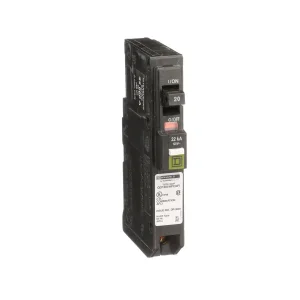
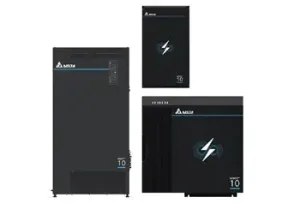
In addition, we act as a strategic ally for brand-new, original industrial brands on electronics, electricals, machinery spare parts, hardware, tools, and raw materials, featuring trusted names such as MITSUBISHI, SIEMENS, SCHNEIDER, PANASONIC, OMRON, DELTA, WEINTEK, EMERSON, EATON, PHOENIX CONTACT, and more.
Optimizing engineering procurement through certified supply chains and OEM/ODM engineering integration.
Testing procedures differ depending on the electrical distribution topology:
Separate neutral and protective earth conductors throughout the system. Earth fault currents return via the PE cable back to the star point. Low earth fault loop impedance is typically easier to achieve, but connection points must be tested periodically for high contact resistance.
Neutral and protective earth are combined in a single conductor (PEN) from the substation to the installation origin. Earth loop impedance readings are low, but protective bonding must be checked because a broken neutral can cause live voltages on all bonded metalwork.
The consumer earth terminal is connected directly to local earth electrodes (earth rods). Loop impedance values can be high (e.g., 20Ω to 200Ω+), meaning protective devices rely heavily on RCDs rather than MCBs for fault isolation.
Electrical safety testing is shifting toward connected data architectures and smarter validation algorithms:
A unified portal for global industrial components and high-precision diagnostic devices.
The company provides a wide variety of top-tier brand instruments, including KEYSIGHT, R&S, etc., minimizing sourcing delays.
We offer professional network testing solutions to help customers test and analyze network performance and diagnose problems.
We maintain a professional, experienced, and responsive engineering team to support complex technical RFQs.
We supply brand-new, original industrial products, covering electronics, electricals, machinery spare parts, and tools.
We leverage international trade connections to locate obsolete or long-lead items, keeping your production lines online.
Enjoy 24/7 dedicated customer service response, fast processing, and rapid air transport to meet urgent site requirements.
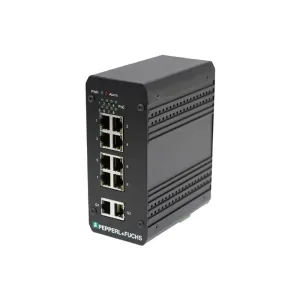
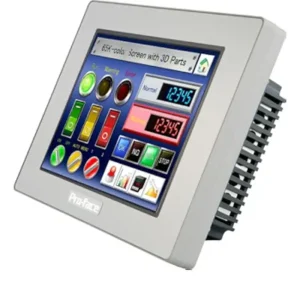
Integrate high-accuracy industrial sensors, communication interfaces, HMIs, and electrical control units.
Critical technical, regulatory, and sourcing questions answered by instrumentation and compliance specialists.
Earth Resistance testing measures the physical resistance of the earth electrode itself to the surrounding ground mass using auxiliary spike insertion methods (like the 3-pole or fall-of-potential test). Earth Fault Loop Impedance (Zs) measures the impedance of the electrical path that a fault current takes during an active phase-to-earth short circuit, which includes the phase conductors, local earthing system, transformer windings, and return path.
By using a No-Trip Loop Testing mode. This mode injects a low current (typically between 10mA and 15mA) on the active line to ground. This current level is below the tripping threshold of standard 30mA RCDs. Sophisticated digital signal processing (DSP) filters are then used to separate the small test signal from the background electrical noise to compute the exact loop impedance.
Testing instruments must meet international performance and safety standards, specifically IEC/EN 61557 (which dictates requirements for equipment used in testing low-voltage electrical systems up to 1000V AC and 1500V DC). Calibration certificates must trace back to national metrology standards (NIST or DAkkS/DKD), confirming that the instrument retains its rated accuracy across its measurement range.
For circuits located near the source of distribution (such as substation transformers), the impedance values are extremely low. Standard meters (0.01Ω resolution) have an uncertainty margin that is too wide to accurately verify safe operating parameters. High-resolution, high-current meters use test currents of up to 200A to generate a measurable voltage drop, providing the necessary accuracy to compute reliable Prospective Fault Current (PFC) values.
 Machine-Win