Best AC Power Sources Manufacturer & Manufacturers

Precision Engineering, Global Supply Chain Orchestration, and Custom Testing Solutions for Industry Leaders

Featured Industrial Instruments & Power Solutions

Explore our premium selection of testing, measurement, and precision power analyzer systems.
Global AC Power Sources: Architectural Integrity & Engineering Principles

Modern electrical engineering requires highly accurate, clean, and flexible power architectures. Choosing an AC power source is no longer just about supplying voltage; it involves simulating complex grid conditions, evaluating harmonic distortion, and preparing for global compliance tests. Whether you are engineering automotive drivetrains, validating aerospace systems at 400Hz, or testing medical electronics, finding the right AC power source manufacturer is critical for product reliability and market entry.

SEO Insight & Semantic Value: Selecting an AC power source manufacturer goes beyond matching kilowatt capacities. True technical compliance requires evaluating Total Harmonic Distortion (THD), transient recovery timelines, and phase synchronization capabilities under dynamic, non-linear loads.

Understanding Programmable AC Power Sources

Programmable AC power sources are sophisticated instruments designed to simulate real-world grid irregularities. Unlike standard variable transformers, programmable AC sources allow engineers to control voltage amplitude, frequency, phase angle, and wave characteristics. This capability is essential for performing compliance tests according to international standards such as IEC 61000-3-2 (harmonic current emissions) and IEC 61000-4-11 (voltage dips, short interruptions, and voltage variations).

Key parameters for comparing AC power source manufacturers include:
  • Total Harmonic Distortion (THD): Pure sine wave outputs with low THD (often <0.5% at full linear load) prevent external noise from skewing test results.
  • Output Frequency Range: Standard systems run from 45Hz to 500Hz. Advanced systems go up to 5kHz, supporting specialized military and aviation setups.
  • Regenerative Capabilities: Advanced bidirectional AC sources feed energy back into the local grid during testing. This reduces thermal load and utility costs, making it ideal for solar inverter and EV-to-Grid (V2G) testing.
Machine-Win Technology Co., Ltd. Global Supply Infrastructure

Localized Support, Compliance, and Certification

Deploying heavy industrial hardware requires strong localized technical support and clear regulatory compliance. A reliable manufacturer must design equipment that conforms to regional grid requirements and safety directives. For example, CE marking for Europe, UL/CSA certifications for North America, and CCC for China are essential regulatory credentials.

Beyond safety marks, local calibration and repair networks are critical. High-precision industries cannot afford long downtimes when sending instruments abroad for annual calibration. Partners like Machine-Win Technology Co., Ltd. bridge this gap by providing sales, repair, and calibration services, ensuring that your test instrumentation remains compliant with ISO/IEC 17025 standards throughout its operational lifespan.

Supply Chain Strengths: The China Manufacturing Advantage

China has become a major hub for high-performance power electronics. The combination of local components, mechanical engineering, and extensive testing infrastructure creates a resilient supply chain. China-based manufacturers provide substantial benefits, including:

  • Rapid Prototyping: Co-located component suppliers and metal fabrication facilities allow for fast design cycles and customization.
  • Cost-Effective Scaling: Access to regional sub-assembly lines reduces overhead costs compared to Western manufacturers, without compromising component quality.
  • Custom OEM/ODM Services: Chinese factories are highly adaptable, offering customized sheet metal, specialized control interfaces, and custom software integrations to match specific test setups.

As a global partner, Machine-Win leverages this ecosystem to manage procurement, perform quality control, and handle shipping logistics. This ensures that customers receive original, certified equipment on time.

Global Procurement Needs

Procurement teams face several challenges when sourcing AC power sources: managing lead times, verifying authenticity, and standardizing equipment across multiple regional offices. A unified procurement model reduces system integration costs and keeps testing methods consistent across global engineering sites.

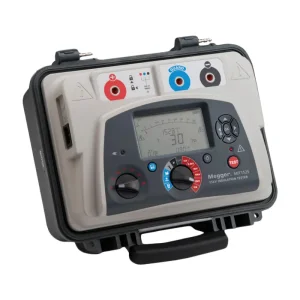
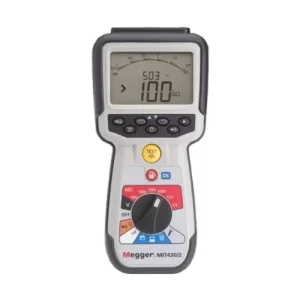
Standardizing on well-known brands like KEYSIGHT, RIGOL, ITECH, YOKOGAWA, and CHROMA simplifies training and makes software automation scripts easier to reuse. Procurement agents should work with suppliers that offer both the primary power sources and the necessary accessories, such as Megger insulation testers, Tektronix multimeters, and high-frequency network analyzers, to streamline the purchasing process.

Industry Trends: Smart Grids and SiC/GaN Technology

The AC power source industry is evolving to keep pace with broader trends in power electronics:

  • Wide Bandgap Semiconductors (SiC & GaN): Manufacturers are replacing silicon-based switches with Silicon Carbide (SiC) and Gallium Nitride (GaN) transistors. This transition leads to higher efficiency, faster response times, and smaller chassis footprints.
  • Hardware-in-the-Loop (HIL) Integration: Modern AC power sources increasingly feature real-time analog interfaces. This allows them to connect with HIL testing systems, simulating complex microgrids and real-time transient events.
  • High-Frequency Output: Emerging applications in electric aviation and high-speed motor drives require AC sources capable of producing stable frequencies of 800Hz, 1000Hz, or higher.

Localized Application Scenarios

To help engineers identify the correct configuration, let's look at key applications for programmable AC power sources:

  • Aviation and Defense (400Hz Systems): Simulating aircraft power systems (typically 115V AC at 400Hz) to test onboard electronics, instruments, and actuators.
  • EV charging Infrastructure: Testing electric vehicle supply equipment (EVSE) against varying grid voltages and frequency changes to ensure reliable charging.
  • Renewable Energy Inverter Testing: Simulating voltage swells, sags, and frequency shifts to evaluate grid-tied solar and wind inverters for anti-islanding safety.
  • Consumer Electronics: Testing switch-mode power supplies (SMPS) under different regional voltages (110V/220V) and frequencies (50Hz/60Hz) to ensure global compatibility.

Who We Are: Machine-Win Technology Co., Ltd.

Your strategic ally for brand-new, original industrial brands, instrument sales, repair, calibration, and OEM/ODM engineering solutions.

100%
Genuine Brands Guaranteed
24/7
Customer Support & Service
10+
Years Industry Experience
50+
Global Partners & Brands

One-Stop Instrument Solutions

We provide full-lifecycle instrument sales, repairs, and calibration services. We support top brands including KEYSIGHT, R&S, TEKTRONIX, KEITHLEY, RIGOL, NI, MEGGER, DRUCK, YOKOGAWA, and ITECH.

Industrial Product Supply

We source and supply brand-new, original industrial products across electronics, electrical components, machinery spare parts, hardware, and raw materials. Our brand portfolio includes MITSUBISHI, SIEMENS, SCHNEIDER, PANASONIC, OMRON, DELTA, WEINTEK, EMERSON, and EATON.

OEM/ODM & Sourcing Sourcing

We deliver tailored OEM/ODM solutions across multiple sectors, including batteries, adapters, chargers, computer peripherals, and POF shrink film packaging. We optimize supply chains to reduce procurement costs and improve overall efficiency.

Why Partner with Machine-Win?

Integrated equipment, machines, and spare parts delivered through a single reliable service.

Turnkey Services

Access high-quality instruments from top brands like KEYSIGHT, R&S, and more, all through a single sourcing partner.

Network Testing Solutions

Comprehensive diagnostic and performance testing tools to keep your network infrastructure running smoothly.

Professional Technical Team

Our experienced support engineers help verify specifications, customize configurations, and resolve integration issues.

Industrial Product Supply

Genuine components spanning electronics, electrical parts, machinery spares, hardware tools, and raw materials.

Strategic Sourcing

Maximize your cost efficiency through our global trade network, optimized logistics, and qualified factory relations.

Rapid Response Time

Our customer service team is available 24/7, providing fast shipping and immediate support for urgent requirements.

Technical Q&A: AC Power Sources

Expert insights into selecting, integrating, and operating precision programmable AC power supplies.

Q1: What is the main difference between linear and switching AC power sources?
Linear AC power sources deliver low noise, low electromagnetic interference (EMI), and fast transient recovery times. They are ideal for sensitive R&D testing. Switching AC power sources, on the other hand, offer higher power density, better efficiency, and smaller footprints. This makes them a more practical choice for high-power production testing and burn-in applications.
Q2: How does regenerative testing help reduce operational costs?
Regenerative AC power sources act as bidirectional systems. When testing grid-tied equipment like solar inverters or EV motor controllers, the energy generated by the device under test is fed back into the facility's local power grid instead of being dissipated as heat. This can lower electricity consumption and reduce cooling requirements in test bays by up to 90%.
Q3: Why is 400Hz frequency output critical in aerospace test configurations?
Aviation, aerospace, and military electrical systems operate at 400Hz to save weight. Higher frequencies allow for smaller, lighter transformers and motors on aircraft. Test setups must simulate this 400Hz grid to evaluate how avionics, power converters, and auxiliary generators behave under standard flight conditions.
Q4: How do I select the right phase configuration (1-phase vs. 3-phase) for my facility?
Single-phase AC sources are typically used for consumer electronics and low-power appliances under 5kVA. Three-phase AC sources are needed for high-power industrial equipment, large EV motors, server farms, and grid simulation. Many advanced manufacturers offer selectable multi-phase systems. These can run in either single-phase or three-phase modes, providing flexibility for testing different types of products.
Q5: What role does Crest Factor play in choosing an AC power source?
The Crest Factor is the ratio of peak current to RMS current. Devices with non-linear loads, such as power supplies with capacitive filters, draw current in short, high-amplitude spikes. The AC source must be able to deliver these peak currents without distorting the output voltage waveform. For testing non-linear loads, select an AC source with a crest factor rating of 3:1 or higher.

Additional Diagnostic & Industrial Automation Solutions

Optimize your factory floor and calibration labs with our comprehensive catalog.
Need Help Sourcing the Right Power Infrastructure?

Contact our technical engineering team for customized solutions, system pricing, or calibration support.

Consult an Expert