Machine-Win Technology Co., Ltd. is a globally established, professional, and reliable international supply chain enterprise. We specialize in engineering and providing an extensive, high-precision instrument and hardware matrix designed for modern high-frequency communication, industrial automation, and power systems. Drawing on decades of accumulated experience in global logistics, instrumentation calibration, and regulatory compliance, we guarantee streamlined, reliable component procurement and customized system designs for international markets.
As your one-stop strategic partner, we bridge the gap between world-leading original instrumentation manufacturers (OIMs) and industrial end-users. We manage complex procurement processes, ensure strict calibration tracing, and deliver comprehensive design-and-build services. Our technical expertise encompasses standard RF architectures and custom test signal generator solutions designed to fit custom testing frameworks across telecommunication, aerospace, and semiconductor industries.
Request Engineering Consultation
Modern telecommunications, automotive electronics, and aerospace systems demand highly customized, clean, and repeatable reference waveforms. Standard off-the-shelf signal generators often lack the exact frequency agility, channel density, or phase synchronization needed for complex multichannel receiver testing. Custom test signal generators solve this challenge. By combining Direct Digital Synthesis (DDS), Arbitrary Waveform Generation (AWG), and custom RF upconversion modules, these specialized units generate exact signals—ranging from ultra-low frequency control loops to high-gigahertz carrier waves.
For systems validation engineers, a custom signal generator is more than just a source of basic sine waves. It acts as an adjustable physical environment emulator. It replicates multi-path interference, atmospheric signal degradation, phase jitter, and thermal noise. By embedding these characteristics directly into the generated RF signal, engineers can stress-test high-speed receivers, complex modulation formats, and digital switching lines under realistic, repeatable conditions. This guarantees robust end-product design before mass-market deployment.
The global test and measurement market is moving quickly toward highly modular, software-defined testing systems. In sectors like electric vehicles (EV) and ADAS, engineers need signal generation frameworks that can adapt on the fly. This means moving from simulating simple wheel-speed sensor waveforms to simulating complex, multi-channel 77GHz radar returns. Our custom test signal generator systems provide the modular basis for these test setups, allowing industrial operators to update software profiles without replacing expensive physical hardware.
Additionally, the transition to 5G Advanced and early research into 6G networks has created a need for wider bandwidths and higher frequency bands, such as the millimeter-wave (mmWave) and sub-terahertz ranges. Custom signal generators are critical for validating these architectures, supplying clean carrier signals and complex modulations (like QAM-4096 or OFDM) with extremely low Error Vector Magnitude (EVM). This capability helps developers isolate noise and design errors within the device under test (DUT).
To deploy custom test equipment in global markets, manufacturers must meet strict international regulatory standards. These standards ensure safety, electromagnetic compatibility (EMC), and measurement reliability:
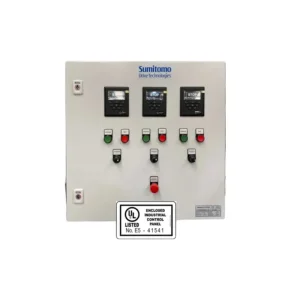
UL 508A Compliance: When integrating custom signal generation systems into larger industrial control panels, compliance with UL 508A is essential. It guarantees the structural, electrical, and thermal safety of the control layout, reducing risk and simplifying overall system validation.
ISO/IEC 17025 Calibrations: High-precision instruments require a clear, traceable path to national reference standards, such as NIST. Our global export operations include complete verification data. This ensures every custom test signal generator maintains its rated accuracy, power output, and spectral purity across its lifetime.
EMC and Safety Certifications (CE, FCC): To minimize interference with nearby electronics, our signal generators are built with robust shielding and clean power supplies. This design meets the strict radiated and conducted emission limits required by European (CE) and North American (FCC) regulations.
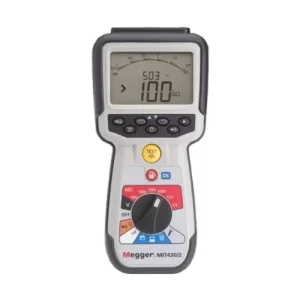
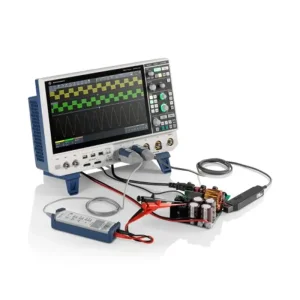
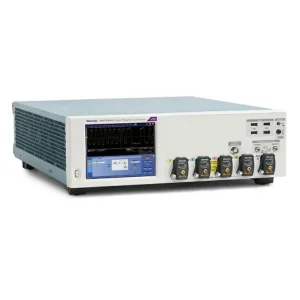
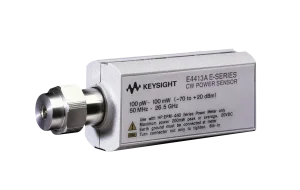
We supply, integrate, and configure high-performance hardware from top-tier brands like KEYSIGHT, R&S, TEKTRONIX, and KEITHLEY. This gives you access to the best core testing platforms on the market.
We supply high-speed fiber-optic and network analyzer systems that keep network infrastructures running smoothly, helping operators quickly diagnose and fix signal integrity issues.
Our engineering team helps you customize, calibrate, and troubleshoot your equipment, ensuring your testing lines experience minimal downtime.
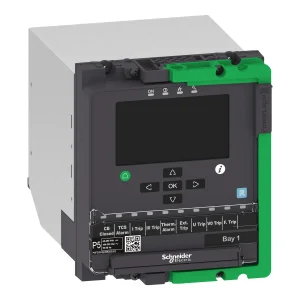
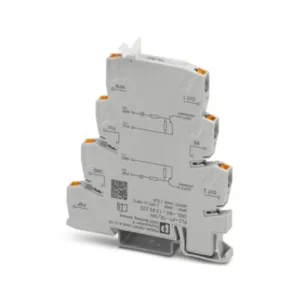
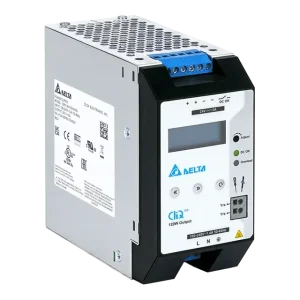
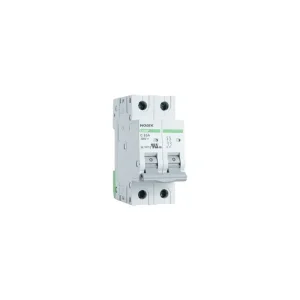
We provide original industrial components, such as Schneider protective relays and Phoenix Contact amplifiers, ensuring your testing stands integrate seamlessly with plant floor automation.
Our global sourcing network helps you procure hard-to-find components and optimize your supply chain, keeping projects on budget and on schedule.
We offer around-the-clock technical support and fast delivery for urgent projects, helping you meet tight deadlines and keep production lines running.
As microelectronics shift to lower operating voltages and faster switching speeds, signal generation technology must evolve to match. The next generation of custom test signal generators will rely on multi-gigasample-per-second (GS/s) digital-to-analog converters (DACs) to synthesize RF signals directly. This approach eliminates traditional analog mixing stages, removing common sources of phase noise and sideband distortion. Our roadmap includes integrating these high-speed converters with field-programmable gate arrays (FPGAs) to dynamically generate complex signal patterns on the fly.
In addition, AI-driven digital pre-distortion (DPD) is becoming standard in modern signal generation. By monitoring and correcting for non-linearities in real time, signal generators can output cleaner waveforms even at high power levels. This tech is particularly useful when testing wideband RF amplifiers for 5G/6G transmitters, where maintaining low out-of-band emissions is critical.
Looking ahead, we are exploring optical and quantum signal synthesis. Generating RF signals by beating laser signals together on high-speed photodetectors offers ultra-wide bandwidths and exceptionally low phase noise. This technology will be essential for validating next-generation satellite communications, deep-space radar, and quantum computing interfaces.
 Machine-Win