Explore our elite portfolio of industrial hardware, testing systems, and premium calibration components ready for deployment.
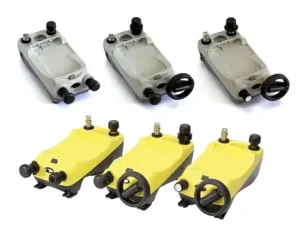 China Druck Pressure Generating Station, PV620 Series Exporters, Products
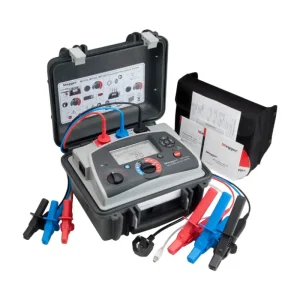 Custom Megger Insulation Resistance Tester MIT1025/2 Exporter, Product
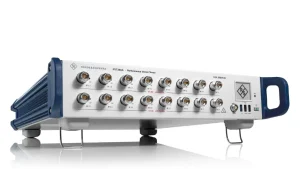 Wholesale Performance vector tester PVT360A Manufacturers, Supplier
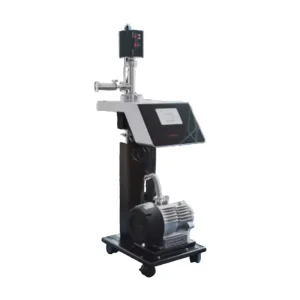 Wholesale Leybold LEYSPEC Carts Mobile residual gas analyzers LEYSPEC Cart 100 S Exporter, Product
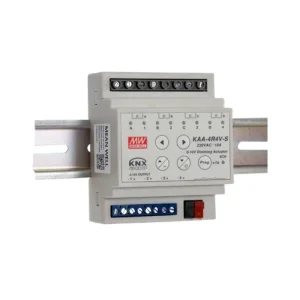 Custom Meanwell KNX LED Dimming Actuator KAA-4R4V-S Manufacturers, Products
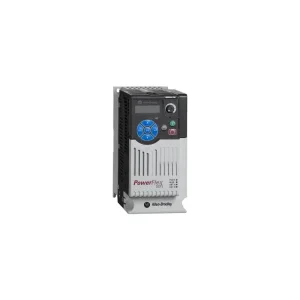 Best Rockwell PowerFlex 523 2.2kW (3Hp) AC Drive 25A-A011N104 Exporters, Product
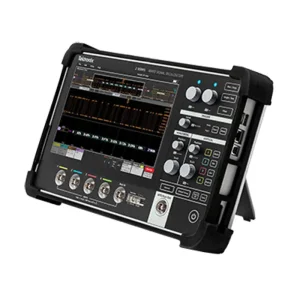 China Tektronix MSO Mixed Signal Portable Oscilloscope, 2 Seriess MSO22 MSO24 Suppliers, Product
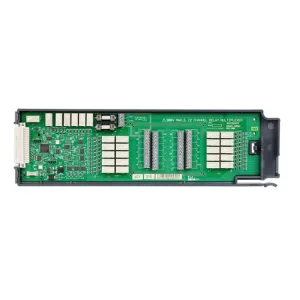 Best For DAQ970A and DAQ973A, the DAQM901A 20 Channel Multiplexer Module Manufacturers, Supplier
Machine-Win Technology Co., Ltd. is a leading-edge, professional, and reliable international supply chain and engineering enterprise. We specialize in providing a broad array of precision instruments, RF component systems, and strategic automation components for diverse high-tech industries.
By integrating a global logistics network with direct engineer-level partnerships, we remove sourcing hurdles for key global sectors. Our operations bridge the gap between high-precision testing (featuring keysight, R&S, Tektronix calibration rigs) and resilient manufacturing components, delivering unparalleled compliance, system integration, and on-time execution.
Contact our RF Sourcing Specialists
How China's RF Signal Conditioning ecosystem supports modern telecommunication, aerospace, and high-frequency laboratories worldwide.
In high-frequency electronics, raw analog signals are susceptible to interference, path attenuation, distortion, and impedance mismatch. RF Signal Conditioning is the processes applied to convert these raw electromagnetic signals into structured, clean, and calibrated forms suitable for analog-to-digital converters (ADCs), mixers, or transmission antennas. As networks shift toward mmWave frequencies, the demand for precision signal conditioning systems—incorporating attenuators, low-noise amplifiers (LNAs), bandpass filters, phase shifters, and power splitters—has experienced unprecedented growth.
As an established China RF Signal Conditioning Supplier, Machine-Win Technology acts as a vital link, supplying high-performance components designed to preserve signal integrity, prevent impedance mismatching, and reduce overall noise figure. Whether processing RF signals in massive MIMO arrays or configuring micro-machined radar transceivers, our selection ensures the stability your designs require.
Utilizing high-linearity amplification and precision attenuation to optimize signal amplitude without introducing spurious frequencies or unwanted harmonic distortion into the transmission chain.
Advanced bandpass, highpass, and notch filtering configurations that remove out-of-band noise, co-channel interference, and cellular leakage, maintaining clean spectrum allocation.
Highly precise 50Ω and 75Ω impedance transformation arrays that minimize VSWR (Voltage Standing Wave Ratio) and reflection coefficients, protecting high-power transmitters.
Stay ahead of the technological developments driving components sourcing and network architectures.
The roll-out of sub-6GHz and millimeter-wave technologies demands higher frequency RF conditioning units capable of operating up to 40GHz and beyond with minimal insertion loss.
System-in-Package (SiP) and Monolithic Microwave Integrated Circuits (MMICs) are combining multiple conditioning steps onto a single die, requiring high thermal dissipation.
Software-defined RF structures dynamically adjust filtering parameters and amplification based on real-time channel state feedback and multi-path fading profiles.
Gallium Nitride (GaN) components are replacing Silicon-based hardware due to superior power density, operating efficiency, and robust handling of high voltage and thermal loads.
Deciphering the critical quality baselines and validation metrics that modern sourcing managers demand from their supply partners.
For global procurement agencies, choosing an RF supplier goes beyond raw pricing. High-frequency operations demand strict compliance with international standards to ensure interoperability and safety. When vetting industrial suppliers, components must meet strict baselines:
Machine-Win Technology addresses these issues directly. With a deep sourcing platform and close alignment with official manufacturers, we provide fully verified industrial assets. By streamlining custom clearance, providing test reports, and coordinating secure freight logistics, we guarantee that our products arrive on-site ready to perform.
How advanced production modeling and local value chains deliver unmatched scalability and cost advantages.
The modernization of China's production landscape—widely known as Factory 4.0—has revolutionized the manufacture of high-frequency components. By integrating automated optical inspection (AOI), robotic component pick-and-place lines, and automated assembly line solutions for pneumatic mechanisms and RF shields, Chinese factories offer unparalleled scale.
At the center of this transition is supply chain resilience. Due to local access to raw materials, micro-electronic processing centers, and testing infrastructure, Chinese manufacturers can bypass typical cross-border delays. This localized ecosystem dramatically reduces development loops, enabling rapid prototyping of customized RF conditioning modules.
Whether optimizing standard automated gas springs production lines or sourcing specialized high-density multi-port switchboards, Factory 4.0 techniques ensure highly repeatable tolerances and exceptional cost efficiency.
Why global technology enterprises trust Machine-Win Technology as their strategic sourcing ally.
We supply top-tier brand instruments including KEYSIGHT, R&S, Tektronix, and Keithley, offering complete system integration alongside calibration support.
Our engineers provide robust consulting to help clients evaluate network throughput, diagnose physical layer faults, and optimize link margins.
Our customer support team is staffed by experienced application engineers to ensure technical inquiries receive precise, actionable responses.
From complex semiconductor controllers and PLC modules to pneumatic components, we cover original parts from Siemens, OMRON, Mitsubishi, and Rockwell.
We analyze customer volume requirements, negotiate direct vendor allocations, manage buffering inventories, and reduce sourcing overheads.
We provide around-the-clock technical communication and priority processing for urgent component requests, keeping factories operational.
Exploring where RF signal conditioning and precision automation intersect in commercial production environments.
Automotive Tier-1 suppliers require robust test environments to validate ADAS radar sensors (77-81GHz). RF conditioning modules scale down high-frequency signals for analyzers without introducing phase noise.
Hardware Used: Tektronix MSO Series Oscilloscopes & Performance Vector Testers.Telecommunications carriers need to verify massive MIMO transceiver setups. Signal conditioning elements regulate output power margins to prevent damage to expensive analyzer networks.
Hardware Used: Keysight Mutiplexers, RF Attenuator Arrays & LEYSPEC residual gas analyzers.University research centers require flexible RF networks to evaluate novel antenna configurations. Precision impedance-matching devices maintain signal integrity over wide frequency sweeps.
Hardware Used: Rohde & Schwarz RTO6 High-Performance Oscilloscopes.Answers to common industry questions regarding RF signal conditioning and international supply lines.
Access our catalog of industrial controllers, testing hardware, and automation components.
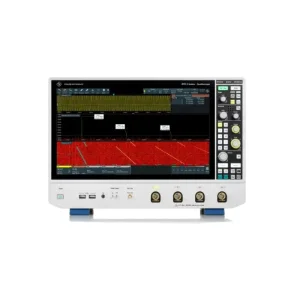 Best Rohde & Schwarz R&S®RTO6 Oscilloscope R&S®RTO64 Manufacturer, Exporters
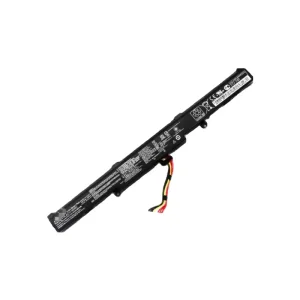 Wholesale Asus Laptop Battery SPU A41N1611 for Asus ZX53V ZX53VE ZX53VE7300 ZX53VE7700 Exporters, Products
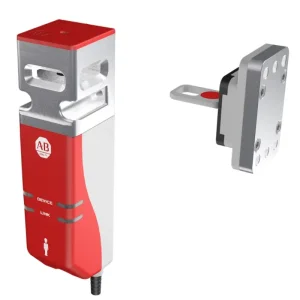 China Rockwell Guardmaster 440G-MZ Guardlock Switch 440G-MZS20SNRJ Products, Product
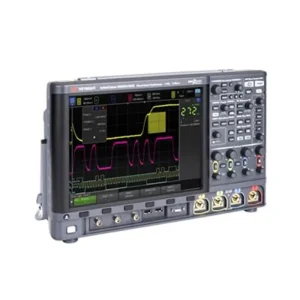 Wholesale Keysight 4000 X-Series MSOX4154G Mixed Signal Oscilloscope Manufacturer, Exporters
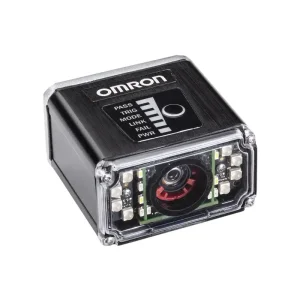 China OMRON MicroHAWK F430 Series Industrial Ethernet Smart Camera F430-F000L12M-NNA Manufacturer, Exporters
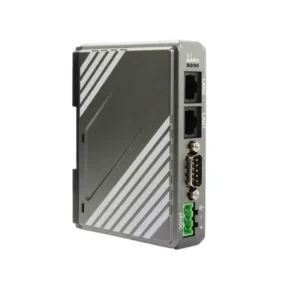 Best Weintek CMT-G01 IIoT Gateway Supports OPC UA and MQTT Exporters, Exporter
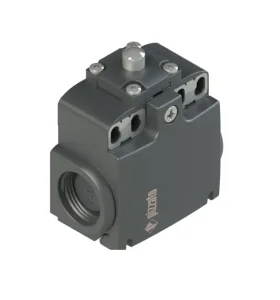 Custom Pizzato Position switches for standard applications FX Series FX 1001-M2 Exporter, Products
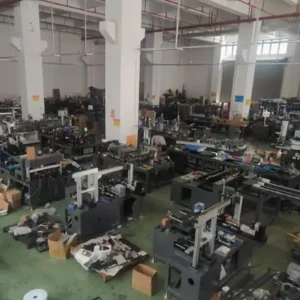 Custom Fully Automated Assembly Production Line for Gas Springs and Gas Pressure Rods Manufacturers, Product
 Machine-Win