High-precision electrical instrumentation, PLC systems, and pneumatic components sourced for international clients
Calibration Accuracy Guarantee
Global Top-Tier Brands
Technical & Engineering Support
Countries Reached in Export Logics
In modern electronic engineering, signal integrity and waveform fidelity serve as the foundation of research, development, validation, and calibration. The ability to synthesize specific voltages over time with precise amplitude, phase, and frequency parameters is critical. This whitepaper analyzes the predominant function generator types, examining how distinct technology routes affect output parameters such as total harmonic distortion (THD), phase noise, frequency resolution, and rise/fall times.
A. Direct Digital Synthesis (DDS) Generators: DDS systems generate periodic waveforms by reading phase points from a lookup table in memory and routing them to a Digital-to-Analog Converter (DAC). The phase-accumulator design allows for fine frequency tuning (often down to micro-Hertz resolution) and rapid, phase-continuous frequency switching. However, because DDS drops or duplicates points at non-integer sampling ratios, it suffers from periodic jitter.
B. True Arbitrary Waveform Generators (TrueArb): Unlike DDS, TrueArb architectures stream every stored waveform point sequentially through the DAC. This ensures that no point is skipped or repeated, maintaining high signal fidelity without compromising jitter performance. This architecture is vital for validating high-speed communication buses, automotive radar components, and custom communication protocols.
C. Analog Function Generators: Utilizing classic voltage-controlled oscillator (VCO) loops, discrete analog circuit paths build sine, square, and triangle waves. While modern DDS systems have largely replaced these, analog units remain valued for educational labs and specialized audio-frequency validation because they lack quantization noise.
Best for rapid frequency hopping, standard testing waves (sine, square, ramp), and projects demanding sub-micro-Hertz resolution under tight budget constraints.
Crucial for simulating real-world signal anomalies, multi-level pulse schemes (PAM4/PAM8), and complex protocol validation with zero phase point skipping.
Valued for zero-quantization testing, high-reliability legacy configurations, and environments requiring isolation from modern digital high-frequency noise.
The deployment of test instruments is shifting away from isolated tabletop units and toward network-enabled, software-defined ecosystems. Test setups in the automotive, aerospace, and semiconductor sectors require function generators to interface directly with oscilloscopes, power analyzers, and network analyzers.
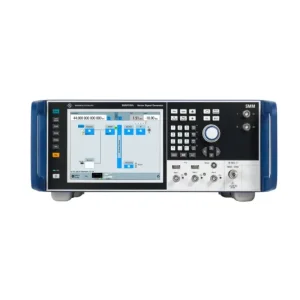
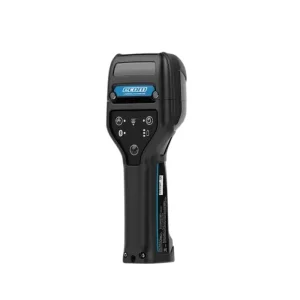
For instance, vector signal generation (such as with the R&S®SMM100A) represents the top end of the RF testing market, enabling millimeter-wave development. At the same time, standard industrial operations require robust handheld interfaces for troubleshooting sensors, actuators, and signal loops, highlighting the need for portable, reliable equipment.
How distinct function generator designs solve testing challenges across industries and regions
In European and North American automotive hubs, engineers use TrueArb function generators to simulate complex crankshaft sensor outputs, CAN/LIN bus noise, and electrical transients. Generating precise arbitrary signals allows developers to test Electronic Control Units (ECUs) under repeatable fault conditions.
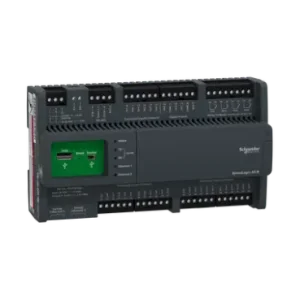
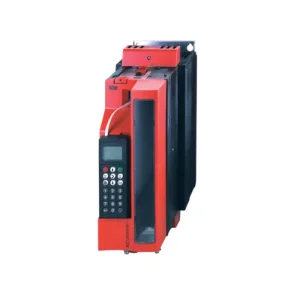
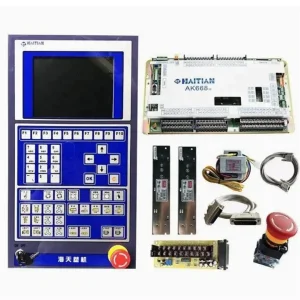
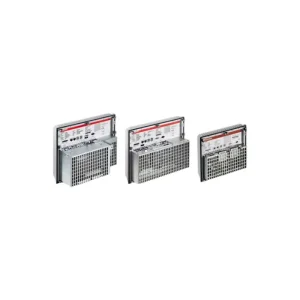
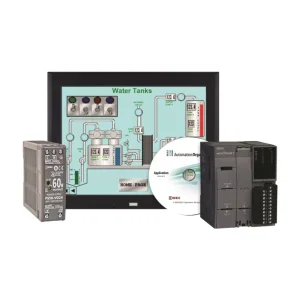
On factory floors across Asia and Europe, signal generators simulate 0-10V and 4-20mA loop signals. This process validates analog input cards on PLC systems like the Haitian Techmation AK668 or Beckhoff C6515. It ensures proper signal scaling, noise rejection, and sensor failure routing before deployment.
RF signal generators (like the Rohde & Schwarz SMM100A) are essential in defense electronic labs. They validate military communication systems, simulate multi-path radar reflections, and evaluate electronic warfare countermeasures. This requires low phase noise and wide modulation bandwidths.
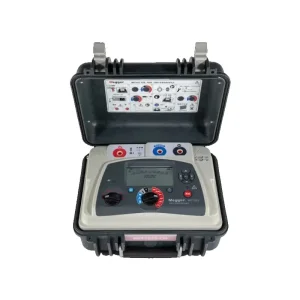
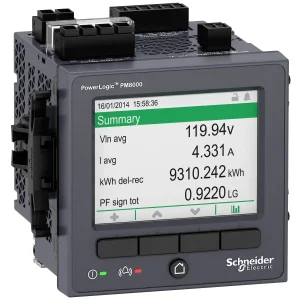
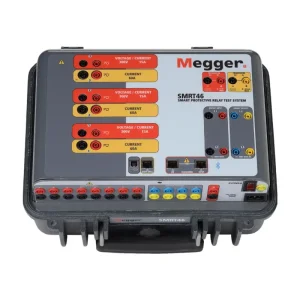
Testing power grids and sub-stations requires simulating transient overvoltages and phase imbalances. Engineers pair arbitrary function generators with high-voltage amplifier circuits to validate relays, test insulation testers (such as the Megger MIT515), and verify power quality meters (such as the Schneider PM8000).
Machine-Win Technology Co., Ltd. is a professional and reliable international supply chain partner specializing in sourcing high-quality testing instruments, industrial control electronics, spare parts, and raw materials. Our extensive industry experience and global supplier network allow us to deliver reliable products and services tailored to meet international standards.
We operate as a single point of contact for sales, calibration, instrument repair, and network testing solutions. We partner with top-tier brands to keep your testing benches and production lines running efficiently:
Providing supply chain integration, technical calibration, and OEM/ODM engineering services
We provide sourcing, distribution, warranty maintenance, and calibration across various test architectures. We offer access to high-frequency vector signal synthesizers, network analyzers, oscilloscopes, and process calibrators.
We supply brand-new, original industrial products, including electronics, electrical systems, spare parts, hardware, tools, and raw materials. We work with trusted brands like Mitsubishi, Siemens, Schneider, Panasonic, Omron, Delta, and Emerson.
We deliver tailored manufacturing and procurement solutions, spanning computing accessories (chargers, batteries, keyboards), workshop assembly line parts, and specialized packaging materials like POF shrink films.
How we leverage integrated industrial ecosystems to ensure on-time delivery and quality compliance
Our operational centers are situated within major manufacturing clusters. This proximity allows us to quickly source key electrical sub-assemblies, precision hardware, and raw materials. Our location helps reduce lead times compared to fragmented supply networks.
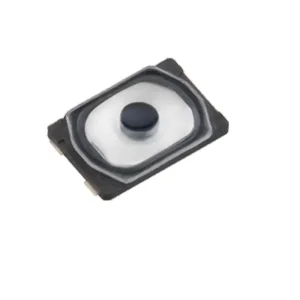
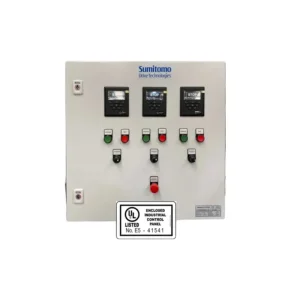
We manage rigorous inspection protocols. From basic switch assemblies (such as Panasonic Tactile Switches) to large industrial control setups (including Sumitomodrive UL 508A Industrial Control Panels), we verify that all products undergo standard factory acceptance testing.
We handle export licensing, customs declarations, international logistics, and documentation. This end-to-end management reduces the risk of border delays for delicate test equipment, industrial computers, and high-precision sensors.
The function generator market is evolving to support higher-speed communications and more complex automation systems. Key trends shaping the future of signal generation include:
Modern DAC designs are moving toward higher sampling rates (exceeding 10 GSa/s) and vertical resolution (transitioning from 14-bit to 16-bit and 18-bit paths). This change lowers the noise floor and reduces spurs, which is essential for testing 5G/6G transceivers and satellite communications.
Modern testing environments increasingly rely on virtual instrumentation. Software-defined architectures allow engineers to configure signals directly from MATLAB, LabVIEW, or custom Python libraries. This integration facilitates automated testing runs and remote debugging, making it easier to manage complex setups.
Advanced projects, such as quantum computing research and phased-array radar testing, require multiple signal outputs with precise phase alignment. Modern arbitrary waveform generators provide channel-to-channel skew adjustments down to the picosecond range. This capability helps simulate clean, synchronized multi-phase systems.
Ensuring calibration alignment, documentation compliance, and local importing support
We coordinate calibration services traceable to national standards (such as NIST or equivalent regional bodies). This ensures that imported function generators, multimeters, and pressure sensors are ready for immediate integration into quality-controlled testing workflows.
We verify that the industrial systems we supply comply with standard global regulatory markers, including CE, RoHS, FCC, and UL (such as the UL 508A standard for industrial control panels). This step helps prevent customs issues and ensures plant safety.
Our logistics network handles sensitive instrumentation with care. We use shock-absorbent, climate-controlled packaging to protect calibration parameters during sea, air, or land transit, ensuring the equipment arrives in working order.
Common questions from engineering departments and purchasing teams regarding signal generation and sourcing
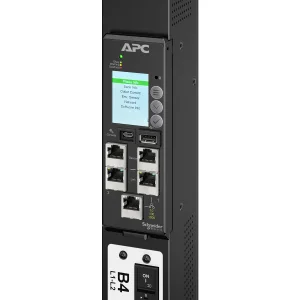
High-grade vector signal generators, intrinsic tools, network PDUs, and PLCs for industrial settings
 Machine-Win