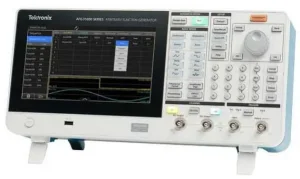
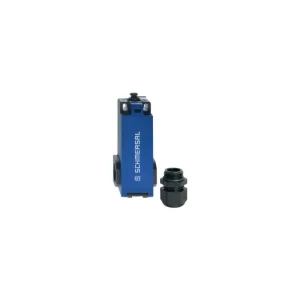
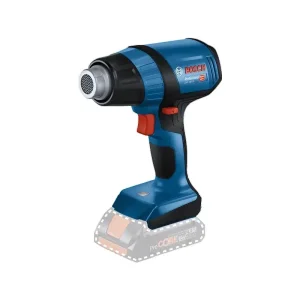
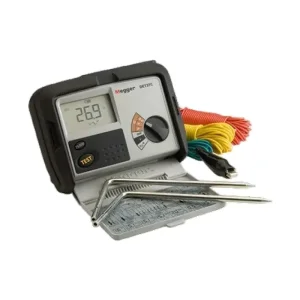
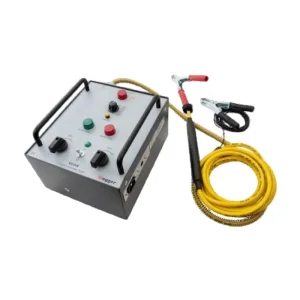
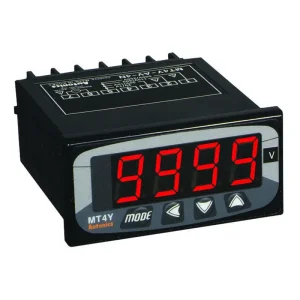
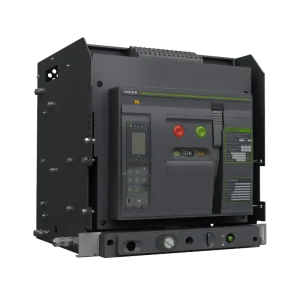
Explore our elite selection of industrial testing calibration systems and premium analog generators, sourced and maintained to the highest quality standards.
In modern electronic design, verification, and automated testing, the generation of precise signals is the bedrock of system accuracy. An Analog Generator (specifically encompassing RF analog signal generators, function generators, and arbitrary waveform generators) serves as the primary excitation source for a multitude of device-under-test (DUT) scenarios. Unlike simple digital outputs, custom analog generator products must deliver highly stable waveforms with exceptionally low phase noise, wide frequency coverage, and minimal total harmonic distortion (THD).
Customization in this sector is driven by specialized industry applications. Design engineers frequently require tailored modulation profiles, non-standard source impedances, multi-channel phase-coherent architectures, and integrated amplification. These parameters are essential when testing low-noise amplifiers (LNAs), automotive radar transceivers, or high-performance mixers. Sourcing a standard off-the-shelf instrument often forces engineering teams into compromises, which is why Custom Analog Generator Products built with application-specific hardware and software architectures are highly sought after by tier-one enterprise buyers.
Google’s search algorithms increasingly prioritize semantic matching over pure keyword frequency. For "Custom Analog Generator Products," search engines analyze user queries to locate signals related to RF calibration, impedance matching, Direct Digital Synthesis (DDS), phase noise specifications, and supplier reliability. Global enterprise buyers—such as lab directors, aerospace compliance engineers, and procurement managers—are rarely searching for generic equipment. Instead, their search intents map to the following crucial evaluation pathways:
The manufacturing ecosystem of China plays a vital role in keeping testing and measurement equipment accessible and adaptable. Industrial hubs in Guangdong and Zhejiang offer deep clusters of component suppliers, precision PCB manufacturers (PCBA), and testing calibration labs. These cluster effects grant unique capabilities to companies operating in the region, including:
1. Cost-Efficient Prototyping: Sourcing custom metal enclosures, high-frequency RF connectors (SMA, SMP, N-type), and specialized power components locally drops turnaround times from months to days.
2. Industrial Scale: By coordinating production with top-tier brands like Keysight, Tektronix, and Rohde & Schwarz, Chinese manufacturing facilities can scale output from low-volume bespoke prototypes to high-volume standard units without compromising on rigorous quality control (QC).
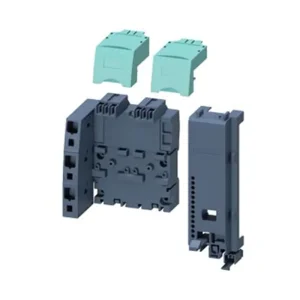
3. Agile Adaptation: When custom changes are required—such as modifying an infeed system like the Siemens 3RV2907-1AB00 or integrating specialized rotary components like the Yaskawa SGM7J—local engineering teams can rapidly cross-verify and configure mechanical-electrical drawings to align with assembly line demands.
Deploying analog generators and automated test systems globally requires navigating complex regulatory landscapes. Hardware compliance is not just about avoiding legal issues; it is about ensuring user safety, electromagnetic compatibility (EMC), and environmental stewardship. Below are the core compliance layers we support:
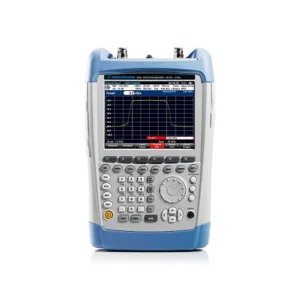
Compliance with CE, FCC Part 15, RoHS, and REACH guidelines is mandatory. Our systems are engineered to prevent electromagnetic interference (EMI) from leaking out, protecting nearby sensitive measurement instruments like Rohde & Schwarz or Keysight spectrum analyzers.
Any custom analog waveform generator must have its accuracy verified. Calibration processes are traceable to international standards, providing metrological confidence for mission-critical automotive or aerospace testing pipelines.
Additionally, localized technical support forms the backbone of reliable operations. Machine-Win Technology Co., Ltd. provides local repair and calibration coordination, ensuring that if an instrument suffers from drift or hardware failures, downtime is minimized. Rather than shipping units back across oceans, localized test hubs manage swift diagnostics and component replacements.
The field of analog signal generation is undergoing a digital revolution. Several technological transformations are altering the market:
Your reliable international supply chain and strategic sourcing partner for electronics, machinery, and instrumentation.
We provide full-spectrum equipment acquisition, maintenance, repair, and calibration services, partnering with market leaders like KEYSIGHT, R&S, and TEKTRONIX.
From custom adapters, cables, and battery packs to application-specific analog generator layouts, we tailor electronics to your exact specifications.
Leverage our strategic sourcing systems, original component inventory pipelines, and comprehensive QC mechanisms to eliminate operational risks.
Clear answers to common questions about analog signal generators, custom modifications, and our sourcing services.
Our secondary portfolio highlights electrical, safety, automation, and environmental testing instrumentation ready for deployment.
 Machine-Win