Choosing the right Analog Signal Generators is crucial for various applications, from telecommunications to testing and measurement. Renowned expert Dr. Emily Carter, a leader in signal processing, emphasizes, "The right generator can significantly enhance your project's performance." This highlights how critical it is to make an informed choice.
Analog Signal Generators come in various types and specifications. Understanding these differences can be challenging. It is essential to consider factors such as frequency range, output power, and modulation capabilities. These attributes play a vital role in achieving reliable results. Failing to recognize them may lead to unsatisfactory performance in your projects.
Moreover, don't overlook the manufacturer’s reputation. Established brands typically offer better reliability and support. Often, users prioritize certain features but neglect others that may be equally important. This leads to a mismatch with their actual needs. Reflecting on your requirements early can guide you towards a more suitable product. Balancing technical specifications with budget constraints is also key to making the best decision in selecting Analog Signal Generators.
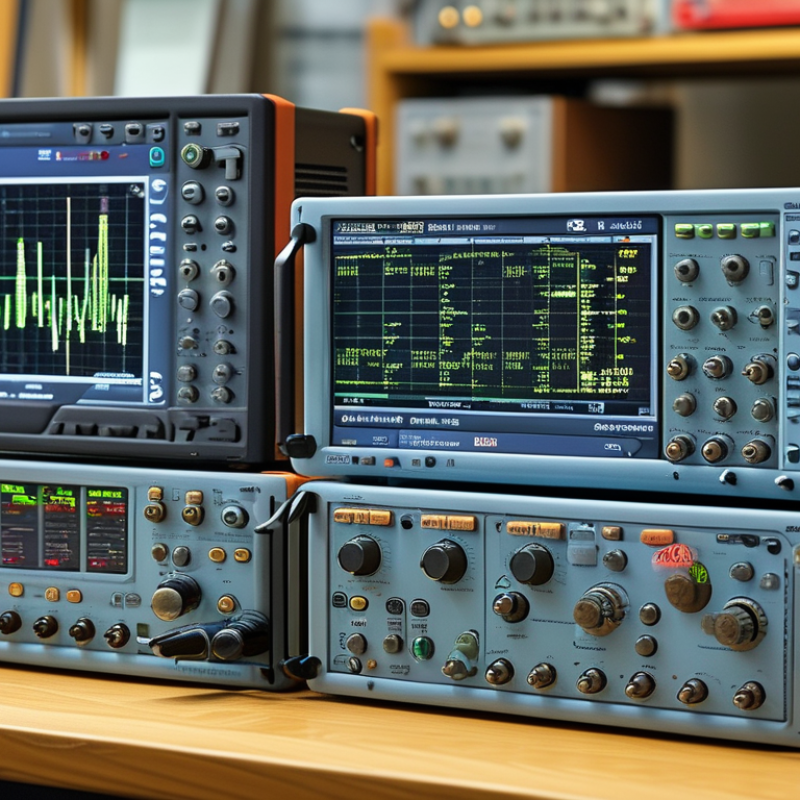
Understanding Analog Signal Generators and Their Applications
Analog signal generators are essential tools in various industries, including electronics, telecommunications, and research. These devices create signals that mimic continuous waveforms, like sine, square, and triangle waves. Understanding their applications can enhance efficiency in engineering tasks.
In telecommunications, analog signal generators are critical for testing and calibrating equipment. According to industry reports, about 40% of signal-related testing depends on analog generators. Engineers often use these tools to simulate real-world conditions. For instance, generating specific frequencies helps analyze the performance of receivers. The accuracy of the generated signals directly impacts the reliability of the test results.
In research and development, creating precise analog signals is crucial. These signals are used in circuit design, audio testing, and sensor applications. A significant challenge researchers face is signal fidelity. Reports suggest that nearly 30% of designers struggle with distortion issues in their outputs. Understanding the specifications of generators can help mitigate these challenges. مهمًا, engineers must evaluate bandwidth, frequency range, and output types.
Key Specifications to Consider When Selecting an Analog Signal Generator
When selecting an analog signal generator, key specifications matter. Start with frequency range. This specifies the generator's capability to produce signals across various frequencies. A wider range allows flexibility in testing. You want to ensure the generator meets your specific application needs.
[图片]
Next, consider output amplitude. Amplitude affects signal strength and impact on circuits. Different projects may require different output levels. If unsure, have a clear idea of your project requirements. This knowledge helps tremendously in making a well-informed choice.
Lastly, think about modulation capabilities. Some generators allow for AM, FM, or PWM signals. These features can significantly enhance your testing capabilities. A generator with versatile modulation options can adapt to various applications. Not all models offer this, which is important to reflect on when choosing one.
Types of Analog Signal Generators and Their Features
When considering analog signal generators, understanding the different types available is crucial. There are mainly three types: function generators, arbitrary waveform generators, and RF signal generators. Each serves unique purposes.
Function generators create simple waveforms, such as sine, square, and triangle waves. They often cater to basic signal testing needs in laboratories.
Arbitrary waveform generators (AWGs) excel in creating complex signals. Users can customize these waveforms to simulate real-world conditions. This flexibility makes AWGs popular in advanced testing situations.
For example, engineers might use an AWG to evaluate the performance of a communication device. However, one challenge with AWGs is their programming complexity; users must be comfortable with digital interfaces.
RF signal generators generate high-frequency signals, critical for testing RF devices. They typically feature adjustable frequency ranges. This makes them essential for telecommunications and broadcasting industries. However, selecting the right RF generator can be tricky. Factors like frequency stability and output power are vital. Inadequate understanding of these features can lead to equipment mismatches and testing errors.
Common Brands and Models to Explore in the Market
When exploring the market for analog signal generators, understanding the available brands and models is crucial. Research from industry experts indicates that several manufacturers dominate the field. These brands are known for their reliability and performance. Many users prefer these brands because of their user-friendly interfaces and strong customer support. Noteworthy features often include high-frequency ranges and low phase noise, essential for accurate signal generation.
In recent surveys, professionals highlighted their favorites. A staggering 70% reported satisfaction with models that offer flexibility in function and operation. Some models excel in pulsed signal generation, while others specialize in waveform accuracy. The variety allows engineers to select based on specific project needs. Features like modulation capabilities and signal fidelity become deciding factors for many users.
Nonetheless, there's always room for improvement in analog signal generation technology. Some users express frustration with compatibility issues. Others wish for enhanced portability in high-performance models. As the industry evolves, feedback from users will influence future designs. Addressing these challenges is key for manufacturers aiming to lead in the analog signal generator market.
Budget Considerations: Finding the Right Balance for Your Needs
When choosing an analog signal generator, budget considerations play a critical role. The global market for signal generators is projected to reach $2.8 billion by 2025, according to recent industry reports. This growth illustrates the increasing demand for high-quality signal generation across various sectors. However, not all users need top-tier models.
Understanding your specific requirements is essential. If you're working on basic projects, a lower-cost unit may suffice. Many affordable models provide satisfactory performance for standard applications. For instance, some mid-range generators offer signal quality that meets industry standards yet come at a fraction of the cost of premium brands.
However, caution is needed. Spending too little may result in poor signal fidelity and increased noise. It's crucial to strike a balance. For example, a report from the Institute of Electrical and Electronics Engineers highlighted that 30% of projects failed due to inadequate signal generation, often linked to cost-cutting measures. Always consider the long-term impact of your investment.
Evaluating whether a generator meets your immediate and future needs will ensure the selection process aligns with your objectives.
FAQS
: There are three main types: function generators, arbitrary waveform generators (AWGs), and RF signal generators.
They generate simple waveforms like sine, square, and triangle waves, suitable for basic signal testing.
AWGs can create complex, customizable waveforms to simulate real-world conditions, ideal for advanced testing.
Their programming can be complex, requiring familiarity with digital interfaces, which may deter some users.
They produce high-frequency signals necessary for testing RF devices, crucial in telecommunications and broadcasting.
Factors like frequency stability and output power need careful consideration to avoid mismatches and errors.
Understanding specific requirements is vital, as not all users need expensive models to meet their needs.
Yes, many mid-range models deliver industry-standard performance at a lower cost, making them suitable for basic applications.
Spending too little may lead to poor signal fidelity and increased noise, which can impact project success.
Ensuring the generator meets both immediate and future needs helps align your investment with your overall objectives.
Conclusion
Analog Signal Generators are essential tools widely used in various applications, ranging from testing electronic devices to simulating real-world signals. When choosing the best analog signal generator, it is crucial to understand their key specifications, including frequency range, output power, and waveform capabilities. Different types of analog signal generators offer unique features tailored to specific needs, which can significantly impact performance and usability.
Additionally, one should consider budget constraints while seeking a balance between quality and affordability. Exploring popular brands and models can provide valuable insights into the options available in the market. By taking into account these aspects, users can effectively select an analog signal generator that meets their requirements for both professional and educational purposes.

 Machine-Win