Choosing the right Thermal Cameras can feel surprisingly difficult. Global buyers face hundreds of models, specifications, and confident marketing claims. A camera may promise sharp images, yet perform poorly in rain, darkness, or crowded industrial spaces.
Professor Michael Vollmer, a respected researcher in infrared thermography, explains the core principle clearly: “Thermal imaging uses infrared radiation to reveal temperature differences that ordinary cameras cannot see.” That difference matters. Thermal Cameras do not simply produce colorful pictures. They measure heat patterns, identify unusual temperature changes, and support decisions in maintenance, building inspection, electrical diagnostics, agriculture, and public safety.
Real conditions are less friendly than product pages suggest. A low-cost model may be excellent for home inspections but unsuitable for high-temperature machinery. A compact smartphone attachment may improve portability, yet offer limited sensitivity and measurement distance. Resolution matters. So do thermal sensitivity, calibration, lens options, software, durability, and regional service support.
No ranking is perfect. Buyer needs vary widely. A contractor working on rooftops needs different performance from a factory technician monitoring motors. Weather, training, warranty access, and local import requirements can also change the final choice. This guide compares leading Thermal Cameras through practical criteria, not impressive labels alone. It considers where each model performs well, where it falls short, and which compromises buyers may need to accept. Some conclusions may remain debatable. That is useful, because careful purchasing should include questions, field testing, and a little healthy doubt.
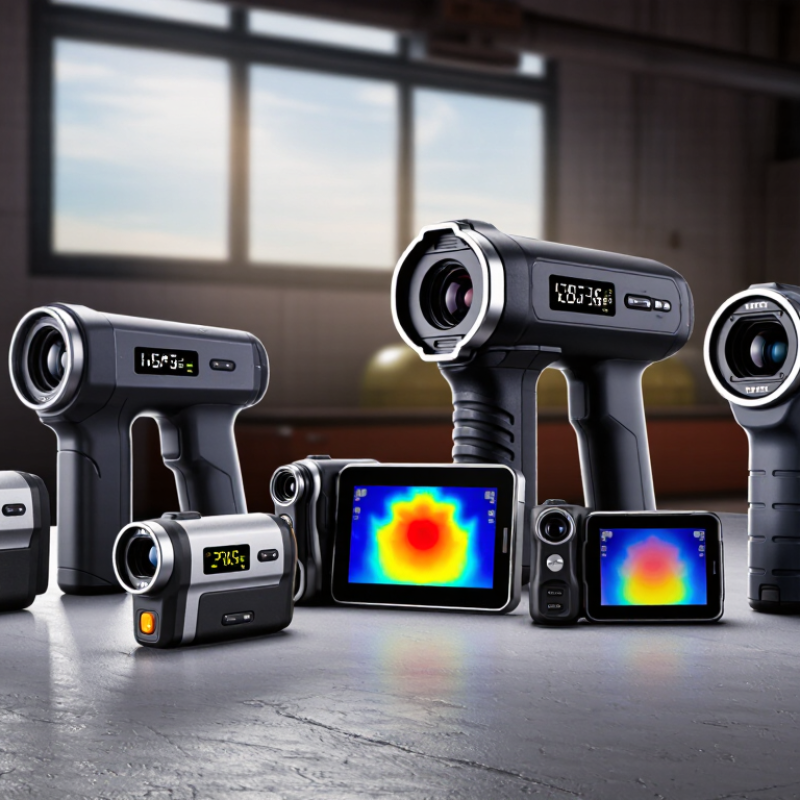
A thermal camera does not photograph visible light. It detects infrared energy emitted from surfaces. Every object above absolute zero releases some thermal radiation. The camera lens focuses this radiation onto a detector, often a microbolometer array. Each pixel responds to absorbed energy by changing its electrical signal. Internal software converts these signals into temperature estimates and colored images. Red does not automatically mean danger.
In practical building inspections, the operator scans walls, electrical panels, pipes, and machinery without touching them. The camera measures surface temperature, not hidden internal temperature. Emissivity settings matter because painted walls, skin, and polished metal emit infrared energy differently. Shiny metal may reflect a person or a lamp. A warm-looking patch can be reflected sunlight. Distance, airflow, humidity, and focus also affect readings. I have learned that a sharp image can still support a poor conclusion.
For global buyers, useful specifications include detector resolution, thermal sensitivity, focusing control, measurement range, and calibration records. A higher resolution is not always better if the lens, software, or operator is weak. Buyers should check whether the device records radiometric data, supports common file formats, and works reliably in the intended climate. Local service, user training, and documented accuracy deserve equal attention. Specifications can mislead. A camera should be tested on a known-temperature surface before serious inspection work.
Choosing a thermal camera starts with the scene, not the feature list. A building inspector may need to spot a narrow temperature difference behind drywall. A maintenance technician may inspect a hot motor from several meters away. Higher resolution helps reveal small defects, while a low NETD rating improves sensitivity between similar temperatures. These specifications matter more than impressive marketing language.
Focus control is often overlooked. Manual focus can produce sharper images at changing distances, but autofocus saves time during routine inspections. Check the refresh rate when viewing moving equipment or walking through a large site. A stable image reduces missed details. The camera should also offer accurate temperature measurement, adjustable emissivity, and a clear display under bright sunlight.
Battery life, weight, grip comfort, and dust resistance affect daily use. A camera that feels excellent for ten minutes may become tiring after an hour. Export options are important too. Radiometric files, visible-light images, and voice notes can make reports easier to verify. Secure software updates and reliable data storage deserve attention, especially for international teams. In hands-on evaluation, no camera performs perfectly in every environment. Reflective metal, glass, steam, and changing airflow can mislead readings. A simple field test with known temperature references is wise. I would not choose a model before testing its accuracy, menu speed, and image clarity in the actual workplace.
Top thermal cameras differ across global markets because buyers value different forms of performance. Field evaluations often begin with thermal resolution, temperature accuracy, and NETD sensitivity. A higher resolution image helps inspectors identify small heat differences on electrical panels. However, it may increase cost, storage needs, and training time. In humid regions, reliable focus and moisture protection can matter more than maximum pixel count.
North American buyers often compare industrial safety features, cloud reporting, and service coverage.
European buyers may examine energy efficiency, repairability, data protection, and conformity documentation.
Across parts of Asia, compact designs, multilingual software, and fast local support can influence purchasing decisions.
Agricultural users may prioritize long battery life and wide temperature ranges.
Building inspectors usually need clear reports rather than advanced laboratory functions.
Market conditions change the meaning of “top.” A camera designed for cold warehouses may perform poorly in tropical fieldwork if condensation is ignored. Calibration certificates also deserve careful review, since accuracy claims can depend on distance, emissivity, and environmental conditions.
I have seen specifications look impressive until reflective metal surfaces created misleading readings. That weakness is easy to overlook. Buyers should test sample materials locally, compare service response times, and confirm replacement battery availability. No ranking stays perfect, because user skill, climate, and application can alter results.
Choosing a thermal camera starts with the work, not the specification sheet. Handheld uncooled cameras suit electrical inspections, building surveys, and routine mechanical checks. They are lighter, faster, and usually less expensive. A technician can scan a crowded switchboard without interrupting production. For precise laboratory measurements, cooled cameras remain stronger. Their greater sensitivity can reveal small temperature differences in electronics, coatings, and research samples.
Fixed-mount cameras fit continuous monitoring. They watch furnaces, conveyor bearings, substations, and storage areas from one position. The International Energy Agency reports that buildings consume about 30% of global final energy, increasing demand for practical heat-loss inspections. A radiometric camera helps locate missing insulation, overheated connections, and moisture-related temperature patterns. However, thermal images do not prove the cause. Air movement, reflective metal, distance, and incorrect emissivity can distort readings.
Different sites need different optics. A wide lens helps inspect a large panel at close range. A narrow lens measures distant equipment more effectively. According to MarketsandMarkets, the thermal imaging market is projected to grow from roughly 4.7 billion dollars in 2024 to 7.1 billion dollars by 2029. That expansion may encourage rushed purchases. It should not. Multispectral systems can combine visible and infrared evidence for inspections involving smoke, low light, or complex surfaces. Still, I have found that more channels can complicate training. A clear workflow often matters more than the highest resolution. Sensor records, calibration checks, and operator experience determine whether a thermal camera supports a defensible professional decision.
Choosing a thermal camera starts with the inspection task, not the product brochure. For building surveys, field technicians should check thermal sensitivity, image resolution, focus control, and temperature accuracy. A lower NETD value can reveal smaller temperature differences. However, laboratory figures may not reflect dusty sites, reflective metal, or changing weather. Test sample images in realistic conditions. Small details matter.
Compliance requires more than a familiar logo on the box. Ask for current test reports, user manuals, safety documentation, and regional declarations of conformity. Requirements can differ across destination markets. Verify electrical safety, electromagnetic compatibility, battery transport rules, and data protection features. A supplier should explain calibration procedures and provide traceable certificates. If answers remain vague, pause the purchase. That hesitation is useful.
Total cost includes much more than the quoted camera price. Include freight, import taxes, software subscriptions, calibration, spare batteries, training, and warranty handling. A rugged housing may cost more initially but reduce downtime on construction sites. Check repair locations and expected replacement times. Request a written quotation with currency, delivery terms, accessories, and support limits. Even experienced buyers miss hidden fees. Review the first-year cost and the likely three-year cost separately. Then compare measurable performance, documented compliance, and service reliability rather than chasing the lowest offer.
| Camera Category | Typical Thermal Resolution | Typical Spectral Band | Typical Thermal Sensitivity (NETD) |
Typical Temperature Range | Typical Accuracy | Recommended Applications | Quality Indicators to Verify | Common Compliance Evidence | Indicative Purchase Price (USD) |
Estimated 3-Year Total Cost (USD) |
Overall Value Score |
|---|---|---|---|---|---|---|---|---|---|---|---|
| Compact Mobile Thermal Camera | 160 × 120 to 320 × 240 pixels | Long-wave infrared, approximately 8–14 μm |
≤50–70 mK | Approximately −20°C to 400°C | Typically ±2°C or ±2% of reading | Building checks, electrical screening, HVAC inspection, maintenance triage, education | Uniformity correction, emissivity adjustment, visible-light alignment, stable USB or wireless connection, repeatable readings | Regional conformity declaration; EMC and electrical-safety test reports; RoHS/REACH documentation where applicable | $200–$1,200 | $350–$1,800 | 3.8 / 5 |
| Professional Handheld Thermal Camera | 320 × 240 to 640 × 480 pixels | Long-wave infrared, approximately 7.5–14 μm |
≤30–50 mK | Approximately −20°C to 550°C | Typically ±2°C or ±2% of reading | Predictive maintenance, power distribution, machinery inspection, leak detection, commercial buildings | Calibrated temperature reference, manual focus or reliable autofocus, radiometric files, measurement repeatability, protected connectors, service availability | IEC 60529 ingress rating claim; EMC evidence aligned with applicable IEC 61000 requirements; calibration traceability to an ISO/IEC 17025 laboratory is preferred | $1,500–$6,000 | $2,300–$8,500 | 4.6 / 5 |
| High-Resolution Industrial Handheld | 640 × 480 to 1,024 × 768 pixels | Long-wave infrared, approximately 7.5–14 μm |
≤25–35 mK | Approximately −20°C to 650°C | Typically ±2°C or ±2% of reading | Detailed electrical inspection, rotating equipment, substation surveys, research support, quality control | High spatial resolution, interchangeable optics, radiometric video, focus accuracy, drift correction, battery safety, data-export compatibility | Documented IP rating; regional EMC and safety testing; calibration certificate with stated uncertainty; export classification and battery-transport documents when relevant | $5,000–$15,000 | $7,000–$20,000 | 4.5 / 5 |
| Fixed-Mount Industrial Thermal Camera | 320 × 240 to 640 × 512 pixels | Long-wave infrared, approximately 8–14 μm |
≤35–60 mK | Approximately −20°C to 550°C; higher ranges may require specialized configurations |
Typically ±2°C or ±2% of reading | Continuous process monitoring, fire-risk detection, furnace observation, conveyor inspection, automated alarms | 24/7 operating stability, Ethernet or industrial protocol support, alarm latency, enclosure durability, lens protection, cybersecurity controls, easy calibration checks | IEC 60529 enclosure rating; EMC evidence for industrial environments; machine-interface documentation; hazardous-area certification only if explicitly required and supplied | $2,500–$12,000 | $5,000–$22,000 | 4.3 / 5 |
| Cooled Scientific or R&D Camera | 640 × 512 to 1,280 × 1,024 pixels | Mid-wave or long-wave infrared; approximately 3–5 μm or 8–12 μm |
≤15–25 mK | Application-dependent; commonly below 300°C without specialized filters or optics | Often better than ±2% when correctly calibrated and configured | Research, thermography development, transient testing, materials analysis, aerospace and laboratory measurement | Detector stability, frame rate, integration-time control, external triggering, measurement uncertainty, optical calibration, raw-data access, software-development support | Calibration traceability; laser or optical-safety documentation where applicable; EMC and electrical-safety reports; export-control review may be necessary for advanced configurations | $15,000–$80,000+ | $25,000–$120,000+ | 4.1 / 5 |
| Radiometric Drone-Mounted Thermal Camera | 320 × 256 to 640 × 512 pixels | Long-wave infrared, approximately 7.5–14 μm |
≤40–60 mK | Approximately −20°C to 500°C | Typically ±3°C or ±3% of reading under field conditions | Solar-farm inspection, roof surveys, utility corridors, agriculture, infrastructure monitoring | Radiometric image integrity, GPS/time synchronization, vibration resistance, gimbal stability, battery endurance, georeferenced output, weather limitations | Camera conformity documentation plus aircraft or radio-equipment requirements applicable in the destination market; transport rules for lithium batteries must be checked | $3,000–$20,000 | $6,000–$30,000 | 4.0 / 5 |
It detects infrared energy from surfaces, not visible light. Every object above absolute zero emits some thermal radiation.
A lens focuses infrared energy onto detector pixels. Software converts electrical signals into temperature estimates and colored images.
Usually, no. It measures surface temperature. A warm surface may not reveal the condition underneath.
No. Red only represents a temperature range. Reflected sunlight, airflow, or incorrect settings may create misleading colors.
They can inspect walls, electrical panels, pipes, machinery, furnaces, and conveyor bearings without touching them.
Different surfaces emit infrared energy differently. Painted walls, skin, and polished metal may require different settings.
It can reflect a person, lamp, or sunlight. The bright patch may not show the metal’s true temperature.
Handheld uncooled cameras suit building surveys, electrical checks, and mechanical inspections. They are generally lighter and faster.
Cooled cameras suit precise laboratory work. They can reveal small temperature differences in electronics, coatings, and research samples.
Check detector resolution, sensitivity, focus control, measurement range, calibration records, file formats, and local service support. Test it first.
Thermal Cameras detect infrared energy and convert heat differences into visible images, helping users identify temperature patterns that ordinary cameras cannot see. Their performance depends on factors such as thermal resolution, temperature range, image clarity, refresh rate, lens options, battery life, durability, and software functions. When comparing models across global markets, buyers should consider whether the camera suits local climate conditions, workplace requirements, connectivity standards, and user skill levels.
Different professional applications may require different designs, including compact handheld units for inspection, fixed systems for continuous monitoring, or specialized cameras for building surveys, electrical maintenance, mechanical analysis, and emergency response. Global buyers should also evaluate measurement accuracy, calibration procedures, product certifications, warranty support, data security, and long-term operating costs. A reliable choice is not always the model with the lowest purchase price; it is the solution that delivers consistent results, meets applicable safety and compliance expectations, and provides the best total value throughout its service life.

Machine-Win