Packaged Controllers are becoming essential wherever compact, reliable control must fit inside a ready-to-deploy system. They coordinate pumps, compressors, burners, conveyors, and temperature loops with limited commissioning time. The Industrial Control Systems Market report by MarketsandMarkets estimates growth from approximately USD 16.7 billion in 2023 to USD 21.6 billion by 2028. That expansion reflects stronger demand for connected automation, cybersecurity, and modular control architectures.
Related research from Grand View Research also identifies industrial automation as a sustained growth sector, supported by manufacturing upgrades, energy efficiency programs, and smart-factory investment. These figures do not measure Packaged Controllers directly. The boundary is not perfectly clean. Still, they reveal the commercial environment shaping supplier competition. Buyers increasingly compare lifecycle support, communication protocols, diagnostics, spare parts, and integration effort—not only purchase price.
Dr. Thomas F. Edgar, a respected control-engineering professor and author, describes the central purpose clearly: “Process control is concerned with maintaining process variables at desired values.” That principle remains practical. A controller mounted beside a noisy motor must hold pressure steadily. It must also expose useful alarms without overwhelming operators. Our review of the Top 10 Packaged Controllers Suppliers Worldwide considers those real operating demands, alongside product breadth, software capability, regional service, and documented customer experience. No ranking is perfect. Supplier claims can be polished, while field performance varies by application, installer, and maintenance culture. Readers should therefore treat this list as a structured starting point, not a final purchasing decision.
What Packaged Controllers Are and How They Work
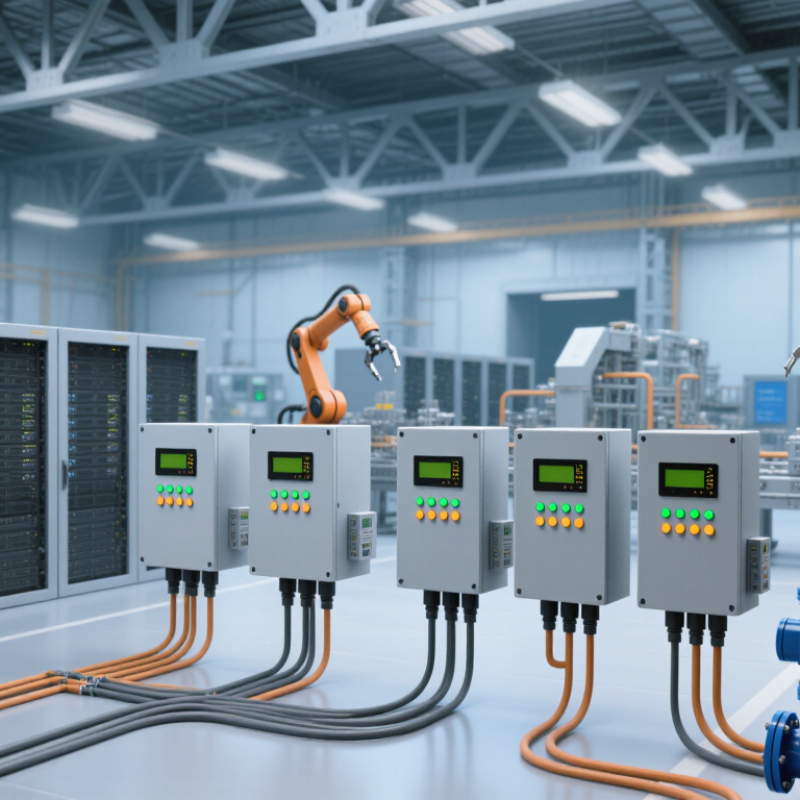
Packaged controllers combine control logic, input and output connections, and often a protective enclosure in one ready-to-install unit. They monitor signals from equipment, compare readings with programmed settings, then switch or adjust outputs. A controller might read a temperature sensor, for example, and activate a fan when a cabinet becomes too warm. The exact response depends on its configuration and the connected devices.
Inside the package, a processor runs the control program while terminals link sensors and actuators. Some units also include a display, communication ports, or built-in power components. This arrangement can reduce panel wiring and simplify installation, though “packaged” does not mean maintenance-free. A loose terminal or poorly selected sensor can still cause unreliable readings. Small details matter.
In practice, technicians check supply voltage, input types, output ratings, and enclosure conditions before commissioning. They then test the controller under realistic operating conditions, not just with a quick power-up. Clear labeling helps later troubleshooting. I have seen setup assumptions linger longer than expected; that is worth questioning. A well-matched packaged controller can make a system easier to manage, but its performance still depends on sound design, careful configuration, and periodic inspection.
Packaged Controllers: Typical Operating Sequence
A packaged controller combines control hardware and input/output connections in an assembled unit. It receives sensor signals, applies programmed logic, and sends commands to equipment; feedback helps the controller monitor the process. The bar heights show sequence order only—not measured performance or supplier rankings.
Core Applications and Features of Packaged Controllers
Packaged controllers combine a processor, input/output modules, communication ports, and protective housing in one tested unit. In commissioning work, this integration can reduce wiring time and simplify panel inspection. It also limits design freedom. That trade-off matters.
These controllers serve HVAC systems, pumping stations, water treatment lines, cold storage, and automated packaging equipment. A typical unit reads temperature, pressure, flow, or level signals. It then adjusts valves, motors, heaters, or fans through programmed logic. PID control supports stable temperatures and pressures, while timers and interlocks protect equipment during abnormal conditions. Built-in diagnostics can identify sensor loss, communication faults, and overload conditions before downtime spreads.
Practical features often include Ethernet or serial networking, remote monitoring, data logging, and a compact DIN-rail or wall-mounted enclosure. Clear terminal labels and removable connectors help technicians work inside crowded cabinets. Some models support recipe handling and touchscreen operation, which suits changing production tasks. Cybersecurity deserves attention, especially when controllers connect to wider networks. Passwords alone may be insufficient. Supplier documentation should explain firmware updates, access levels, environmental ratings, and spare-part availability. In real installations, a controller may perform well in testing but struggle with electrical noise or poor sensor grounding. Careful site testing remains essential.
Criteria for Evaluating Global Packaged Controller Suppliers
A credible Top 10 ranking of packaged controller suppliers needs more than shipment volume. Evaluation should begin with field reliability, documented performance, and application fit. The International Federation of Robotics reported 541,302 industrial robot installations in 2023. This indicates strong automation demand, but it does not prove controller quality. Buyers should examine failure rates, mean time between failures, thermal tolerance, and performance in dusty or humid facilities.
Interoperability deserves equal weight. A controller should support widely adopted industrial protocols and connect smoothly with existing sensors, drives, and supervisory systems. Suppliers should provide clear engineering manuals, firmware histories, and long-term compatibility commitments. Cybersecurity evidence is essential. Conformance with ISA/IEC 62443 principles, secure update procedures, role-based access, and vulnerability disclosure processes offer practical indicators. Certifications alone are not enough.
Supply continuity also separates mature suppliers from convenient alternatives. The World Bank’s Commodity Markets Outlook has repeatedly highlighted volatility in industrial input prices, which can affect lead times and replacement costs. A serious assessment should review factory locations, regional service capacity, spare-parts coverage, and average repair timelines. Total cost matters more than the initial quotation. A low purchase price can become expensive after training, integration, and downtime.
No scorecard is perfect. Weightings should change by industry. Process plants may prioritize lifecycle support, while machine builders may value compact design and rapid programming. One weakness remains common: supplier claims are often easier to find than independently verified field data. Teams should request references, test sample units, and record every assumption before publishing a global ranking.
Profiles of 10 Leading Packaged Controller Suppliers Worldwide
Top 10 Packaged Controllers Suppliers Worldwide
These profiles examine ten leading packaged controller suppliers through practical industry criteria. The review considers engineering depth, delivery consistency, support, and documented testing.
Supplier one serves process plants with rugged controller packages, stainless enclosures, and clear wiring schedules.
Supplier two focuses on compact systems for machine builders, offering quick configuration and accessible replacement parts.
Supplier three supports water facilities, where remote monitoring and alarm reliability matter every day.
Supplier four designs temperature and pressure control packages for demanding production lines. Its commissioning teams often provide useful on-site training.
Supplier five combines controller hardware with customized software logic. This approach reduces integration work, but software documentation must remain current.
Supplier six is known for modular packages that simplify expansion during plant upgrades.
Supplier seven emphasizes energy management, using load monitoring and automatic sequencing.
Supplier eight supplies pretested panels for warehouses and logistics facilities. Its factory acceptance procedures can shorten installation time.
Supplier nine serves laboratories and clean production areas, where stable control and careful traceability are essential.
Supplier ten develops specialized packages for harsh environments, including vibration, dust, and changing temperatures.
Reliable suppliers usually publish technical specifications, test procedures, service terms, and spare-part policies. Buyers should also inspect response times and installer competence. A polished enclosure is not enough. Field experience shows that unclear interfaces can create delays, even when hardware performs well. Some supplier claims still deserve independent verification. Performance depends on application design, maintenance discipline, and operator training.
How to Compare Suppliers by Products, Support, and Market Reach
Top 10 Packaged Controllers Suppliers Worldwide
Comparing packaged controller suppliers requires more than counting product models. Review the controller’s input and output capacity, communication protocols, enclosure rating, and operating temperature. Ask for current datasheets, test records, and sample units. A polished website proves very little. Field performance matters more.
I have found that technical support often separates a dependable supplier from a cheap one. Check response times before signing a contract. Can engineers explain wiring faults clearly? Are manuals practical, or filled with vague diagrams? Ask about firmware updates, spare parts, training, and troubleshooting procedures. One missed detail can delay an installation for days. It happens.
Market reach also deserves careful testing. A supplier may export widely but lack local technicians or replacement stock. Check service locations, delivery times, distributor training, and references from similar industries. Compare warranty terms in writing, including transport responsibilities and repair limits. A spreadsheet helps, but it can still mislead. I once ranked a supplier highly for broad coverage, then discovered that regional support depended on one unavailable contractor. That weakness changed the evaluation. Reliable comparisons should weigh documented capability, direct technical communication, and proven project experience rather than impressive claims.
Conclusion
This article presents a clear introduction to Packaged Controllers, explaining what they are, how they operate, and how they combine control functions, monitoring capabilities, and protective features within a unified enclosure. It explores their main applications across industrial automation, building systems, energy management, equipment control, and other demanding environments. Readers will also learn about important features such as flexible configuration, reliable communication, simplified installation, scalability, and ease of maintenance.
The article then outlines practical criteria for evaluating global Packaged Controllers suppliers, including product performance, customization options, quality management, technical support, delivery capability, after-sales service, and market coverage. Profiles of ten leading suppliers are organized around their product strengths and service capabilities without focusing on brand promotion. Finally, the guide explains how to compare suppliers by considering product range, engineering expertise, response speed, documentation, integration support, and long-term cooperation potential, helping buyers make informed decisions for different operational requirements.

 Machine-Win