Working near energized equipment demands more than confidence. It demands controlled habits, suitable equipment, and honest risk assessment. Insulated Tools are designed to reduce accidental contact between a worker’s hand and conductive metal. Their handles use layered insulation, often with a bright outer color that reveals wear more clearly. Some are rated for work up to 1,000 volts, but that rating never makes energized work automatically safe.
Electrical safety educator Jim Phillips explains, “Insulated tools reduce risk, but they never replace proper safety procedures.” That distinction matters. A screwdriver may carry the correct voltage marking, yet still fail if its coating is cracked, contaminated, or improperly maintained. Small details matter.
Look closely.
A damaged tool can expose a narrow strip of metal near the handle. In a crowded control cabinet, that strip may touch an adjacent terminal within seconds. Quality Insulated Tools also help limit short circuits when space is tight, especially around breakers, busbars, and industrial panels. However, protection depends on correct selection, inspection, and use.
This guide will examine how insulated tools are built, what their markings mean, and when they are genuinely necessary. It will also question a common assumption: owning certified tools does not equal having a safe work system. Gloves, isolation procedures, voltage testing, training, and clean working conditions remain essential. Some advice sounds repetitive. It is repetitive because preventable mistakes are still common. Even experienced technicians can overlook a worn handle after a long shift. That human weakness deserves attention, not denial.
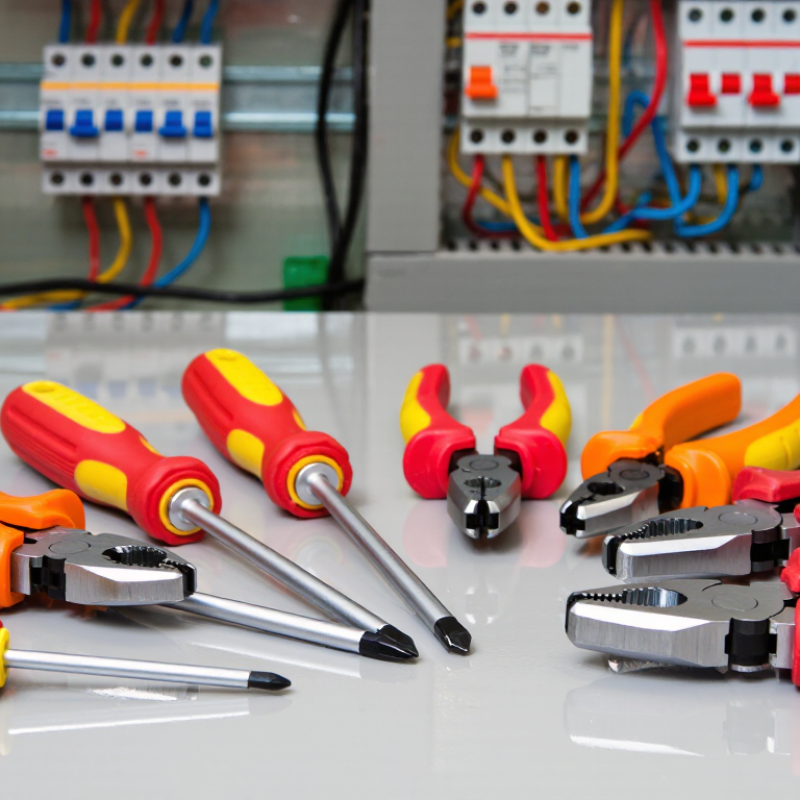
Insulated tools are hand tools covered with a tested, non-conductive layer. Common examples include screwdrivers, pliers, cutters, and nut drivers. Their handles and exposed shafts help reduce the chance of current reaching the user’s hand. They are designed for electrical work, not ordinary decoration.
The insulation works by interrupting the electrical path between the metal tool and the person holding it. Many tools use two visible layers. A bright inner layer may appear when the outer layer suffers deep damage. This warning is useful, but it is not perfect. A small crack near the tip can remain easy to miss. The tool must also carry a suitable voltage rating and follow recognized safety standards, such as IEC 60900.
In real workshop conditions, I inspect each tool before use. I look for cuts, swelling, burn marks, loose handles, and contamination from oil or moisture. The surface should feel dry and stable. Never assume insulation makes live work safe. De-energizing the circuit, locking it out, and verifying the absence of voltage remain essential controls. Insulated tools add protection when accidental contact occurs, but they cannot replace proper training or personal protective equipment. A tool can look new and still be unsuitable after misuse. That detail deserves more attention.
Insulated tools are designed to reduce current transfer when accidental contact occurs. Their handles typically use layered polymers such as PVC, polypropylene, or thermoplastic elastomers. These materials create electrical resistance while improving grip and impact protection. The metal working end remains conductive, so insulation does not make careless contact safe.
Safety features matter as much as the material. A thick, two-color coating can reveal cuts, burns, or hidden wear. Raised finger guards help prevent a hand from sliding toward exposed metal. Textured surfaces improve control when gloves are damp. Clear voltage markings also support correct tool selection. IEC 60900 covers insulated tools for live working, while ASTM F1505 addresses insulated hand tools in North America. The U.S. Bureau of Labor Statistics recorded 126 fatal occupational injuries involving electrical exposure in 2020. That figure makes routine inspection difficult to dismiss.
Tips: Check the insulation before every use. Do not rely on color alone. Look for cracks, swelling, punctures, or oil damage. Keep tools clean and dry, then store them away from sharp edges. Replace questionable tools rather than testing them with live contact. A tool may look perfect but still have internal damage. That uncomfortable uncertainty deserves respect. Use the correct voltage-rated tool, and follow your workplace electrical-safety procedure. Insulated tools support safe work; they never replace isolation, verification, and proper training.
Insulated screwdrivers are common in electrical maintenance because their coated handles reduce accidental contact with energized parts. Slotted and Phillips types suit terminal screws, control panels, and household fixtures. The shaft insulation must remain intact. A small cut can change the risk completely.
Insulated pliers help grip, bend, and position wires in crowded boxes. Long-nose pliers reach narrow spaces, while combination pliers handle thicker conductors. Diagonal cutters trim wires cleanly, but they should not cut energized cables unless specifically rated and required by approved procedures. Insulated nut drivers and socket tools are useful for tightening terminal nuts and fasteners near electrical components. They offer better control than ordinary hand tools.
Voltage-rated wrenches and insulated cable cutters serve specialized maintenance tasks. They are valuable around switchgear, battery systems, and distribution equipment when trained workers follow local safety rules. I always inspect the coating for cracks, swelling, or exposed metal before use. I also keep the tool dry and clean. Insulation is not magic. Power should be disconnected and verified whenever possible. One practical weakness is easy to overlook: a tool may look safe while its rating, inspection date, or working voltage is unclear. In that situation, replacement is wiser than guesswork.
Insulated tools are designed to reduce current transfer when a worker handles energized or potentially energized equipment. Their importance is greatest near exposed conductors, switchgear, control panels, battery systems, and industrial machinery. OSHA 29 CFR 1910.333 requires suitable insulated tools when contact with energized parts is possible. The Electrical Safety Foundation International, analyzing U.S. Bureau of Labor Statistics data, recorded 126 workplace electrical fatalities in 2020. That number makes tool selection more than a workshop preference.
Use insulated tools during approved electrical testing, troubleshooting, installation, and maintenance tasks. They are especially necessary in cramped panels, damp work areas, and locations with unexpected backfeed risks. The tool’s voltage rating must exceed the circuit’s maximum voltage. Check the insulation before every use. Cuts, burn marks, oil, or loose handles are warning signs. A rating is not magic. De-energizing, locking out, and verifying zero energy remain the safer controls. I still think workers sometimes trust a perfect-looking handle too much.
Tips: Keep tools clean and dry. Store them away from sharp metal edges. Never modify insulation or use a damaged tool. Follow the manufacturer’s inspection guidance and NFPA 70E workplace practices. When conditions change, pause and reassess the task. Small shortcuts become serious problems quickly.
Insulated tools are designed to reduce the risk of electric shock during work near energized equipment. Their protective layers cover conductive parts, but they are not a license to ignore safe isolation procedures. Choose each tool according to its voltage rating, intended task, and condition. A screwdriver for low-voltage work may not suit higher-voltage equipment. Check the rating and markings before use. In practical workshops, selecting a familiar tool too quickly is an easy mistake.
Inspection should happen before every job. Look closely at the insulation for cuts, cracks, burns, swelling, or exposed metal. Flex the handle gently and check for looseness. Remove oil, dust, and moisture with a clean, suitable cloth. Do not use abrasive cleaners that could weaken the surface. If damage appears, remove the tool from service. Do not repair the insulation with ordinary tape. That shortcut can create false confidence.
Tips: Keep insulated tools dry and separate from sharp objects. Store them where extreme heat and sunlight cannot reach them. Use the correct tool instead of forcing one into an unsuitable task. Never rely on insulation alone; de-energize equipment whenever possible and verify the absence of voltage with properly rated test equipment. Keep inspection records for shared tool sets. A small log helps reveal repeated damage. It may feel excessive, but memory is unreliable during a busy shift.
| Tool Category | Typical Electrical Work | Insulation Rating to Look For | Key Selection Criteria | Pre-Use Inspection | Maintenance and Storage | Replacement or Removal Trigger |
|---|---|---|---|---|---|---|
| Insulated Screwdrivers | Installing or removing terminal screws, cover plates, control components, and electrical fittings. | 1,000 V AC / 1,500 V DC | Choose the correct tip size and profile; use a tip that fully fits the fastener to reduce slipping and conductor damage. | Check the insulation for cuts, cracks, burns, chemical damage, looseness, and exposed metal beyond the working end. | Wipe clean with a dry or manufacturer-approved cloth. Keep away from heat, sunlight, oils, solvents, and sharp objects. | Remove from service if the insulation is damaged, the shaft is loose, or the tip is excessively worn. |
| Insulated Pliers | Gripping, bending, holding, and cutting conductors during installation and maintenance. | 1,000 V AC / 1,500 V DC | Select the correct jaw design and cutting capacity. Use a dedicated cutting tool rather than exceeding the rated conductor size. | Inspect handles, insulation transitions, pivot area, jaws, and cutting edges. Confirm that the handles open and close smoothly. | Clean after use, lubricate the pivot when appropriate, and store closed or secured to prevent damage to the insulated handles. | Remove from service for chipped insulation, exposed metal on the handles, excessive play, or damaged cutting edges. |
| Insulated Wire Strippers | Removing insulation from electrical conductors without damaging the conductor strands. | 1,000 V AC / 1,500 V DC | Match the stripping range to the conductor size and select a design suitable for the conductor type and insulation material. | Check the insulation, stripping notches, adjustment mechanism, spring, and cutting edges. Look for conductor damage from previous use. | Remove debris, keep the stripping notches clean, and protect the tool from moisture and corrosive substances. | Remove from service if insulation is cracked, notches are deformed, or the tool repeatedly nicks conductors. |
| Insulated Cable Cutters | Cutting electrical cables within the tool’s specified diameter and material limits. | 1,000 V AC / 1,500 V DC | Verify the maximum cable diameter and material rating. Never use cable cutters to cut energized circuits unless the tool and work method are specifically approved. | Inspect handles, insulation, hinge, blades, and locking mechanism. Ensure the blades are aligned and free from cracks or deep nicks. | Clean and lightly protect the pivot as recommended. Store with the blades closed or locked and avoid contact with abrasive surfaces. | Remove from service if blades are damaged, handles are loose, or any insulating layer is compromised. |
| Insulated Nut Drivers | Tightening or loosening nuts on terminal blocks, switchgear, control panels, and electrical equipment. | 1,000 V AC / 1,500 V DC | Select the exact socket size and sufficient shaft length. Use a torque-controlled tool when the equipment specification requires a defined tightening torque. | Check the socket, shaft, handle, insulation, and connection between the shaft and handle for distortion or looseness. | Keep sockets clean and dry. Do not strike the tool or use it as a lever unless it is specifically designed for that purpose. | Remove from service when the socket is rounded, the shaft is bent, or the insulation shows damage. |
| Insulated Adjustable Wrenches | Adjustable gripping of nuts and fittings where the correct jaw opening is required. | 1,000 V AC / 1,500 V DC | Choose a wrench with an adequate jaw capacity and minimal jaw movement. Use the correct fixed-size wrench when a precise fit is available. | Inspect the insulated handle, jaw faces, worm mechanism, and adjustment movement. Verify that the movable jaw does not slip under load. | Clean regularly, keep the adjustment mechanism free of grit, and store separately from tools that could cut or abrade the insulation. | Remove from service for damaged insulation, distorted jaws, excessive play, or a seized adjustment mechanism. |
| Insulated Hex Keys | Driving internal-hex fasteners in electrical equipment, control systems, and machinery. | 1,000 V AC / 1,500 V DC | Use the exact hex size and choose a length that provides access without forcing the tool against nearby parts. | Check the insulated coating or sleeve, hex ends, and holder. Look for rounding, bending, cuts, or separation of the insulation. | Keep dry and organized by size. Do not hammer, extend, or use an insulated hex key as a pry bar. | Remove from service if the hex end is rounded, bent, or the insulating material is loose or damaged. |
| Insulated Torque Tools | Applying specified tightening torque to electrical terminals and connections. | 1,000 V AC / 1,500 V DC when marked and approved for insulated work | Confirm the torque range, drive size, accuracy requirements, and compatibility with the fastener. Use the equipment manufacturer’s torque specification. | Inspect insulation, adjustment mechanism, scale, locking system, drive head, and calibration label or record. | Store at the manufacturer’s recommended setting, protect from impact and moisture, and follow the required calibration interval. | Remove from service after impact damage, failed calibration, missing identification, or any insulation defect. |
| General Insulated Hand Tools | Routine electrical installation and maintenance where accidental contact with energized parts is possible. | 1,000 V AC / 1,500 V DC | Look for permanent voltage markings, recognized test or conformity information, ergonomic control, and a design suited to the task. | Inspect before every use for cleanliness, dryness, intact insulation, secure handles, and correct operation. | Clean with approved materials, maintain an inventory inspection schedule, and store in a dry, protected tool case. | Remove from service when markings are illegible, insulation is contaminated or damaged, or the tool has been exposed to excessive heat or chemicals. |
Insulated tools are hand tools covered with tested, non-conductive layers. Common types include screwdrivers, pliers, cutters, and nut drivers.
The coating interrupts the electrical path between the metal tool and the user’s hand. It reduces risk, but does not make contact safe.
The inner layer may appear after deep damage to the outer layer. This warning helps, but small cracks can remain hidden.
Look for cuts, cracks, swelling, punctures, burns, loose handles, oil, and moisture. The surface should feel dry and stable.
No. De-energize the circuit, lock it out, and verify that voltage is absent. Insulation provides extra protection only.
Handles may use layered polymers, including PVC, polypropylene, or thermoplastic materials. These layers improve electrical resistance, grip, and impact protection.
Look for raised finger guards, textured grips, clear voltage markings, and visible warning layers. These details support control and correct selection.
Clean and dry them before storage. Keep them away from sharp edges, oil, moisture, and excessive heat.
Yes. Misuse can cause internal damage that is difficult to see. That uncertainty deserves respect. Replace questionable tools.
Users need electrical-safety training and suitable protective equipment. Tools support safe work, but they do not replace careful procedures.
Insulated Tools are specially designed hand tools that help reduce the risk of electric shock when working near energized or potentially energized equipment. Their handles and protective surfaces are made with nonconductive materials and often include layered insulation, finger guards, and clearly marked safety ratings. Common examples include insulated screwdrivers, pliers, cutters, wrenches, and socket tools, each suited to different electrical installation, repair, and maintenance tasks. However, insulation is not a substitute for proper training, de-energizing equipment, or using appropriate protective equipment.
These tools are especially necessary in electrical panels, control cabinets, industrial facilities, construction areas, and other locations where accidental contact with live components is possible. Choosing the right tool requires checking its intended voltage rating, condition, size, and suitability for the task. Before each use, inspect the surface for cuts, cracks, burns, contamination, or signs of wear. Insulated Tools should be cleaned correctly, stored away from heat and sharp objects, and removed from service immediately if their protective layer is damaged.
Machine-Win