Best Oscilloscope Probes for Precision Measurements?

Time:2026-07-09 Author:Madeline
0%

In the realm of electronic testing, precision is paramount. Oscilloscope probes serve as crucial tools for accurate signal measurement. According to a recent report by the Institute of Electrical and Electronics Engineers (IEEE), probe accuracy can significantly influence overall measurement quality. Industry expert Dr. Emily Carter emphasizes this importance: "The right probe can make or break your measurements."

Many professionals overlook the role of oscilloscope probes. They often focus solely on the oscilloscope itself. However, probe selection is essential for effective signal analysis. A mismatched probe can introduce errors, leading to faulty interpretations. Research shows that using high-quality probes can reduce measurement errors by up to 30%.

While various probes exist, not every option suits every application. For instance, passive and active probes each have unique strengths and weaknesses. This variability requires careful consideration based on the intended use. Understanding these differences can enhance measurement capabilities. The choice of oscilloscope probes should not be underestimated in pursuit of precision.
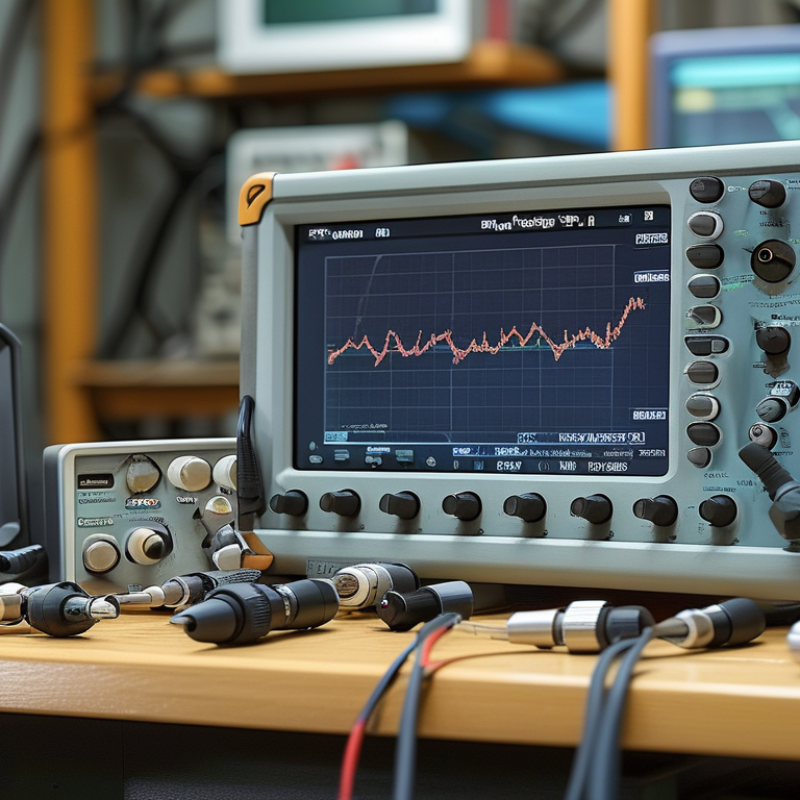
Best Oscilloscope Probes for Precision Measurements?

Understanding Oscilloscope Probes: Key Types and Their Applications

Oscilloscope probes are essential tools for precision measurements in electronics. Understanding the types and their applications can enhance the accuracy of your measurements significantly. High-bandwidth probes can capture fast signals accurately, making them invaluable in high-frequency applications. The selection of a probe impacts not just signal integrity but also measurement range and accuracy.

Consider using active probes for higher impedance and reduced loading effects. They are ideal for testing modern digital circuits where signal levels can be low. In contrast, passive probes are widely used for general-purpose measurements and are favored for their simplicity and cost-effectiveness. However, they can introduce distortions at high frequencies. Selecting the right probe can make a significant difference in data integrity.

According to recent industry reports, over 70% of professionals acknowledge that the choice of probes impacts measurement outcomes. This suggests a need for careful selection based on application requirements. It’s not uncommon to see basic probes used in complex systems, leading to inaccuracies. As technology evolves, keeping up with advancements in probe design is crucial for reliable measurements.

Best Oscilloscope Probes for Precision Measurements

Influence of Probe Characteristics on Measurement Accuracy and Precision

Oscilloscope probes play a pivotal role in achieving precise measurements. The characteristics of a probe can significantly impact accuracy and reliability. High bandwidth is essential for capturing fast-transient signals without distortion. A probe's input impedance also matters; it should match the oscilloscope for optimal signal integrity. Reports suggest a mismatch can lead to measurement errors exceeding 30%.

Another critical factor is the probe's attenuation ratio. A proper attenuation level can minimize loading effects, especially when measuring sensitive components. While a 10:1 probe is standard, lower ratios can capture higher amplitudes but might introduce noise. Professional recommendations often emphasize that the probe used should be suitable for the signal range and frequency to ensure accuracy.

Tips: Always check the probe’s calibration and condition before use. A worn probe can lead to unreliable readings. You can also verify the probe's specifications in relation to your specific measurement needs. Remember, sometimes the best probe is not the most expensive one; it's the one designed for your specific application.

Choosing the Right Bandwidth and Attenuation for Specific Measurements

When selecting oscilloscope probes, understanding bandwidth and attenuation is crucial. Bandwidth determines how accurately a probe can capture signal details. For high-frequency measurements, using a probe with a bandwidth at least 5 times higher than the target signal frequency is recommended. For example, to measure a 200 MHz signal, a probe with 1 GHz bandwidth is ideal. This ensures that you capture transient events without distortion.

Attenuation also plays a vital role in precision measurements. Probes often provide 10:1 or 100:1 attenuation options. A higher attenuation can reduce loading effects on the circuit, improving measurement accuracy. However, it can also introduce noise. It's essential to balance attenuation levels based on the application's needs. Regularly review probe specifications, as not all probes handle high-frequency noise the same way.

Tip: Always assess the environment where measurements will take place. Noise can significantly affect readings. Use shorter cables and minimize connections to reduce interference.

Choosing the right oscilloscope probe is an art. Probe performance degrades over time, especially with frequent use in high-demand settings. Regular calibration and maintenance are necessary. Experimenting with different settings can yield surprising insights. This investigatory approach allows you to refine your process for better measurement accuracy.

Impact of Probe Compensation on Signal Integrity in High-Frequency Tests

When performing high-frequency tests, probe compensation plays a vital role in ensuring signal integrity. Poor compensation can lead to inaccurate measurements, distorting the signal and causing misleading results. A study published in the Journal of Electronic Measurement and Testing indicated that improperly compensated probes could introduce up to 20% error in high-speed applications. This is significant, especially in industries like telecommunications, where precision is paramount.

Compensation involves adjusting the probe to match the impedance of the device under test. This helps minimize reflections, which can compromise the clarity of waveforms. Without proper compensation, even a top-grade oscilloscope will struggle to provide reliable data. Moreover, many engineers overlook regular recalibration of their probes, which can erode measurement accuracy over time. A study from IEEE suggests that nearly 50% of oscilloscope user errors stem from inadequate probe handling or setup.

Understanding how probe characteristics evolve with frequency is crucial. As frequency increases, parasitic capacitance and inductance become more pronounced. If these factors are not adequately addressed through compensation, the fidelity of the signal suffers. Industry reports underline that signal integrity in high-speed digital designs hinges on this precise interaction. This calls for a continuous learning approach, refining the techniques and enhancing measurement setups to avoid costly errors.

Comparative Analysis of Passive vs. Active Probes in Precision Measurements

When it comes to precision measurements, choosing the right oscilloscope probe is crucial. Passive probes are commonly used due to their simplicity and cost-effectiveness. They are capable of handling high voltages and provide decent bandwidth for general applications. However, they may fall short in terms of accuracy and signal fidelity, especially in high-frequency scenarios. These probes can introduce loading effects, which may distort measurements.

Active probes offer a different approach. They feature built-in amplification, allowing for better signal integrity and lower capacitance. This improves performance, particularly in sensitive applications where precision is paramount. The trade-off lies in their higher cost and complexity. Users must consider if the enhanced accuracy justifies the price. In some cases, the benefits of active probes can be diminished by environmental factors or improper usage. It's essential to understand the specifications and limitations of each type.

Ultimately, the choice between passive and active probes depends on the specific measurement needs and the user's expertise. While passive probes work well for many tasks, active probes shine in demanding scenarios. A careful evaluation of the application will lead to better results. Each option presents its own advantages and challenges worthy of consideration.

FAQS

: What are oscilloscope probes used for?

: They are essential tools for precision measurements in electronics.

How do high-bandwidth probes benefit measurements?

They can capture fast signals accurately, crucial for high-frequency applications.

What is the difference between active and passive probes?

Active probes have higher impedance; passive probes are simpler and cost-effective.

Why is the choice of probe important?

The probe selection impacts signal integrity, measurement range, and overall accuracy.

How does bandwidth affect probe performance?

It determines the accuracy of capturing signal details, especially in high-frequency measurements.

What is the recommended bandwidth for measuring a 200 MHz signal?

A probe with at least 1 GHz bandwidth is ideal.

How does attenuation influence measurement accuracy?

Higher attenuation reduces circuit loading but may introduce noise.

What should one consider in measurement environments?

Assess noise levels; use shorter cables to minimize interference.

How does probe performance change over time?

Performance can degrade, especially with frequent use; maintenance is essential.

What can experimenting with probe settings achieve?

It can provide surprising insights and improve measurement accuracy.

Conclusion

Oscilloscope probes are essential tools in achieving precision measurements in electronic testing. This article delves into the key types of probes available and their specific applications, highlighting how different characteristics influence measurement accuracy. It emphasizes the importance of selecting the appropriate bandwidth and attenuation settings tailored to particular measurement needs, which can significantly impact the reliability of results.

Additionally, the article explores the role of probe compensation in maintaining signal integrity, especially in high-frequency applications. A comparative analysis of passive versus active probes offers insights into their respective advantages for precision measurements. Understanding these factors is crucial for engineers and technologists aiming to optimize their measurement processes with suitable oscilloscope probes.


Madeline

Madeline

Madeline is a dedicated marketing professional with a wealth of expertise in our company's core offerings. With a keen understanding of the industry, she brings a unique perspective to her role, consistently delivering high-quality content that highlights the superior aspects of our products. As......